Sustainability Engagement with Customers
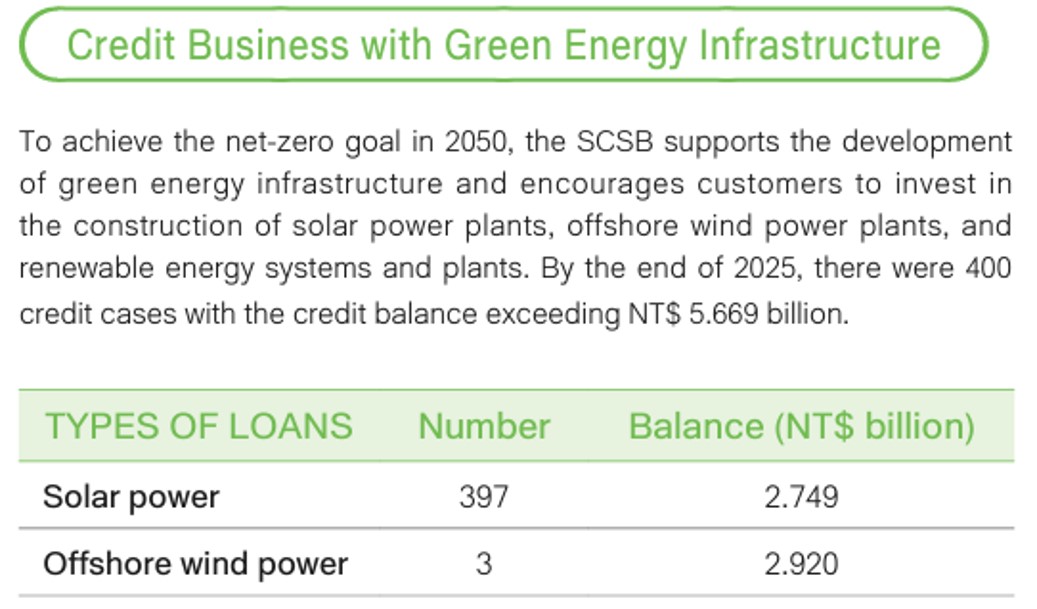
The SCSB projects to closely engage with clients by following the “Regulations for Sustainable Development Engagement” and designing the “SCSB Sustainability-linked Credit Extension Guidelines” to promote sustainable credit business. Moreover, the SCSB serves itself as the benchmarking management bank, and clients who achieve ESG indicators such as GHG emissions intensity, water consumption per unit of revenue, water consumption per unit of production, electricity consumption per unit of production, wastewater emission intensity, and suppliers‘ social responsibility, would benefit from rate cuts in return. This way, clients’ adherence to ethical management, environmental protection goals, and the fulfillment of achieving the sustainable finance management policy would be more effective consequently. At the end of 2025, the SCSB had processed 71 Sustainability-linked loans, with a total credit balance of NT$ 17.266 billion. In order to assisting the government in promoting the SMEs to achieve low carbon innovation developments, offering infrastructure-centric project loans for both managed factories and specific ones. At the end of 2025, the SCSB assisted in the completion of 1,686 applications, with a total lending balance amounting to NT$ 5.983 billion. In addition, in line with the government's policy of encouraging the financial industry to guide clients in meeting the Taiwan Sustainable Taxonomy, where the SCSB announced in October 2025 its engagement guidelines for corporate lending clients and offered preferential interest rates to those whose use of funds qualifies as general economic activities or enabling economic activities as defined under the said guidelines.
To reinforce sustainable engagement with individual customers, the SCSB has asked its Relationship Managers in personal finance to incorporate information related to financial services addressing environmental or social issues into the mortgage and loan application forms for personal finance starting from September 2023. At the end of 2025, the SCSB processed 14,342 applications and the proportion of individual (natural person) lending customers who have completed sustainability engagement reached 31.98%.
The SCSB finished setting up the sustainable investment sector in 2023 with a view to having stakeholders and investors acknowledge the concept of sustainable investment and the social impacts made by their investment decisions. Likewise, the SCSB also furnished an ESG-themed investment webpage where sustainable investment-conscious enterprises and individuals were welcomed to critically choose from ESG funds and overseas bonds. Lastly, there were a total of 13 listed funds meeting the Financial Supervisory Commission's (FSC) ESG fund criteria in 2025, with an accumulated amount of 67 listed funds and the scale for AUM valued at NT$1.26 billion in the same year.
|
Coloum
Issuing Sustainable Bonds to Empower Green Industries |
|---|
| In 2025, the SCSB issued two sustainable bonds with a total issuance amount of NT$2.5 billion. The green investment projects focus on the development of solar, wind, and marine renewable energy facilities, as well as the installation or procurement of energy storage equipment dedicated to such renewable energy sources, the research and development of smart grid and energy storage technologies along with system installation and improvements in industrial processes, and the investment and financing of electric vehicles by supporting enterprises that replace or purchase electric vehicles in place of conventional gasoline and diesel vehicles to promote green transportation and reduce greenhouse gas emissions in the transportation sector targeting investments and financing. In addition, in 2025, there was a total of 5 green loan cases meeting the requirements of the investment plan and the Joint Credit Information Center (JCIC). By the end of the year, the full quota of NT$1.172 billion allocated to green investment projects had been fully utilized. On the other hand, the SCSB also underwrote green bonds totaling NT$300 million in 2025, with the proceeds used for renewable energy development. |
|
Coloum
The SCSB‘s Credit and Debit Cards Acquired Carbon Neutrality Claim Verification |
|
|---|---|
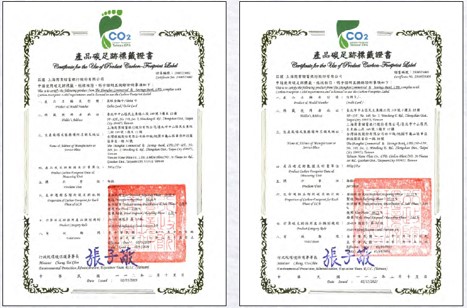
| The whole series of the SCSB's credit and debit cards (with the EasyCard function) have obtained the Ministry of Environment's Carbon Footprint Label in February 2023 (valid between February 16th, 2023 and February 15th, 2028 ), which makes the SCSB's debit cards become the first-ever labeled cards in the financial service industry. In addition, starting in 2022, the SCSB has issued a new series of environmentally friendly credit and debit cards to constantly promote the idea of environmental sustainability. |
|
Responsible Financing
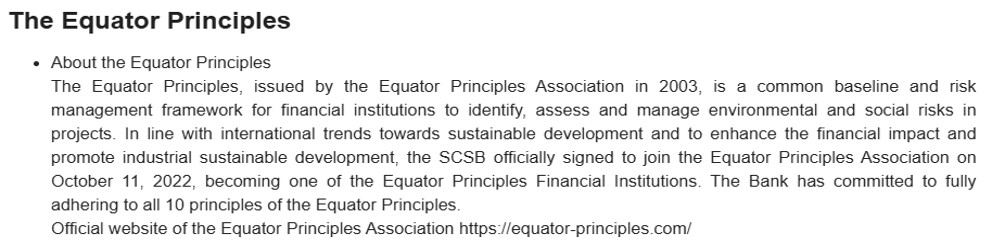
The SCSB not only follows the “Equator Principles” and the “Principles for Responsible Banking (PRB)” but formulates the “Guidelines Governing SCSB‘s Responsible Lending” , “Guidelines for Loans Applicable to the Equator Principles”, the “SCSB Sustainability-linked Credit Extension Guidelines”, and “Guidelines Governing Nature and Climate Risk Management” to review ESG risk factors deriving from lending applicants, investigate thoroughly negative sustainable information, and assess the potential impacts. Additionally, the extension of credit should take the following criteria into consideration, namely monitoring the status of credit applicants after granting loans, reviewing from time to time whether credit applicants fulfill their corporate social responsibilities, where potential impacts on social sustainability are identified, the credit customers’ improvement plan should be reviewed and integrated into the loan renewal assessment.
Project Financing
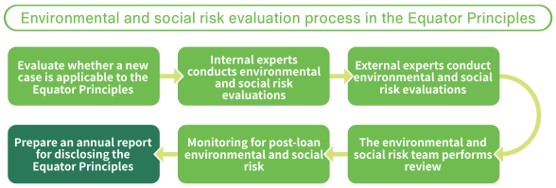
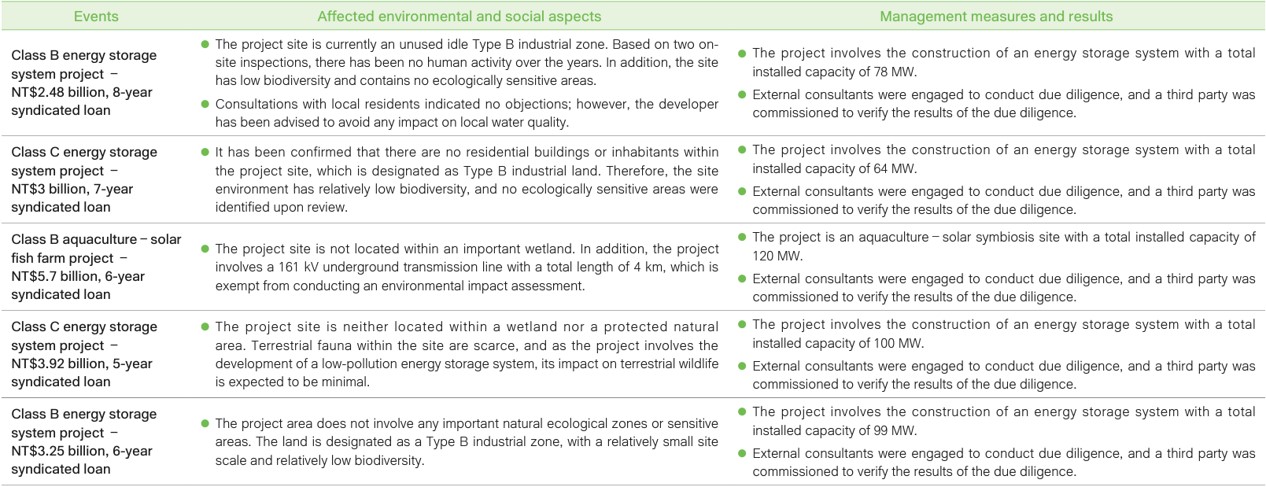
The SCSB’s project financing business complies with the requirements of "Guidelines for Loans Applicable to the Equator Principles". Internal experts and independent third-party organizations evaluate the environmental and social risks of projects, categorizing them into three levels, namely A, B, and C. The evaluation includes human rights, climate change, GHG emissions, and biodiversity, as well as environmental and social management systems and plans to bolster and implement environmental and social risk management for project financing cases. In 2025, there was a total of 5 cases applied to the Equator Principles and underwritten by the SCSB, and all of which were fully disbursed.
Green Building Loans
To encourage the public to purchase green buildings, the SCSB offers borrowers with “Green Building Candidate Certificate”, “Green Building Label”, or “Smart Building Label” recognized by the Ministry of the Interior (MOI) to enjoy green building loans. By the end of 2025, 1,068 loan applications were approved, with a balance of NT$ 13.08 billion.
Responsible Investment
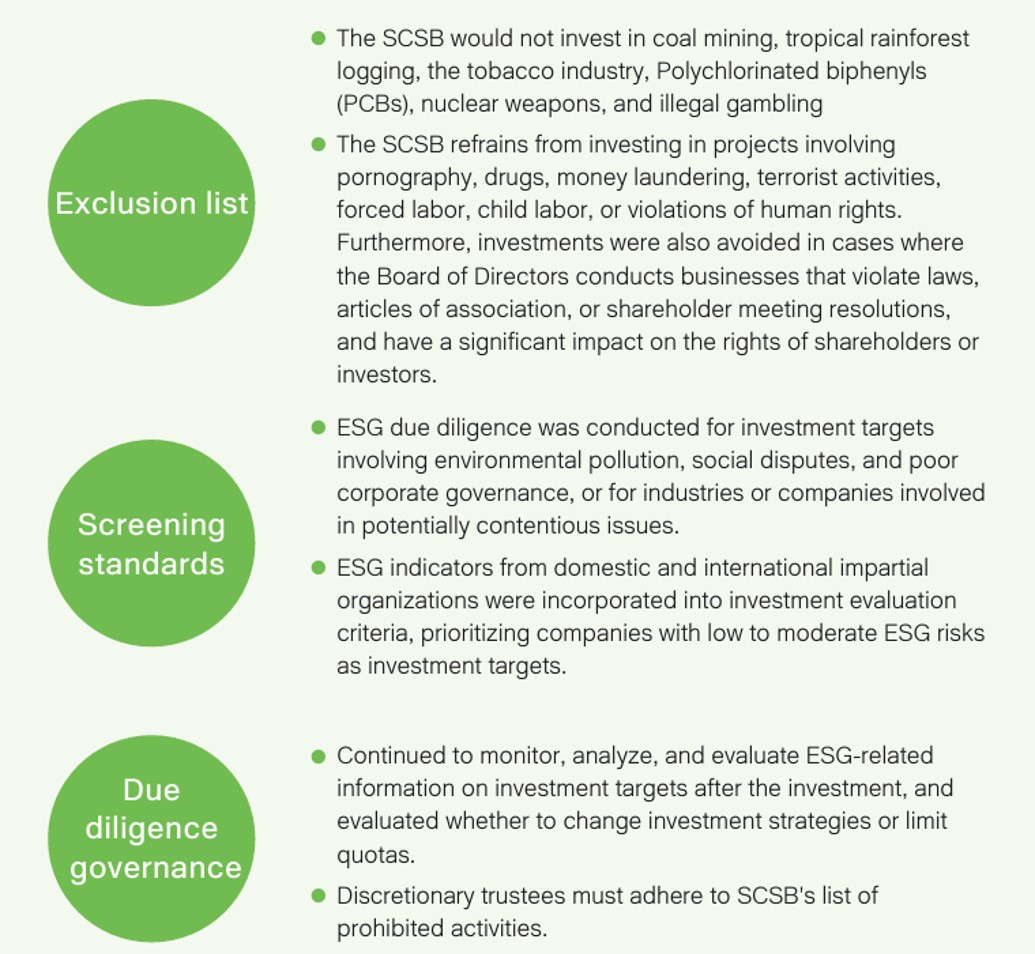
The SCSB follows the "Principles for Responsible Investment (PRI)" and the "Stewardship Principles for Institutional Investors" to formulate regulations such as the "Regulations Governing Responsible Investment", "Regulations Governing Nature and Climate Risk Investment Management", and "Stewardship Standards", to dedicatedly develop green finance. In addition, through integrating ESG factors into investment decisions, promoting responsible investment and stewardship, and amplifying the sustainable influence within the financial services industry to foster a sustainable financial ecosystem. The discretionary asset management firms contracted by the SCSB have all signed statements of the "Stewardship Principles for Institutional Investors", covering 100% of the environmental, social, and governmental risk in the investment process.
Sustainable Finance
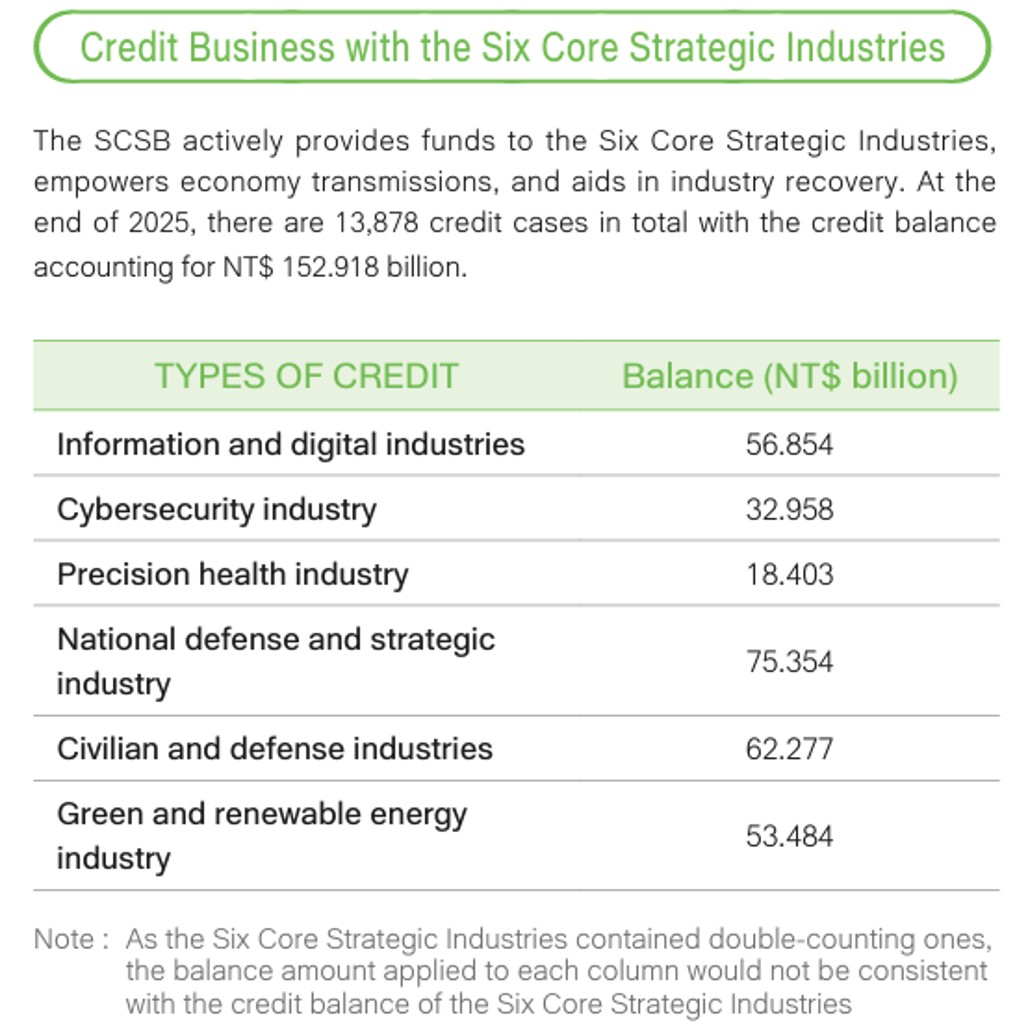
The SCSB works collaboratively with government guidelines, plans out products and services by resonating with the green finance aspect, and supports the development of diverse industries, including solar power, green tech, and key start-ups. In addition, as the Financial Supervisory Commission (FSC) has actively promoted the “Green and Transition Finance Action Plan” since 2024, the SCSB projects to advance both investing and financing business for the Six Core Strategic Industries and other green energy industries wholeheartedly to fulfill the goals of sustainable developments and net-zero emissions. Furthermore, the SCSB officially joined the Equator Principal Association back in October 2022 where the firm would adopt the "Equator Principles 4 (EP 4)", proactively conduct potential environmental and social risk management targeting credit cases, empower business partners to fulfill their environmental protection goals and social responsibilities, as well as optimize the sustainable finance impact.
Sustainable Financing Policy
Corporate Finance
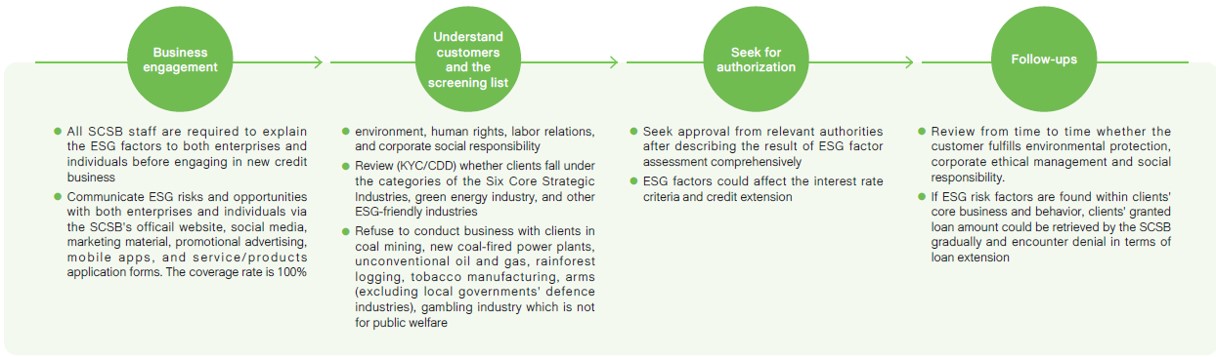
The SCSB incorporated ESG factors in its credit/lending business with corporate clients. As for ESG factors, they cover issues including environment, human rights, labor relations, and corporate social responsibility. Speaking of the KYC/CDD procedures, the SCSB screens clients to avoid engaging with high-risk ESG clients and ESG issues highlighted above. Moreover, a screening list of clients involved in coal mining, new coal-fired power plants, etc., are forbidden to engage with. Lastly, when it comes to engaging with clients on sustainability-linked risks and opportunities, the SCSB puts up internal guidelines and encourages corporate clients to achieve certain ESG indicators such as GHG emissions intensity, water consumption per unit of revenue, etc., to benefit from rate cuts in return. Likewise, the SCSB thrives to assist the government in promoting the SMEs to achieve low-carbon innovation developments and offer infrastructure-centric project loans for both managed factories and specific ones. Furthermore, in line with the government’s policy of encouraging the financial industry to guide clients in meeting the Taiwan Sustainable Taxonomy, where the Bank announced in October 2025 its engagement guidelines for corporate lending clients and offered preferential interest rates to those whose use of funds qualifies as general economic activities or enabling economic activities as defined under the said guidelines.
Consumer Finance
The SCSB incorporated ESG factors in its credit/lending business with individuals. As for ESG factors, they cover issues including environment, human rights, labor relations, and corporate social responsibility. Speaking of the KYC/CDD procedures, the SCSB screens clients to avoid engaging with high-risk ESG industries and ESG issues highlighted above. Moreover, a screening list of clients involved in coal mining, new coal-fired power plants, etc., are forbidden to engage with. Additionally, the extension of credit should take the following criteria into consideration, namely monitoring the status of credit applicants after granting loans, reviewing from time to time whether credit applicants fulfill their corporate social responsibilities, and proactively developing reactive plans for fear of credit applicants exerting potential negative sustainable impacts. Finally, individuals are encouraged to visit SCSB’s website to acknowledge the concept of sustainable investment and the social impacts made by their investment decisions, fulfilling the view of engaging responsibly with clients. Likewise, to strengthen sustainability engagement with individual clients, the SCSB has asked its Relationship Managers in personal finance to incorporate information related to financial services addressing environmental or social issues into the mortgage and loan application forms for personal finance
Corporate Finance
IIn 2025, the total value of corporate lending was NT$ 493,588,000,000 while the total value of green loans and sustainability-linked ones was NT$ 47,221,000,000. Furthermore, speaking of SME-tailored sustainable financing. the SCSB assists SMEs in achieving low-carbon innovation development, offering infrastructure-centric project loans for both managed factories and specific ones, accounting for NT$ 5,983,000,000 while the amount for SME green credit stands for NT$ 11,195,000,000. This way, these three targets comprise of SME-tailored sustainable financing accounted for NT$ 14,986,000,000. Lastly, the percentage of total sustainable value over total value was at 10.01%.
Consumer Finance
In 2025, the amount of green building mortgage accounts for NT$ 13,080,000,000, while the value for personal and mortgage lending is equivalent to NT$ 269,240,000,000. This way, the ratio for total sustainable value over total value is at 3.54%.
Sustainable Finance
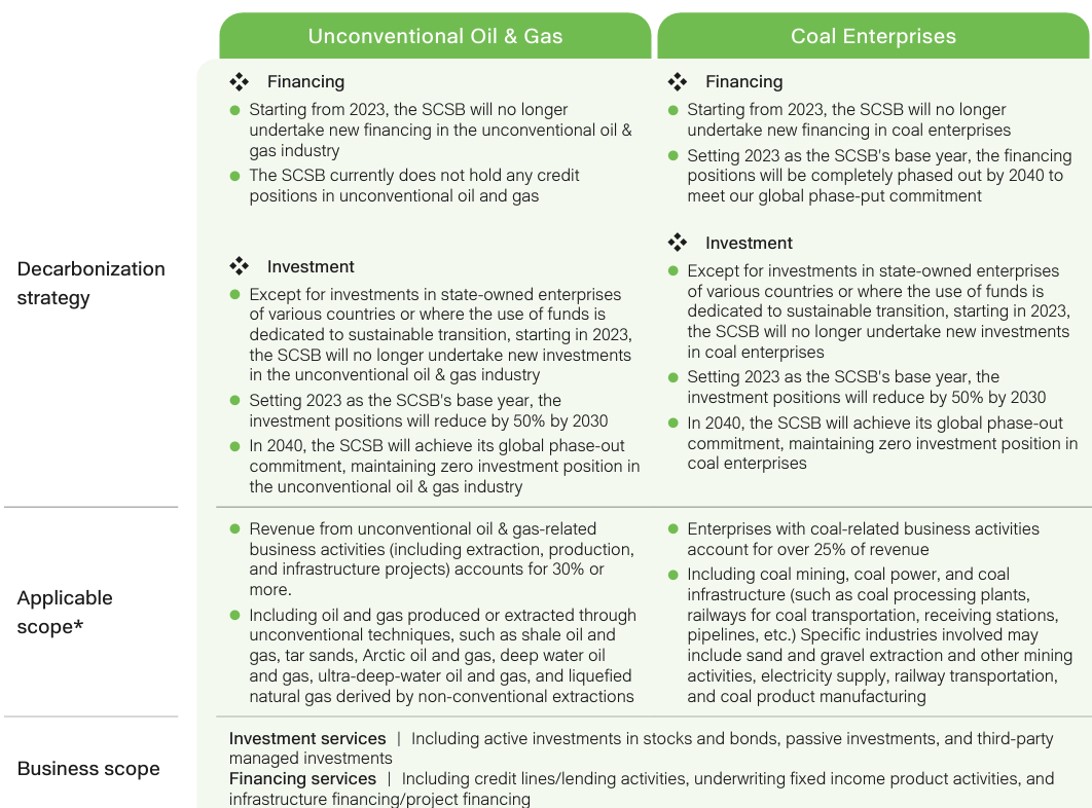
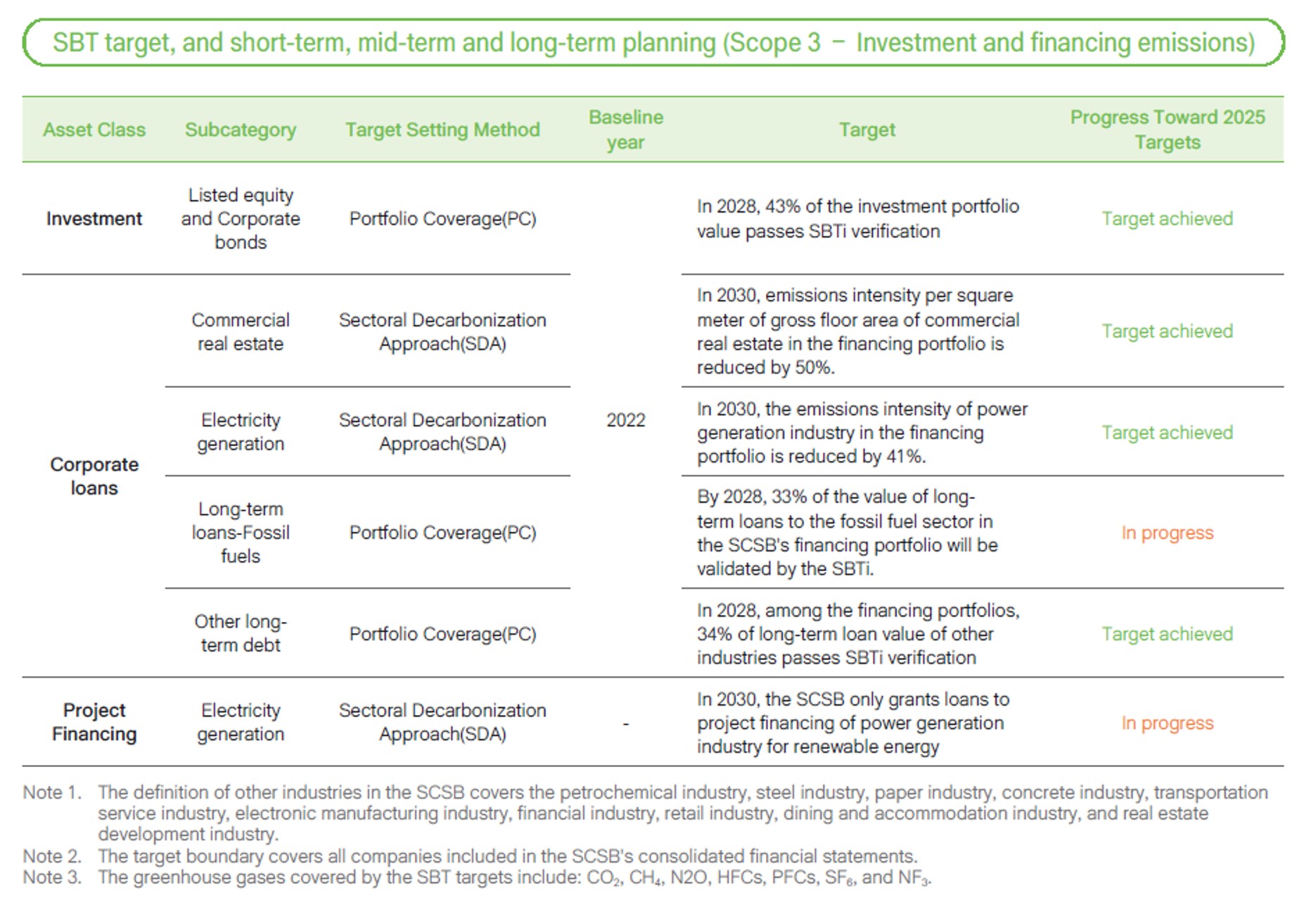
The SCSB works collaboratively with government guidelines, plans out products and services by resonating with the green finance aspect, and supports the development of diverse industries, including solar power, green tech, and key start-ups. In addition, as the Financial Supervisory Commission (FSC) has actively promoted the “Green and Transition Finance Action Plan” since 2024, the SCSB projects to advance both investing and financing business for the Six Core Strategic Industries and other green energy industries wholeheartedly to fulfill the goals of sustainable developments and net-zero emissions. Furthermore, the SCSB officially joined the Equator Principal Association back in October 2022 where the firm would adopt the "Equator Principles 4 (EP 4)", proactively conduct potential environmental and social risk management targeting credit cases, empower business partners to fulfill their environmental protection goals and social responsibilities, as well as optimize the sustainable finance impact. For investments and financing businesses involving high carbon-emitting fossil fuels, the SCSB has set the following phased reduction targets:
Climate and Nature-related Information
According to the Global Risks Report 2026 released by the World Economic Forum (WEF), climate change and environment related risks remain among the most severe global threats over the next decade, including extreme weather events, biodiversity loss and ecosystem collapse, major Earth system changes, natural resource shortages, and environmental pollution. Addressing the impacts of climate change has become a critical issue of shared global concern. In recent years, governments worldwide have strengthened climate governance and established net-zero carbon emission targets. Taiwan has also legislated its 2050 net-zero emissions target, and further climate-related regulations for industries are expected in the future, presenting both challenges and opportunities for enterprises. In response to these trends, the SCSB continues to align with the Financial Supervisory Commission's Guidelines for Climate related Financial Disclosures for Domestic Banks. In 2024, the Board of Directors approved revisions to the Guidelines Governing Nature and Climate Risk Management to systematically identify and assess material climate- and nature-related risks and opportunities arising from its business activities. These considerations have been incorporated into the SCSB's governance framework, strategic planning, and overall risk management system, with clearly defined roles, responsibilities, and management processes to strengthen its capability in addressing environmental issues. In terms of disclosure and implementation, the SCSB's sustainability report has further incorporated international sustainability disclosure standards, including IFRS S2 and the Taskforce on Nature-related Financial Disclosures (TNFD) framework. Relevant policies and execution are overseen by the Board of Directors and senior management. On the strategy front, the SCSB follows IFRS S2 and TNFD recommendations to evaluate the financial and operational impacts of climate- and nature-related risks and opportunities. In risk management, these risks are integrated into the existing enterprise-wide risk management system for ongoing monitoring and response. In addition, through the establishment of key metrics and Science Based Targets (SBT) for emissions reduction, the SCSB regularly tracks management performance, enhances information transparency, and strengthens its resilience in addressing climate change and nature-related impacts.
Governance
The Board of Directors at the SCSB serves as the highest governance body for natural and climate change-related issues, bearing ultimate responsibility for decision-making and oversight. A Risk Management Committee is established under the Board to assist in reviewing the effectiveness of nature- and climate-related management and strategic planning. In addition, the SCSB and executive departments have established a Risk Management Committee and a Sustainable Development Committee, which are required to regularly submit reports and management recommendations to the Board. These efforts support the Board in effectively formulating and refining policies and procedures for managing nature- and climate-related risks and opportunities, thereby strengthening the overall governance framework.
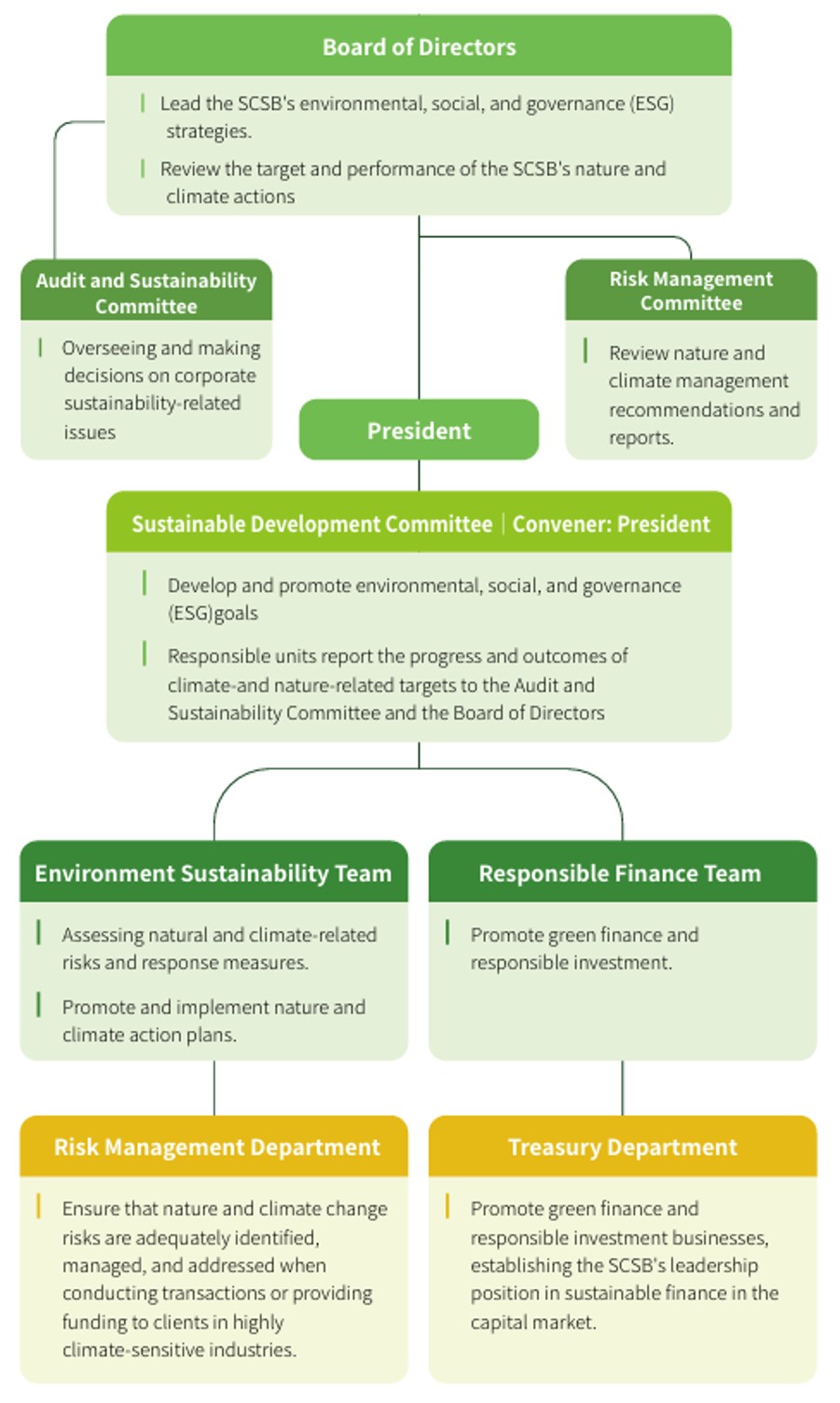
SCSB has established the "Guidelines Governing Nature and Climate Risk Management", clearly defining the responsibilities of each management unit:
- Audit and Sustainability Committee: Responsible for reviewing the annual sustainability plans, objectives, and implementation programs, and for overseeing the effectiveness and conducting reviews of sustainability-related initiatives. The Committee convenes at least once every quarter and may hold additional meetings as deemed necessary.
- Risk Management Committee: Authorized by the Board of Directors, the committee shall exercise the duty of care of a prudent manager and conduct at least an annual review of nature and climate risk issues. It is also responsible for submitting related recommendations and reports to the Board.
- Asset and Liability Management Committee: Responsible for reviewing the nature and climate risk-related regulations submitted by the Risk Management Department and examining the credit and investment portfolios to ensure that the financial risks associated with changes in natural capital or climate change are in compliance with the SCSB's nature and climate risk management policies.
- Sustainable Development Committee: Responsible for reviewing strategies, risk management, indicators, and targets related to nature and climate issues, and for regularly tracking implementation status. The Sustainable Development Committee convenes regular quarterly meetings. At least once a year, the responsible units report to the Audit and Sustainability Committee and the Board of Directors on the progress of climate- and nature related strategic objectives.
The Sustainable Development Committee chaired by the President acts as the consolidating and guiding unit for the SCSB´s sustainability development and natural and climate risk management. The committee convenes quarterly meetings to review the outcomes of climate-related policies, regulations, risks, and opportunities. The responsibilities of the two climate risk-related groups are as follows:
Environmental Sustainability Team:Led by the Risk Management Department and the head of the department. This team is responsible for overseeing changes in nature capital and climate change-related issues, coordinating with various business units to identify risks and opportunities, and implementing action plans related to nature capital and climate change and environmental protection response measures. This ensures that nature and climate risks are adequately identified, managed, and addressed when conducting transactions or providing funding to clients in highly nature-sensitive or climate-sensitive industries.
Responsible Finance Team:Led by the Treasury Department and the head of the department. This team is responsible for promoting the sustainable development of credit extension standards, green finance, responsible investment, and other relevant businesses, as well as implementing due diligence governance. This ensures that the SCSB maintains a strong foothold in the capital market and gradually establishes its leadership in the field of sustainable finance.
The Risk Management Department to gather and summarize the information and reports on nature and climate risks provided by each responsible unit at the end of the previous year. These reports are to be submitted to The Sustainable Development Committee, the Risk Management Committee, and the Board of Directors on an annual basis (at least once per year). Additionally, the Risk Management Department compiles response measures developed by the respective units, enabling the Board of Directors and senior management to incorporate these considerations into their strategic planning and business monitoring.
Apart from the above mentioned top management units, other management units of the SCSB are responsible for assisting in system implementation, talent training, measuring, monitoring, and reporting nature and climate risks according to their respective business functions. They are also required to draft system requirements, request the Information Technology General Department to build databases, provide nature and climate assessment-related data and results, and collaborate with the implementation of nature and climate action within the SCSB. Furthermore, other units such as the business management units, the operations unit and Auditing Department, operate under the SCSB's "Practical Guidelines for the Three Lines of Defense in Internal Control". Each unit carries out its duties based on its respective business functions to identify and assess nature and climate risks and opportunities relevant to the SCSB, and formulate nature-related and climate-related strategies and measures (including nature-related and climate change-related risks and opportunities), establish mechanisms and processes for nature and climate risk management to enhance risk management, help the Risk Management Department perform bank-wide climate change scenario analysis and support the implementation of climate actions
Professional Competency Training for the Nature and Climate Risk Management Unit:
To ensure that the SCSB´s nature and climate risk management unit is equipped with the necessary capabilities to identify and respond to climate risks and opportunities effectively, themed training sessions and education are conducted annually for members of the Board of Directors and top management. The training aims to endow them with the knowledge and skills required to gain insight into international trends related to nature and climate change and sustainable operations. (For detailed information about nature and climate change education and training, please refer to Chapter 2.4 Risk Management and Chapter 4.2 Employee Training and Career Development).
Incorporation of Sustainability and Climate-related Management Incentives management measures:
The compensation and performance of the SCSB’s senior management are evaluated based on the achievement of performance and work targets. The work targets include sustainability and climate development objectives, which are formulated in accordance with the annual priorities planned by the SCSB’s six major working groups and its Sustainability Strategic Target Planning. In 2025, the KPI items for the President and Executive Vice Presidents included: achieving increasing green lending and green investment amounts by 15% year-on-year; completing and publishing the Climate and Nature-related Risk Management Report and Sustainability Report on schedule; achieving a renewable electricity usage ratio of 12% of total electricity consumption across the SCSB; completing greenhouse gas inventory, verification, and disclosure on time; introducing the IFRS S1 and S2 Sustainability Disclosure Standards; implementing the carbon reduction pathway in line with the SCSB’s submitted SBT targets; and fulfilling commitments to energy and resource reduction targets while executing the carbon reduction pathway as scheduled. including reducing absolute GHG emissions (Scope 1 and Scope 2) by 4% compared to 2020 levels. These targets accounted for 13% of the overall performance evaluation.
Strategy
Against the backdrop of accelerating climate change and increasing loss of natural capital, the SCSB recognizes that environmental issues have extended beyond traditional compliance considerations and now represent material risks and opportunities that may affect its long-term sustainability, asset value, and financial stability. To effectively assess these implications, the SCSB has undertaken the identification of climate- and nature-related risks and opportunities in accordance with internationally recognized frameworks and standards, including TCFD, TNFD, and IFRS S2. The SCSB systematically evaluates the impacts of climate- and nature-related issues on its operations and financial business activities, analyzes potential financial and non-financial impacts through different transmission channels, and establishes corresponding risk management and response strategies to enhance resilience and support sustainable development.
Natural and climate-related risks and opportunities identification process
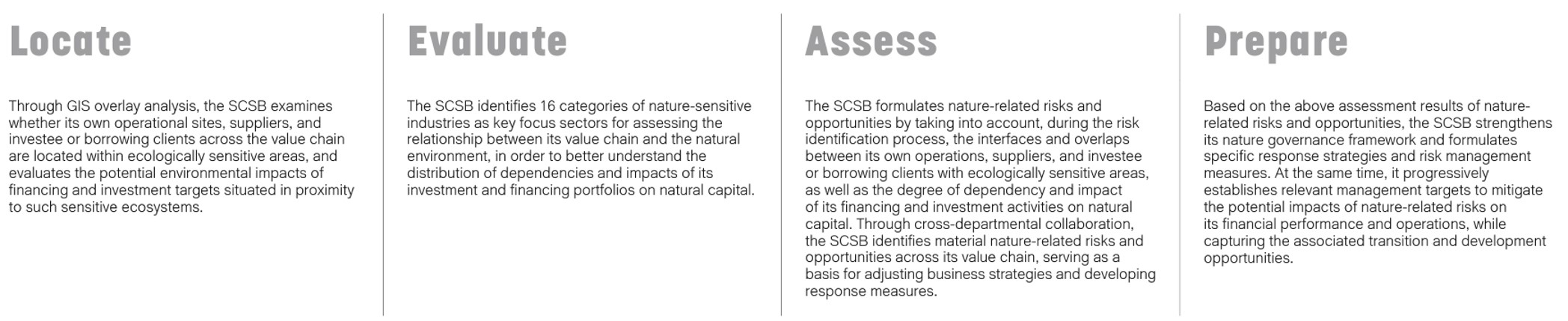
The SCSB’s process for identifying and managing nature and climate-related risks and opportunities is as follows:

The SCSB follows the TNFD Guidelines for the Financial Sector and adopts the LEAP methodology (Locate, Evaluate, Assess, Prepare) to systematically identify nature-related risks and opportunities across its value chain and operating activities. The assessment results indicate that 17.34% of the SCSB's investment portfolio is exposed to nature-sensitive industries, while the proportion for the lending portfolio is 18.49%. Within the investment portfolio, clients show high dependency on water resources and exert significant impacts on water consumption, greenhouse gas emissions, and solid waste generation. The dependency profile of the lending portfolio is similar to that of the investment portfolio; however, its potential impacts on terrestrial, freshwater, and marine ecosystems are more pronounced at the ecosystem level. The assessment of the interface between the value chain and natural ecosystems indicates that the SCSB's own operations, supplier locations, and financing and investment activities do not cause direct impacts on the natural environment. The findings have been used as an important basis for strengthening the SCSB's nature-related governance and for refining its risk management and investment and financing strategies. For the complete LEAP assessment results, quantitative analysis, and annual highlights of nature-related management, please refer to Chapter 2.4 of the SCSB's 2025 Climate and Nature-related Risk Management Report.
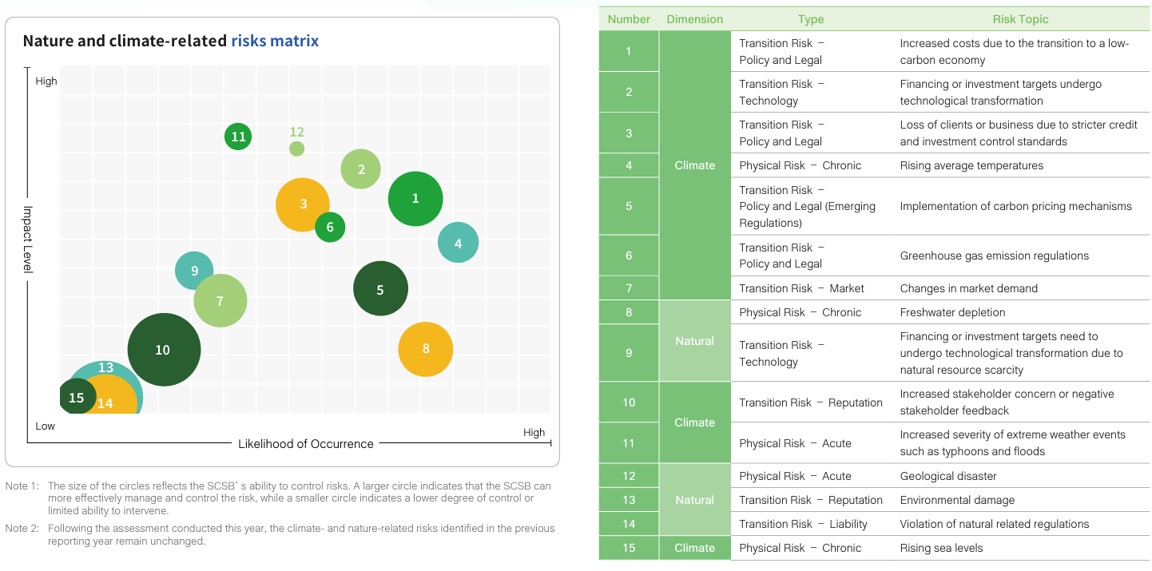
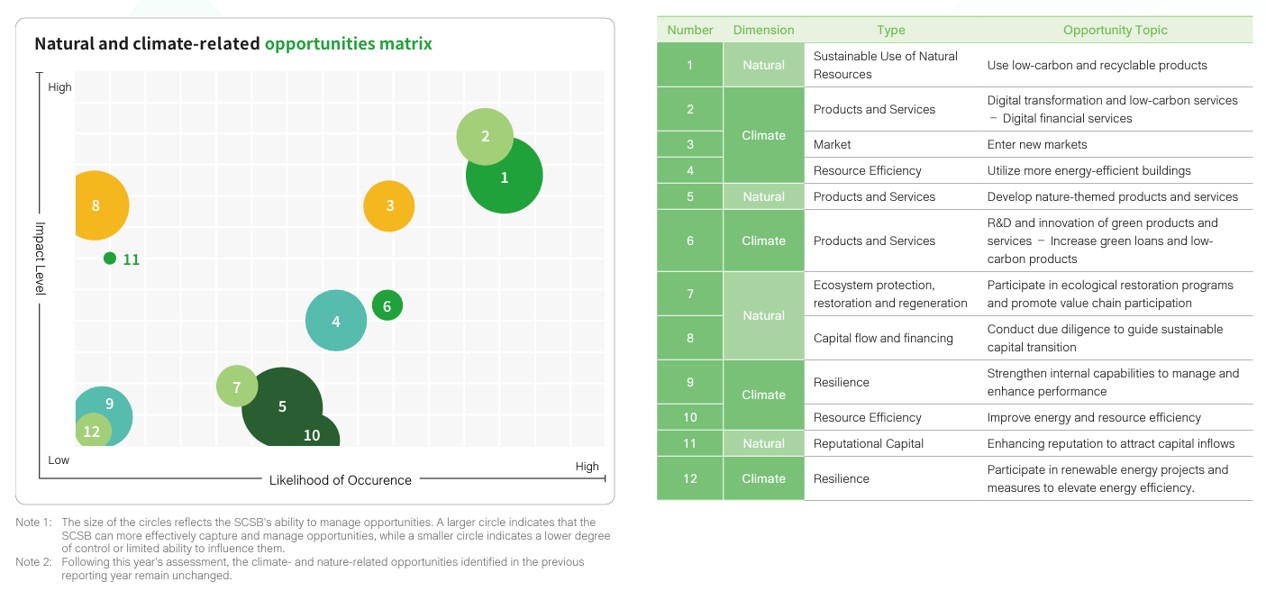
The SCSB formulates nature- and climate-related risk and opportunity issues annually and submits corresponding recommendations and reports to the Board of Directors. Every two years, each department conducts a regular identification of nature- and climate-related risks and opportunities to ensure that major decisions can take into account timely changes in both internal and external environments and trends. When assessing nature- and climate-related risks and opportunities, all departments must follow consistent evaluation standards and definitions. Assessments are based on the likelihood of occurrence, impact level, and expected time of occurrence to ensure the objectivity and comparability of the results. The scope of impact is defined across the value chain as upstream (suppliers), midstream (the SCSB's operations), and downstream (clients and consumers). The time horizon is categorized as short term (within 1 to 2 years), medium term (3 to 5 years), and long term (more than 5 years). Likelihood of occurrence and impact level are also key indicators, both assessed using a five-level scale: High, Moderately High, Medium, Moderately Low, and Low. All departments are required to comprehensively consider the potential negative impacts of risks or the benefits of opportunities, along with their likelihood of occurrence, and analyze the resulting effects on business operations and financial performance. Upon completion of the evaluation, the SCSB prioritizes risks and opportunities based on their level of impact, and determines the material nature- and climate-related risks and opportunities after consideration of the associated trade-offs.
The result of natural and climate risk and opportunity identification in 2025 is as follows:
Impacts and Strategies for Risks and Opportunities
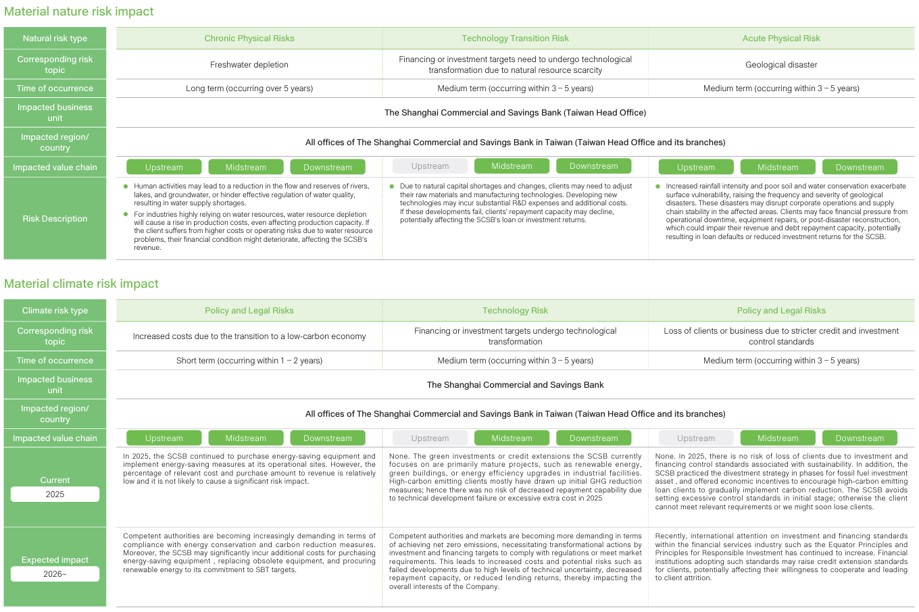
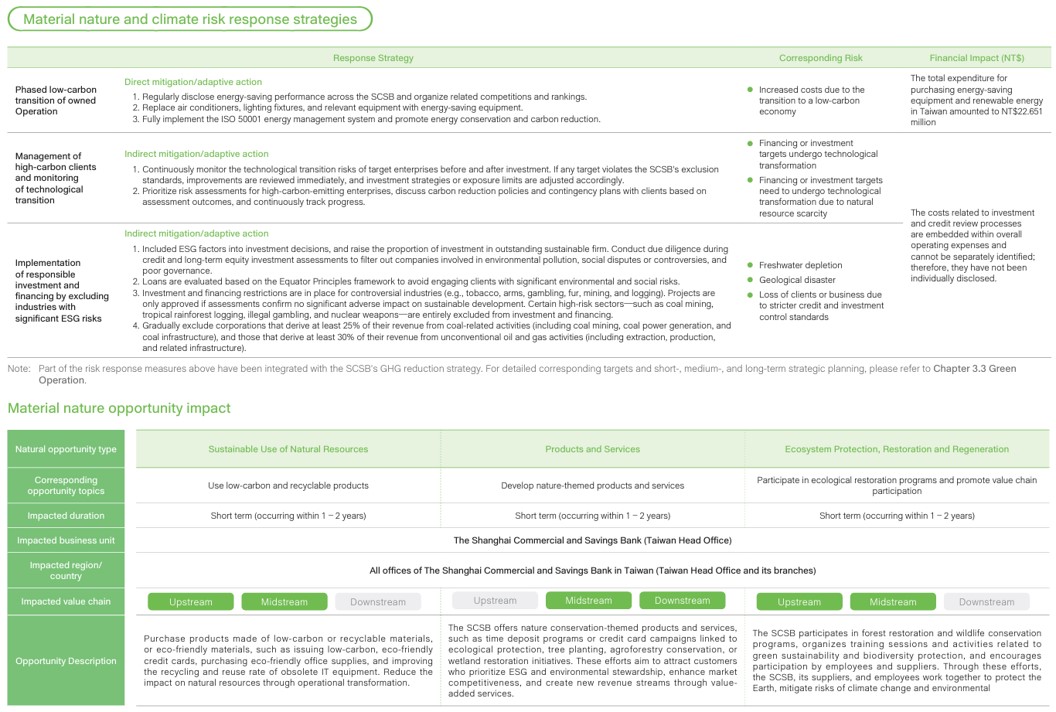
For identified critical nature and climate topics, corresponding response strategies and targets are formulated, and qualitative or quantitative KPIs are set to ensure that the management mechanism is concrete, measurable, and trackable. In addition, the SCSB monitors the progress of relevant strategies year by year, and checks how the financial resource is invested in and target achievement. In the meantime, the SCSB conducts rolling adjustments based on the operating development to increase operational resilience and the effectiveness of risk management. The following section outlines the SCSB's assessment of the impacts posed by major nature- and climate-related risks and opportunities identified for the year, along with the corresponding response strategies
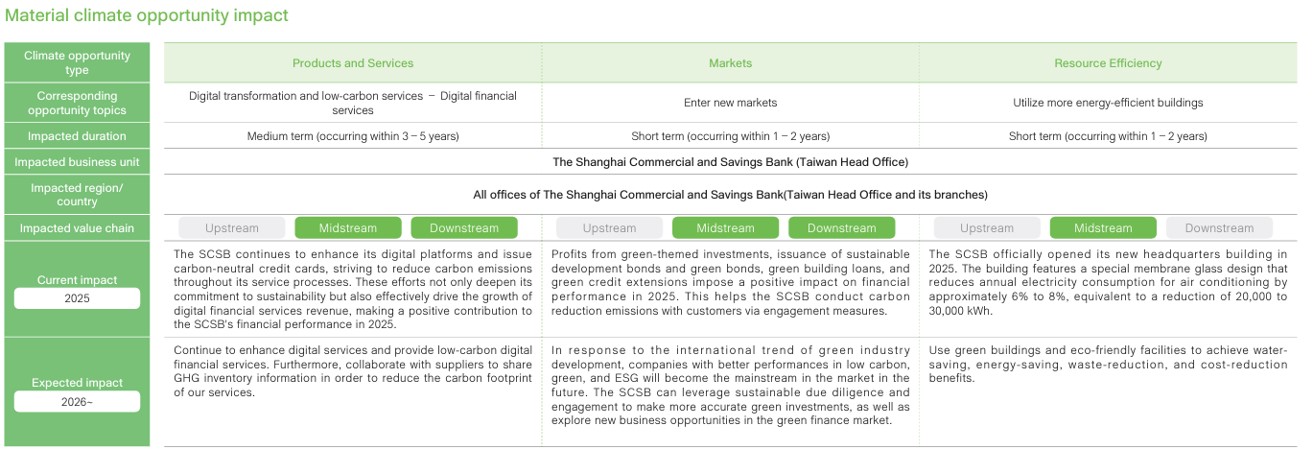
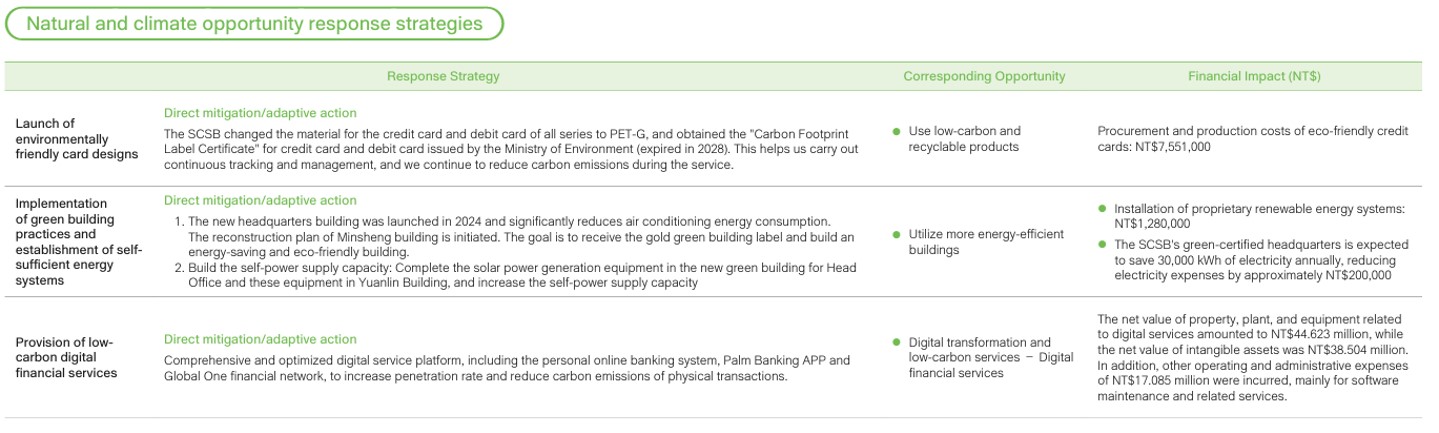
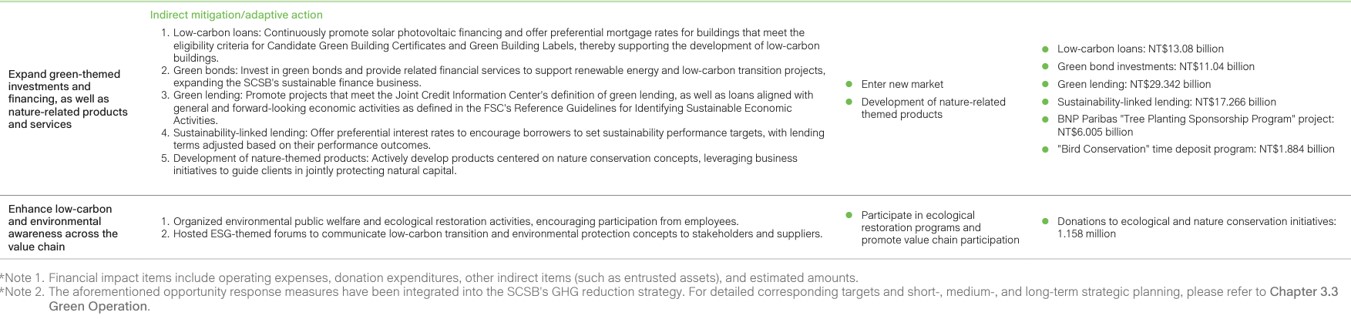
Summary of financial impact associated with risk and opportunity
To strengthen risk management and assess the allocation or impact of financial resources, the SCSB has preliminarily identified the direct financial impacts arising from critical risks and opportunities, as well as the related expenditures and amounts resulting from corresponding response strategies. These items have been mapped to relevant accounting line items in the income statement, balance sheet, and cash flow statement, enabling clearer identification of how material risks and opportunities may affect the SCSB’s financial position, performance, and cash flows.
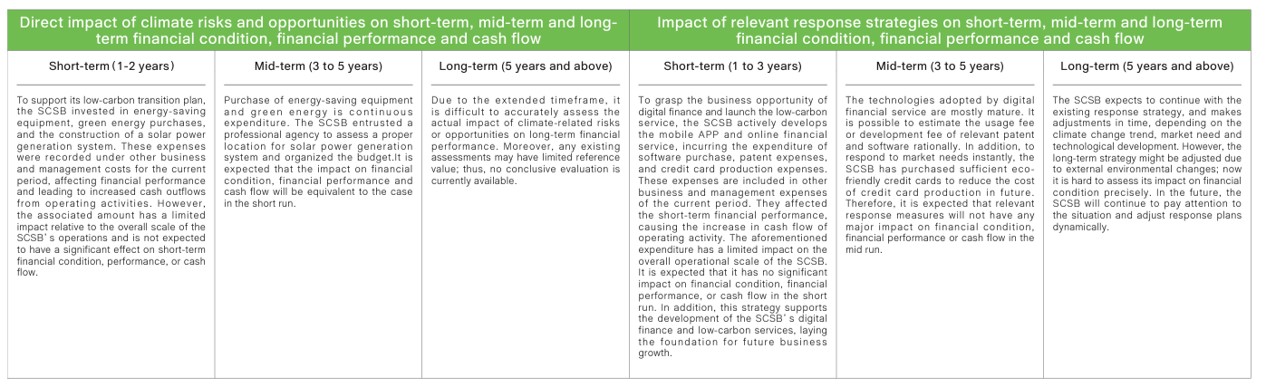
Climate Scenario Analysis
To reflect the impact of climate risks on the SCSB, a scenario analysis is conducted to assess the severity of potential impacts on each business area in the event of physical climate risks and transition risks. The SCSB used the "Representative Concentration Pathways" 1 (RCPs) from the Assessment Report 5 (AR5) of the Intergovernmental Panel on Climate Change (IPCC) to project the climate scenario. The scenario analysis will help the SCSB to develop appropriate risk management strategies and responses to potential impacts, to enhance its climate resilience.
Scenario Analysis of Self-owned Location
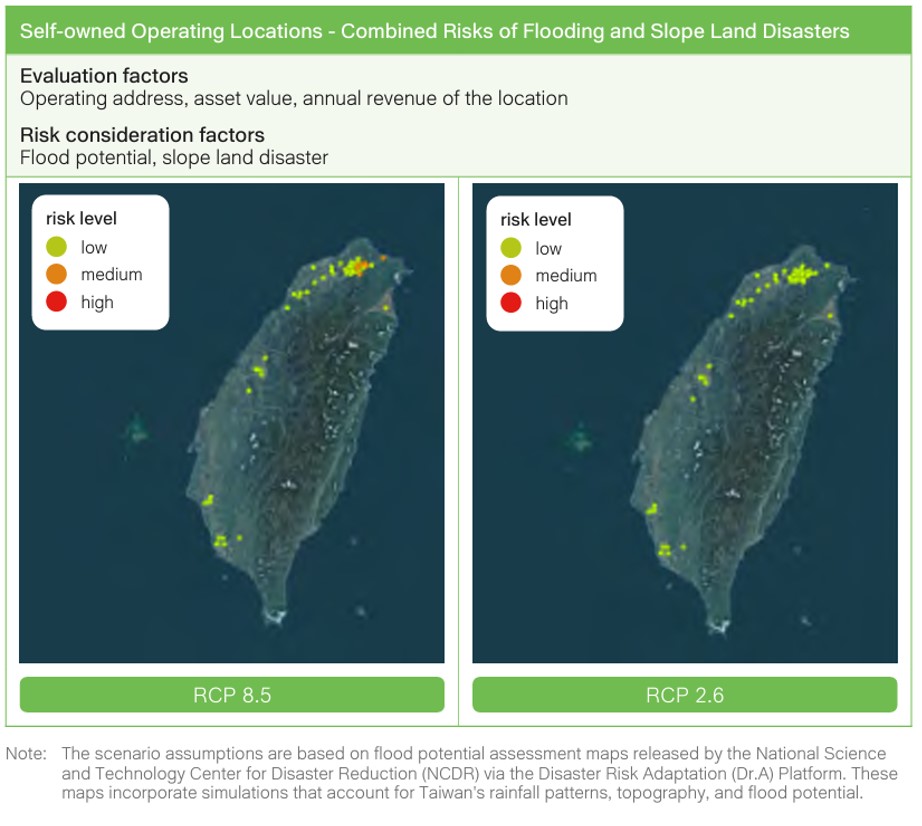
To understand the possible impacts of physical risks on the SCSB's site assets , the SCSB conducts a physical risk assessment for each business locations. The SCSB utilizes a risk sensitivity map based on physical risk severity levels of 1 to 3 (extreme rainfall frequency within 24 hours), vulnerability levels of 1 to 10 (flood potential, slope disasters), and exposure levels of 1 to 10 (exposure amounts). Using RCP 8.5 and RCP 2.6 as the hypothetical scenarios for risk impact, a risk analysis of the SCSB´s assets was carried out for the mid-century period (2036–2065), and corresponding climate risk management strategies were also proposed.
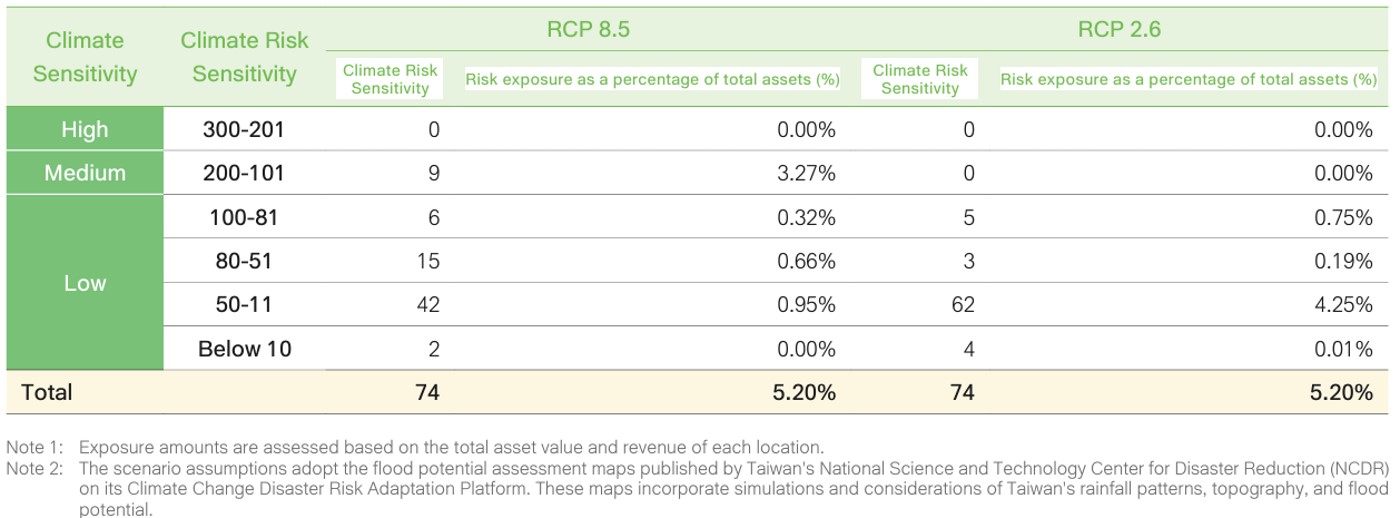
Performed under the most severe conditions of RCP 8.5, and the results showed that none of the locations were highly sensitive, 9 (12.16%) were categorized as medium-sensitivity locations, while the remaining 65 (87.84%) were considered low-sensitivity locations, including 44 locations (59.46%) with a risk sensitivity value below 50. When the Value of the SCSB premises under risk scenarios, the SCSB's total exposure to physical risks is approximately 5.20% of the total asset value of its locations, the exposure value of medium-sensitive locations is approximately 3.27% of the total asset value of all locations, and the exposure value of low-sensitivity locations (including locations with a sensitivity of 1 to 100) represents approximately 1.93% of the total asset value of Among these, locations with sensitivity scores below 50 account for approximately 0.95% of the total asset value of all locations.
Before implementing any management measures, the risks driven by changes in physical climate parameters or other climate-change related developments were assessed based on scenario analysis. Under the“RCP 8.5”scenario in 2036, if SCSB’s owned operations were disrupted due to climate hazards such as landslides or flooding, the estimated financial impact in terms of revenue and asset damage would amount to NT$1,290,253,589.
To mitigate the impact of physical risks, the SCSB has developed a phased low-carbon transition plan for its owned operations, aiming to help slow the pace of global warming. The plan includes the adoption of energy-efficient equipment, the verification of energy management systems, and the expansion of renewable energy use. The estimated cost of implementing these management measures is NT$22,651,000.
Response Strategy and Climate Resilience Evaluation
According to the analysis results, the SCSB´s operating locations in Taiwan are not exposed to significant physical risks. However, to ensure effective control of the impact of physical risks, various operating locations have established response plans and disaster prevention protocols, as well as data backup readiness to minimize the damage of short term natural disasters and maintain operational continuity in the aftermath of disasters.
Scenario Analysis of Supplier Locations
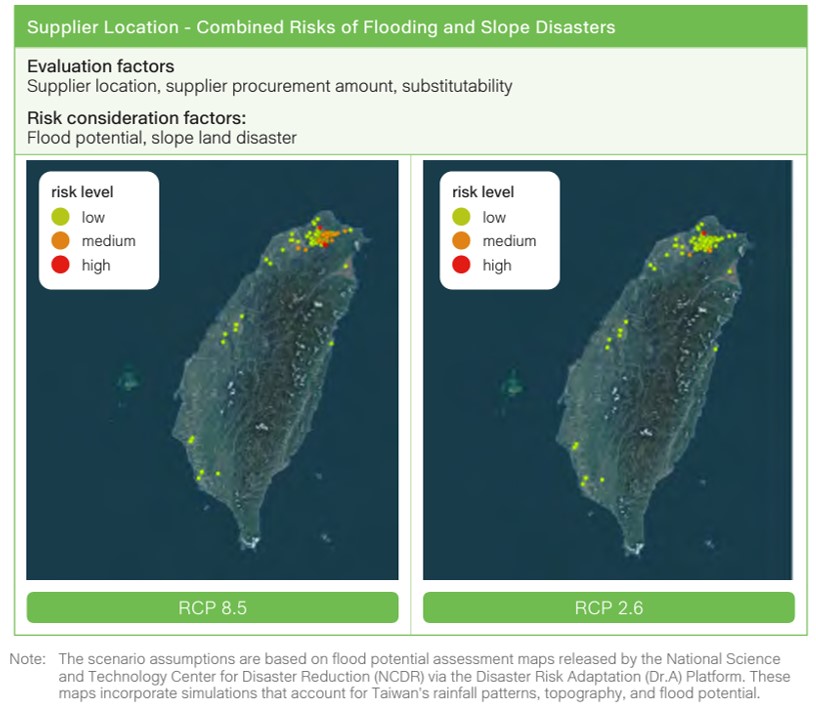
The SCSB used RCP 8.5 and RCP 2.6 as the hypothetical scenarios for risk impact, taking into consideration the combined risks of flood potential and slope land disaster, categorizing climate sensitivity into three levels: high, medium, and low. A higher climate sensitivity represents a greater threat of climate disasters. Based on this, an analysis of the exposure situation for 258 suppliers in Taiwan for the mid-century period (2036–2065) was conducted in 2025.
Analysis Outcome of Supplier Locations
According to the scenario evaluation under the condition of RCP 8.5, most of the SCSB's 258 suppliers have medium to low climate sensitivity. Together, they accounted for 98.19% of the SCSB's overall procurement amount in 2025. There were only three suppliers with high climate sensitivity, accounting for 1.81% of the procurement amount
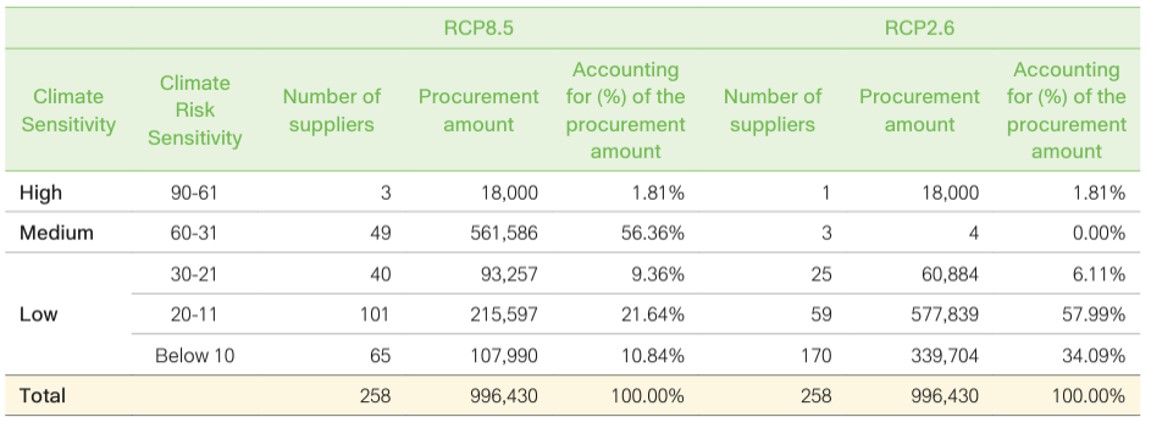
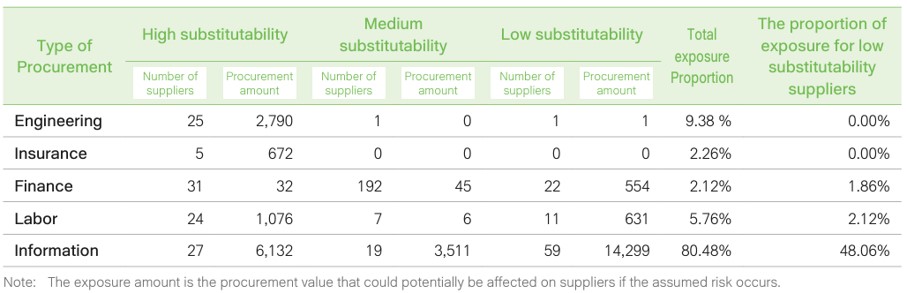
In addition, to understand the impact of physical risks on suppliers, the SCSB assessed how different types of suppliers were affected by physical risks under the RCP 8.5 scenario. The SCSB also performed substitutability analyses on various suppliers, which were categorized into three levels, namely high substitutability (other suppliers can be found within a month), medium substitutability (other suppliers can be found within three months), and low substitutability (other suppliers can be found more than six months). Suppliers classified as low substitutability are primarily concentrated in the information technology and engineering categories, accounting for 48.06% of the exposure. Most of the SCSB’s IT and engineering suppliers are long-term partners. Although similar vendors are not scarce or difficult to find, these suppliers are generally categorized as low substitutability due to established working relationships and the need for operational continuity, resulting in a higher proportion. A review of these suppliers’ climate risk sensitivity shows that most fall within the medium to low risk range. Overall, the SCSB's internal assessment indicates that the impact of supplier-related risks remains limited.
Response Strategy and Climate Resilience Evaluation
To strengthen resilience, the SCSB has established a list of potential alternative suppliers for those with low substitutability, in order to address the risk of supply disruptions caused by sudden climate-related disasters and to ensure that alternative partners can be promptly engaged. Although the current assessment indicates that the impact of the supply chain on the SCSB's operations is minimal, the SCSB will continue to monitor the stability of supplier deliveries and, where appropriate, identify and develop new suppliers to enhance substitutability. In addition, to improve suppliers' preparedness for climate-related risks, the SCSB plans to hold supplier conferences to promote awareness of climate risk prevention measures and disaster response knowledge, and to advise high-risk suppliers to install flood prevention facilities..
Scenario Analysis of Lending and Investment Portfolios
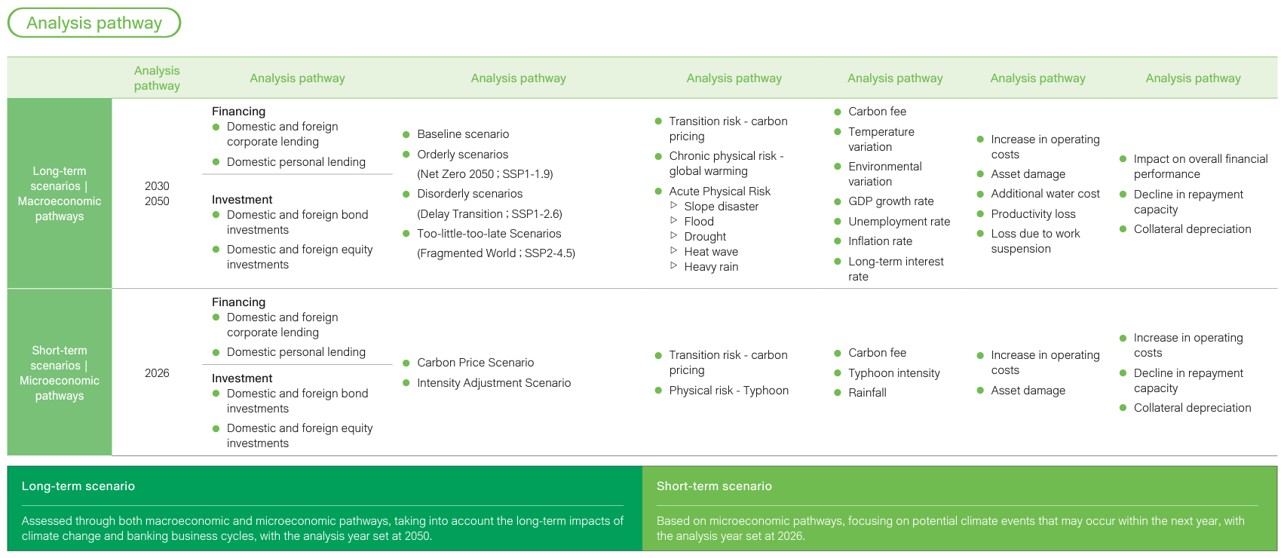
To ensure objective evaluation and continually monitor the impact of climate change risks on business and operations, the SCSB abides by the "Planning for Climate Change Scenario Analysis by Domestic Banks" (hereinafter referred to as the "operational plan"). The SCSB analyzes the potential long- and short-term risk impacts on bankbook positions 2— including domestic and foreign credit, bonds, and equity investments — as of the end of 2025, under various climate scenarios The SCSB referred to the methodology outlined in the operational plan, employing macroeconomic pathways (e.g. GDP, bank lending rates, inflation rates, and unemployment rates) and microeconomic pathways (including revenue losses, collateral losses, and additional costs) to conduct a comprehensive analysis. Furthermore, the SCSB incorporated a probability of Recovery Given Default estimation model to carry out the valuation. Therefore, the SCSB assesses financial resilience of the client in different climate scenarios, further assesses the potential impact of changes in loan repayment ability and collateral value on credit risk and revenue.
Note1:The expected losses under each scenario are subject to inherent uncertainties and do not represent actual future outcomes. Caution should be exercised when using or interpreting the analysis results, given their limitations.
Note2:The scope of analysis is based on the SCSB’s individual entity, including the operations of both domestic and overseas branches as well as offshore banking unit(OBU).
The scenario analysis method and assessment result are as follows:
Long-term scenario
The long-term scenarios include the baseline scenario, orderly transition, disorderly transition, and passive transition, and adopt the scenario data released by the Network of Central Banks and Supervisors for Greening the Financial System (NGFS) in 2023 as the basis for socioeconomic factors. In addition, the Shared Socioeconomic Pathways (SSPs) and Representative Concentration Pathways (RCPs) from the Sixth Assessment Report (AR6) of the Intergovernmental Panel on Climate Change (IPCC) are referenced as the basis for setting environmental factors. The analysis covers both transition risks and physical risks:
- Transition riskThese primarily measure the impact of carbon pricing on corporate revenues, assuming that all domestic enterprises are subject to carbon fees, and estimating the potential reduction in operating revenue.
- Physical risk: These assess the impacts of extreme climate events on corporate financial performance and operations, including production losses caused by heavy rainfall, asset damage and restoration costs resulting from flooding and landslides, additional water costs arising from drought, and the effects of heatwaves on productivity and corporate revenues
Long-term Scenario Analysis Outcome
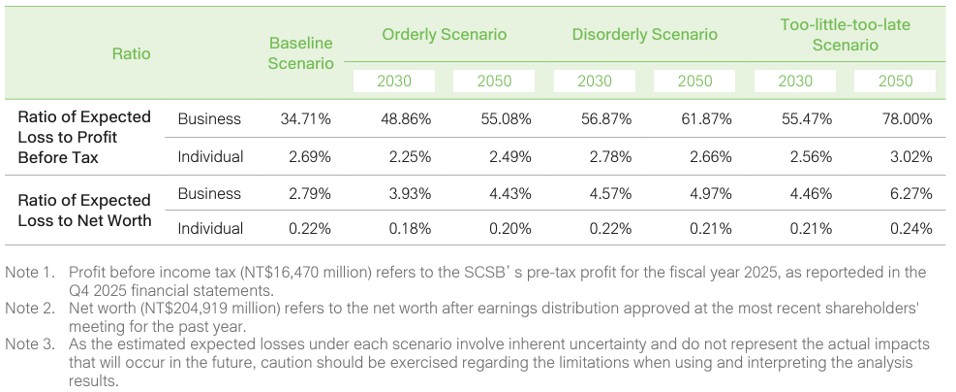
Under the three climate transition scenarios—Orderly, Disorderly, and Too-little-too-late scenarios—the SCSB's expected loss amounts for general corporate clients by 2050 account for 4.43%, 4.97% and 6.27% of the baseline year (2025) net worth, respectively. For individual clients, the expected loss amounts under the same scenarios represent 0.20%, 0.21%, and 0.24% of the baseline year net worth. Among the three scenarios, the Too-little-too-late scenarios for 2050 is expected to result in the highest expected loss, with the combined expected loss for general corporate and individual clients accounting for 6.54% of the baseline year net worth.
Before implementing any management measures, the estimated financial impact of risks driven by changes in regulation was assessed based on the results of scenario analysis. Under the "Too-little-too-late scenario" in 2030, if corporate clients are required to pay carbon fees due to regulatory changes, the SCSB’s investment and financing profit may decline by approximately 55.47% of the profit before income tax in the baseline year. Based on the baseline year profit before income tax (NTD 16,470 million), the estimated financial impact would amount to NTD 9,135,909,000.
Short-term scenario
In a short-term scenario, it is assumed that the climate impact incident does not affect macroeconomy. The scenarios adopted include carbon fee scenario, intensity adjustment scenario. The analyzed risk types are as follows:
- Transition risk: The analysis adopts a carbon fee scenario aligned with the long-term pathway, focusing on evaluating the short-term impact of carbon pricing on the company.
- Physical risk: Based on a projected atmospheric environment with a 2。C increase in global temperature, the assessment estimates potential losses from work stoppages and asset impairment if a typhoon occurs within the next year.
- Adjusted Intensity Scenario: Using Typhoon Morakot as a reference, rainfall statistics are adjusted based on climate change scenarios to assess the risk impact of typhoons.
Short-term Scenario Analysis Outcome
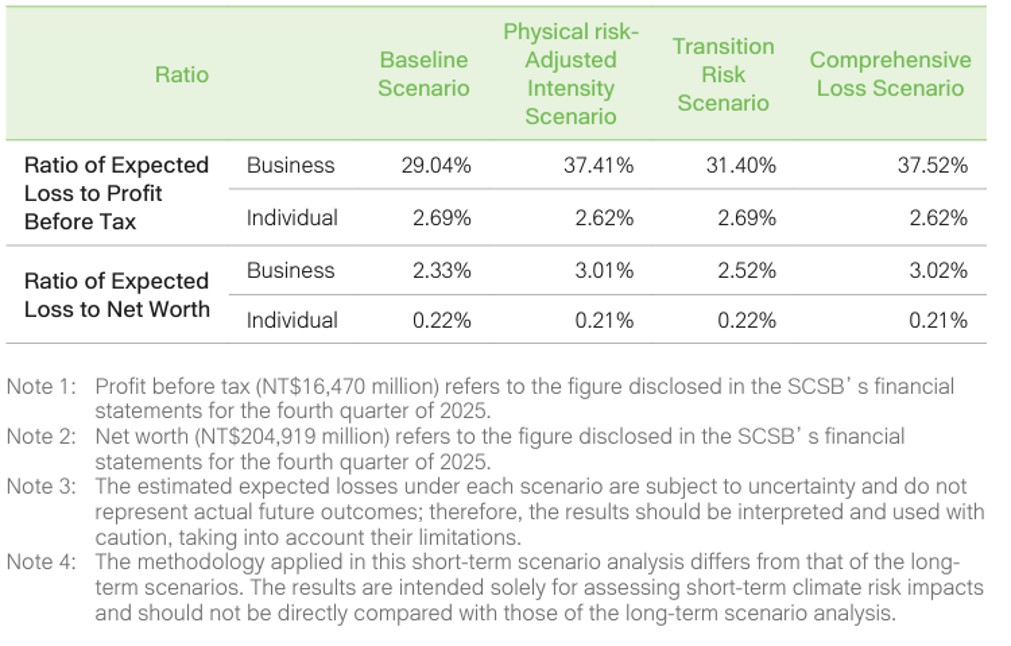
Under the short-term scenarios—Intensity adjustment, Transition risk, and Comprehensive Loss-the SCSB's expected loss amounts for general corporate clients by 2050 account for 3.01%, 2.52% and 3.02% of the baseline year (2024) net worth, respectively. For individual clients, the expected loss amounts under the same scenarios represent 0.21%, 0.22% and 0.21% of the baseline year net worth. Among the three short-term scenarios, the Comprehensive Loss scenario for 2050 is expected to result in the highest expected loss, with the combined expected loss for general corporate and individual clients accounting for 3.23% of the baseline year net worth. The SCSB has conducted regular climate scenario analyses of both physical and transition risks in accordance with the NGFS scenario framework, and assesses the potential impacts of climate change on its investment and financing assets, operational sites, and financial performance across different time horizons. The results serve as an important basis for climate risk management and strategic planning. Based on the scenario analysis outcomes, the SCSB has incorporated relevant risks into its credit and investment decision-making processes, and formulated management targets for green energy and ESG-related lending, digital services, energy use, and carbon emission reduction. These targets are implemented by the respective responsible units in accordance with annual plans and are subject to regular monitoring. For certain short-term targets that were not achieved as originally planned, the SCSB has reviewed the underlying causes and proposed improvement measures, including incorporating relevant targets into subsequent annual KPIs, strengthening monitoring mechanisms, and dynamically adjusting management strategies, in order to ensure continuous enhancement of climate risk management and transition actions. For detailed information on the 2025 targets and their achievement status, please refer to "CH4.3 Target Achievement Status.
To mitigate the impact of transition risks, the SCSB has formulated a decarbonization strategy for its investment and financing assets, aiming to reduce the carbon exposure of its portfolio. The strategy includes incorporating ESG risk assessments—covering environmental and nature-related factors—into the due diligence process. To implement the strategy, around 30 frontline employees have been assigned to perform risk assessments. Based on an average annual salary of NT$1,450,000 per non-managerial employee in 2024, the estimated cost of these management measures is NT$43,500,000.
Nature-related Dependencies and Impact Analysis
As a financial institution, the SCSB not only plays a key role in supporting industrial and economic development, but also acts as a primary entity affected by changes in the market environment. To ensure the stability of the financial system and to fulfill its responsibility in guiding sustainable industry development, the SCSB first adopted the Taskforce on Nature related Financial Disclosures (TNFD) framework in 2023 to conduct nature-related risk assessments. In 2024, the SCSB further enhanced its assessment approach by expanding the scope of ecological sensitivity mapping and identifying material nature-related risks and opportunities. Through these efforts, the SCSB aims to strengthen the management of nature-related risks, implement due diligence for clients located in highly sensitive ecological areas, and promote the sustainable coexistence of the environment, nature, and the economy across its value chain.
Spatial Assessment of Value Chain Intersections with Natural Ecosystems
For all self-owned locations, supplier locations, and investment and financing clients in Taiwan, the SCSB utilized the "National Ecological Network Map" released by the Forestry and Nature Conservation Agency, Ministry of Agriculture, to analyze "Biodiversity Hotspots| based on overlay and estimation of the distribution data of 42 mammal species, 110 bird species, 25 amphibian species, 48 reptile species, and 82 insect species in Taiwan. Each hotspot is defined by a 1×1 km grid, and the diversity of various biological populations within the hotspot area ranks in the top 5% of Taiwan. To further understand the value chain's impact on the natural environment, in 2025, the SCSB expanded the scope to include regional conservation corridors in its analysis. The dataset includes 45 regional conservation corridors, including hills, rivers, plains, coasts, and offshore islands. These are fragmented ecosystems and priority conservation sites in all domestic upstream, midstream, and downstream areas. To gain a complete understanding of the distance between the SCSB's value chain activities and biodiversity hotspots and regional conservation corridors, the SCSB assessed whether its self-owned locations, supplier locations, and investment and financing clients were located within a 1,000-meter radius of biodiversity hotspots and regional conservation corridors. The analysis outcome is shown below:
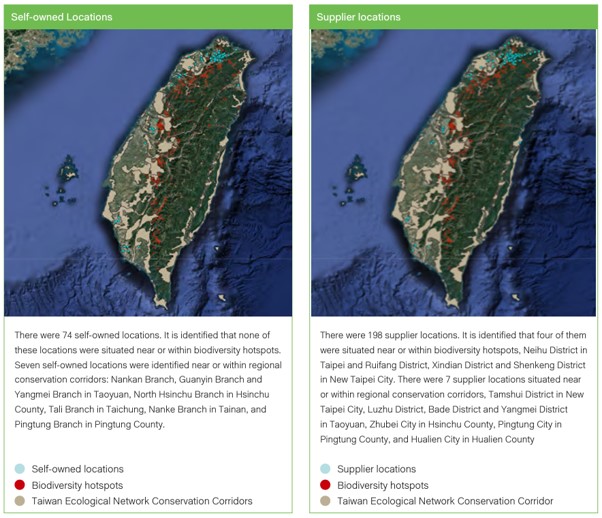
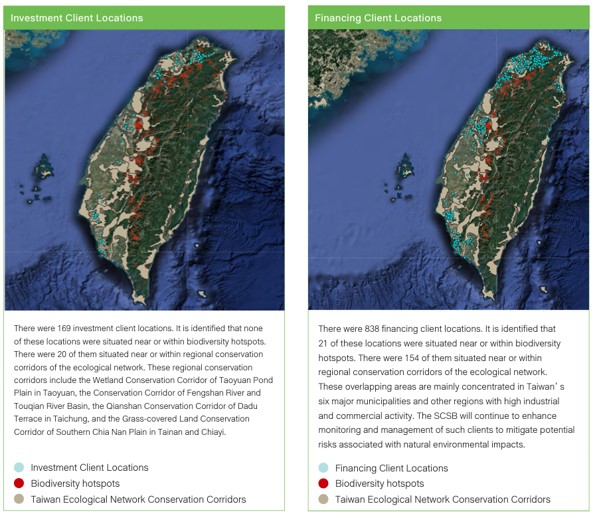
Based on the overall assessment, the SCSB's value chain—including self-owned locations, suppliers, and investment and financing activitieshas not caused direct impacts on the natural environment. However, given that some locations are near ecologically sensitive areas and certain investment or financing clients belong to nature-sensitive sectors as defined by TNFD, these cases warrant prioritized monitoring and enhanced management.
Performance of Natural Risk Management
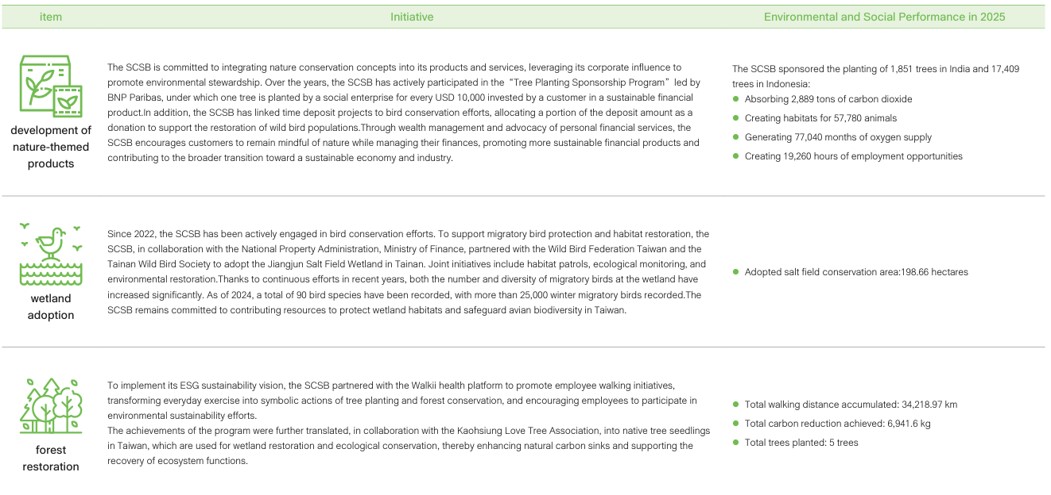
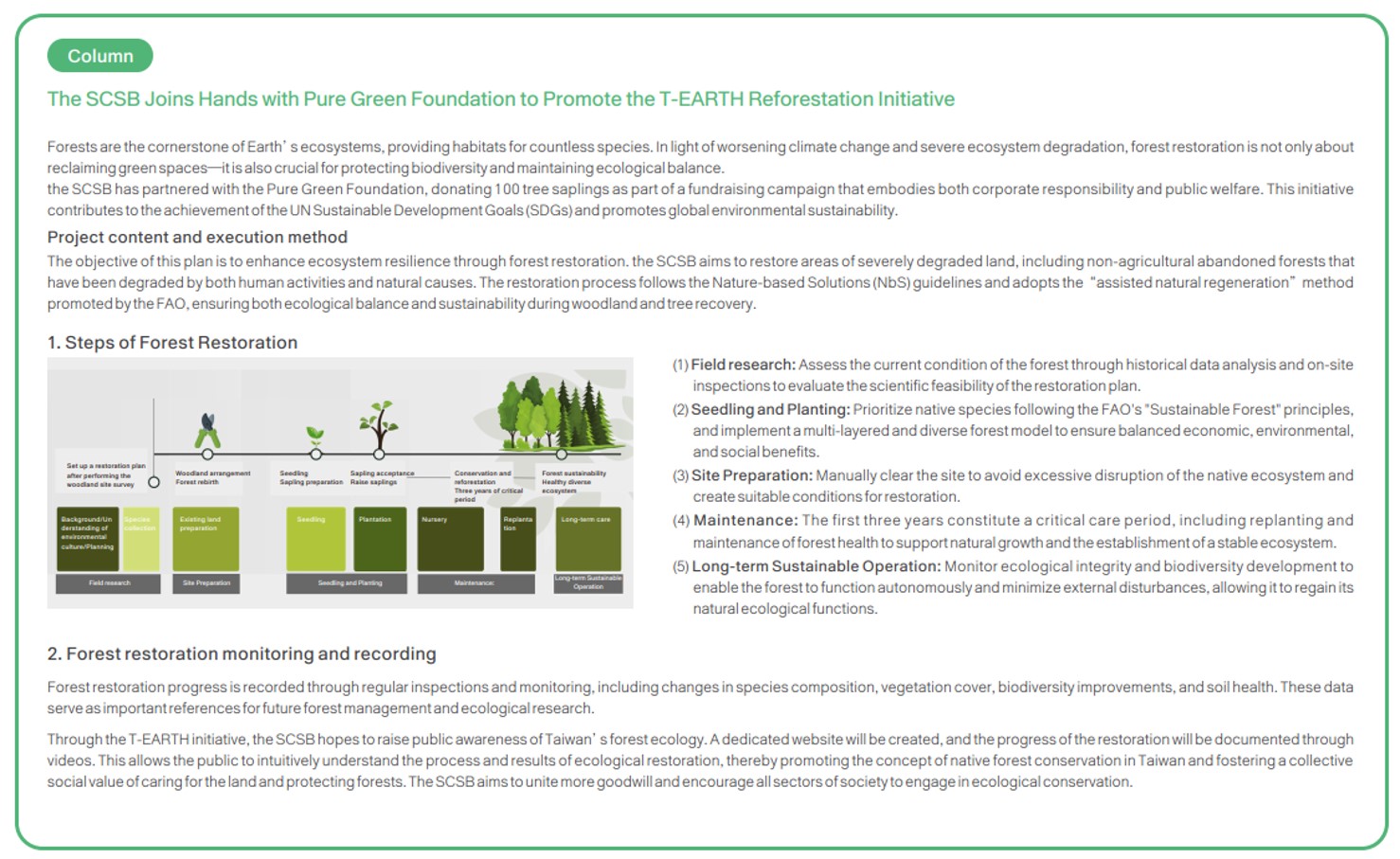
To strengthen the management of natural related impacts, the SCSB has implemented relevant measures across various segments of its value chain to reduce environmental burdens and preserve ecosystem integrity. In recent years, the SCSB has actively advanced natural related initiatives such as "public welfare participation", "development of nature-themed products", "wetland adoption", and "forest restoration" aiming to contribute to ecological restoration and promote environmental sustainability with a diverse range of actions. The performance of these nature-focused initiatives in 2025 is summarized as follows:
Integrated Risk Management Framework
The SCSB has established an integrated risk management framework based on the "Risk Management Policy of Shanghai Commercial and Savings Bank". This framework encompasses critical risk categories such as market, credit, country, operational, assetliability, and climate-related risks. Climate risks, international ESG trends, and annual materiality assessments are also incorporated into The SCSB's risk identification and management processes. The SCSB continues to develop responsive measures and monitoring mechanisms for emerging risks to enhance overall effectiveness of risk management.
In terms of the risk management framework, the Board of Directors serves as the highest risk decision-making body in the SCSB, and the Risk Management Committee, under the Board, is responsible for the SCSB-wide coordination of risk management matters, while the President oversees the Risk Management Department, which independently executes risk management tasks. Dedicated risk officers are also appointed within each business unit to identify and manage risks specific to their operations. (For details on the SCSB's risk management framework and duties, please refer to Chapter 2.4 Risk Management.)
To further strengthen natural and climate-related risk management, the SCSB has revised its "Guidelines for Nature and Climate Risk Management", requiring all units to incorporate natural and climate risks into their management and evaluation processes. In accordance with the "Three Lines of Defense Framework for Internal Control", the SCSB also conducts climate scenario analyses for key climate risks to assess potential financial and operational impacts, which helps with continuous risk tracking and management, thereby enhancing the SCSB's overall resilience.
Value Chain Risk Management
- Management of Self-Owned Loctions 20The SCSB undergoes external verification for ISO 50001 Energy Management System and ISO 46001 Water Efficiency Management System annually. In accordance with system procedures, the SCSB regularly collects internal and external energy- and water-related issues, communication records, and meeting documentation to serveas a basis for assessing risks and opportunities. Through the planning and implementation of relevant measures, the SCSB ensures the expected outcomes of the water efficiency management system are achieved, allocates necessary human and financial resources, drives continuous improvement of the system to achieve the SCSB's climate targets under the Science Based Targets (SBT) initiative on schedule.
- Supplier Management The SCSB has adopted the ISO 20400 Sustainable Procurement Guidelines to promote responsible purchasing practices, evaluated suppliers' potential impacts on natural ecosystems and atmospheric environments through ESG self-assessment questionnaires and supplier risk identification processes, and this helps the SCSB avoid engaging with suppliers that may pose significant negative impacts on nature. Meanwhile, the SCSB also regularly holds ESG forums and invites suppliers to participate, actively promoting nature conservation and sustainability among suppliers and stakeholders and strengthening consensus on sustainable development.
- Investment and Financing Business Management The SCSB has established internal guidelines such as the "Responsible Investment Policy" and "Guidelines Governing SCSB's Responsible Lending", as well as supplementary policies including the "SCSB Sustainability-linked Credit Extension Guidelines", "Regulations for Equator Principles Credit Extension", "Natural and Climate Risk Investment Management Policy", and "Sustainable Development Engagement Guidelines". These frameworks require business units to integrate ESG risk assessments such as climate and nature-related factors into the financing and investment assessment process. In accordance with the SCSB's negative screening list and decarbonization targets, sectors that are prohibited or highly controversial are excluded from engagement. For clients previously involved in ESG controversies, business units are required to carefully consider the results of risk assessments, the client's current improvements, and the establishment of remedial action plans. In the case of high-emission enterprises, the SCSB must request that clients propose energy-saving and carbon-reduction measures, and during periodic reviews, the SCSB shall continue to monitor whether clients are fulfilling their commitments to mitigate potential risks, improve sustainability performance, reduce carbon emissions, mitigate potential risks, and improve sustainability performance. If a client violates ESG commitments or breaches lending conditions, the SCSB shall request a concrete corrective action plan and regularly track its effectiveness, to ensure that investment and financing activities do not cause significant harm to the atmosphere or natural capital. (For details on responsible investment and financing initiatives, please refer to Chapter 3.1 Sustainable Finance.)
Indicator and Target
The SCSB fully checks the GHG emissions of all operating locations to show its firm commitment to sustainable operation and net zero transitions. The SCSB integrates carbon emissions data of investment and financing clients, and sets a carbon emission reduction goal that meets the Paris Agreement. At the end of 2024, the SCSB officially submitted target verification application to the Science Based Targets Initiative (SBTi) and passed approval at the beginning of 2025. To realize the carbon reduction pathway, the SCSB has drawn up the carbon reduction plan covering overseas subsidiaries, showing commitment to sustainable development, and continues with carbon reduction steadily.
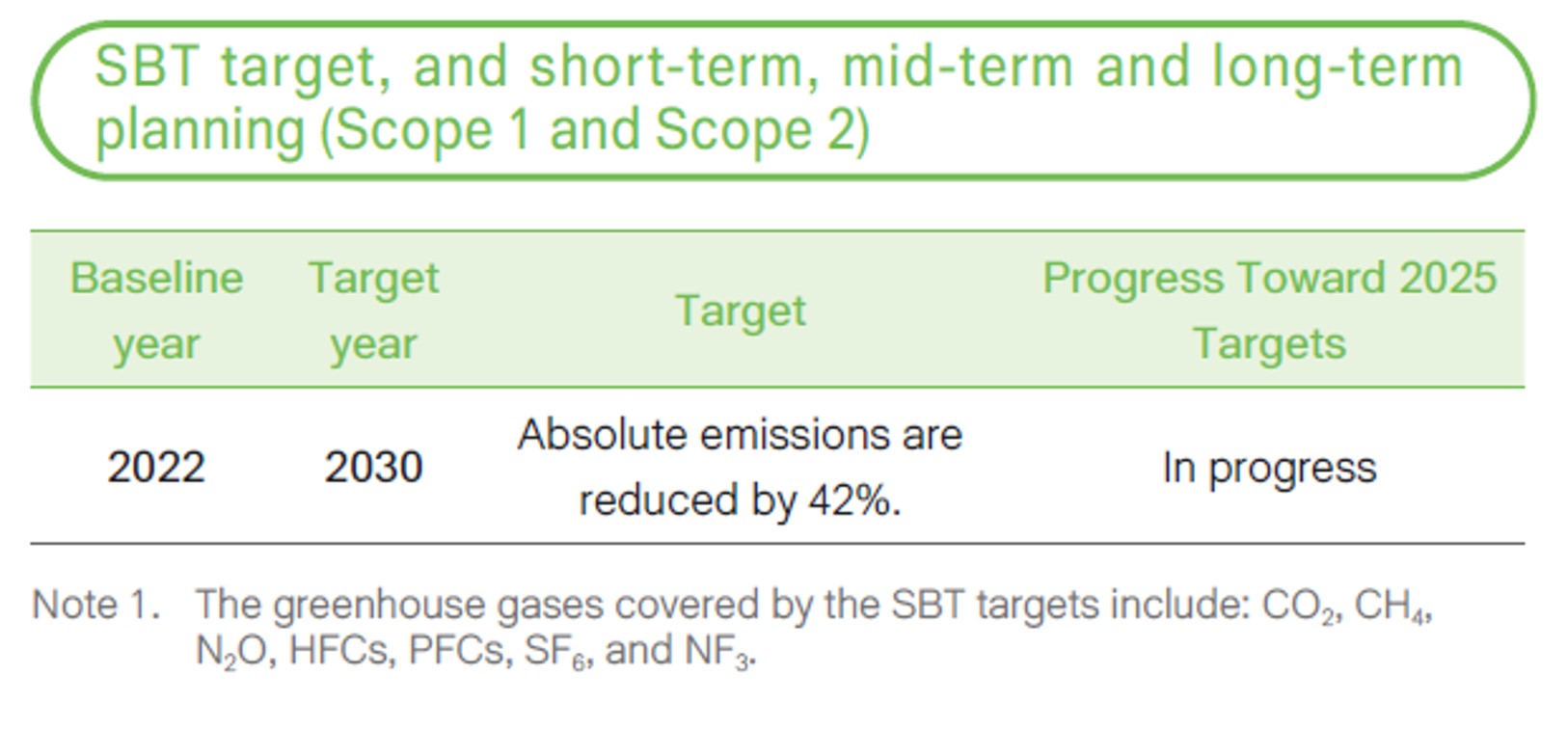
The SCSB has introduced the GHG inventory system and the ISO management system associated with environment, energy, and water resources to ensure that the carbon reduction information of all operating locations and the Head Office is consistent. The SCSB also keeps the management process standardized to take carbon reduction actions effectively. In the short run, our primary reduction strategy is equipment replacement. By introducing highly efficient energy-saving equipment and replacing conventional fuel cars with hybrids or electric cars, carbon emissions during operation are reduced. In the long run, the SCSB will continue to track and optimize the carbon reduction measures by fulfilling the energy resource management target. Meanwhile, the SCSB gradually increases the ratio of renewable energy purchase and carbon offset to effectively fulfill the carbon reduction commitment in the short, medium and long run.
As for investment and financing management, the SCSB has formulated the "Guidelines Governing Nature and Climate Risk Management," and requires the Asset and Liability Management Committee to check credit extension and investment portfolio regularly to ensure that financial risks arising from climate and nature-related changes are aligned with the SCSB’s climate and nature risk management policies. In the meantime, the SCSB actively raises professional talent in climate risk management, optimizes integration of information systems and climate data, and sets up quantitative indicators to enhance management performance. In the short run, the SCSB will start the engagement action with clients, and offer advice for intensity reduction target to clients actively engaging in carbon reduction action, or encourage them to commit to SBTi carbon reduction. In the long run, the SCSB will continue to examine the investment structure, gradually adjust fund allocation, and transfer funds from the high carbon emissions industry to the low carbon emissions industry. The SCSB utilizes the investment influence of the financial industry to help high-carbon emitting enterprises have the determination and will for carbon reduction to gradually realize a low-carbon transition. In addition, as for financing, the SCSB will raise the financing threshold of high carbon emissions industry by increasing the repayment interest rate. For clients not willing to reduce carbon emissions after negotiation, the loan will not be renewed. The SCSB takes action to promote the carbon reduction transition of operations. The SCSB deeply knows that net zero transition cannot be achieved by one corporation only. It is a long-term goal requiring efforts of the entire industry chain. By reinforcing carbon reduction management, adjusting the investment and financing strategy, and promoting the value chain transition, the SCSB will continue to contribute to sustainable development, and work with clients and all sectors to forge ahead to a future of carbon reduction
Environmental and Energy Management Mechanism
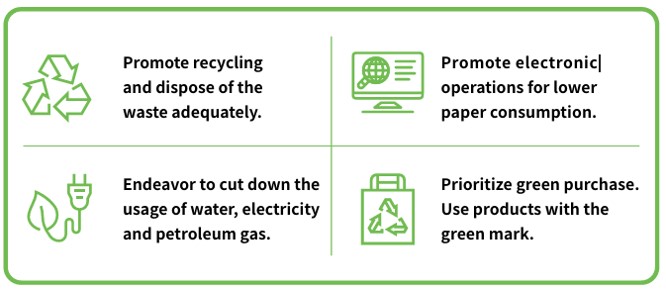
The SCSB has implemented ISO 14001-Environmental Management System, ISO 50001-Energy Management System, and ISO 46001-Water Efficiency Management System. Moreover, the SCSB formulated an "Environmental, Occupational Safety and Health, Energy and Resource Management Policy" to promote various voluntary actions and improvement plans. Through systematic management approaches, achieve to reduce energy and water consumption and minimize waste generation, fulfilling our responsibility towards environmental friendliness. The SCSB regularly collects and studies the law as well as the opinions of internal and external stakeholders to identify environmental and energy-related risks and opportunities that may have a significant impact on the SCSB by following the PDCA cycle, as well as to continue improving environmental and energy performance. As a financial services provider, the SCSB's operational impact on the environment is primarily associated with resource consumption, particularly paper. Through initiatives such as promoting electronic forms, implementing paperless meetings, and encouraging paper reuse and classification, paper usage has been effectively reduced. In terms of direct and indirect energy and resource consumption, the primary resources involved include water, electricity, and fuel for official vehicles. The SCSB has implemented various measures to mitigate environmental impact, including procuring energy-efficient equipment, improving lighting efficiency, installing lighting time-control systems, optimizing corridor lighting, restricting airconditioning usage hours, adjusting water flow, and enforcing vehicle management and regular maintenance policies. In compliance with environmental regulations, the SCSB is committed to appropriately protecting the natural environment and enhancing the efficiency of resource utilization in both its operational activities and internal management practices.
Greenhouse Gas Emission Management
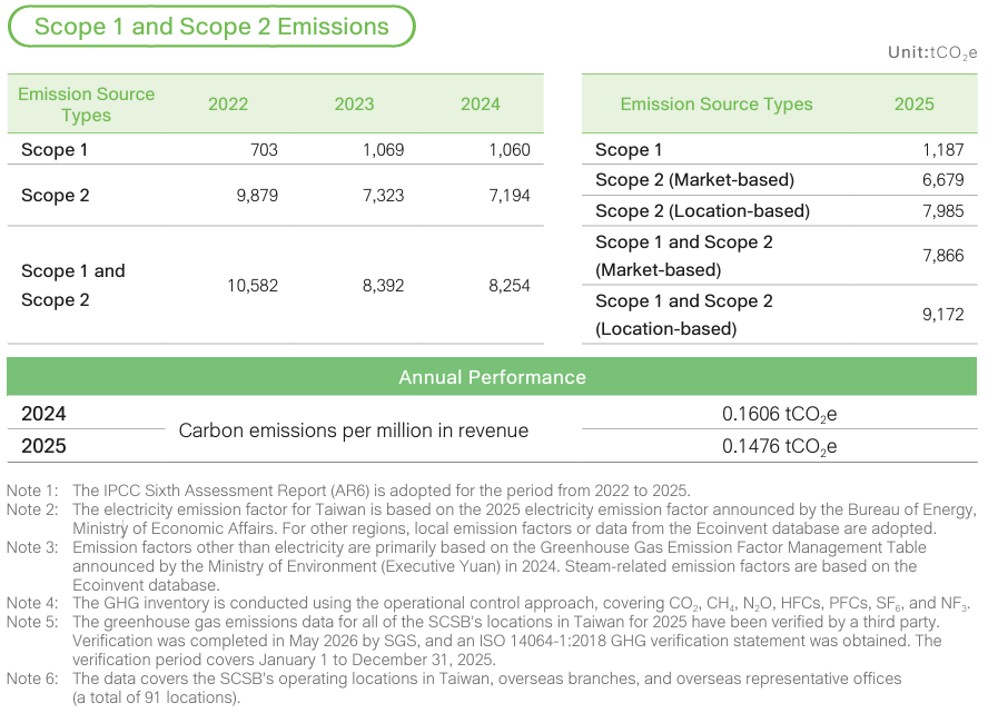
The SCSB conducts greenhouse gas (GHG) inventories in accordance with the ISO 14064-1 international standard, adopting the operational control approach to define organizational boundaries and using the emission factor method for emissions calculation. The emission factors are sourced from the Ministry of Environment's GHG emission factors announced on February 5, 2024, as well as electricity emission factors published by the Bureau of Energy. To achieve its sustainable operations objectives and implement prudent carbon reduction practices, the SCSB has set 2022 as the baseline year and established a target to reduce absolute emissions by 42% by 2030. In 2025, Scope 1 emissions remained at a level similar to that of 2024, while Scope 2 emissions decreased by 7.16% compared to the previous year. The combined Scope 1 and Scope 2 emissions intensity per million in revenue was 0.1476 tCO2 e in 2025, representing a 8.09% reduction from the prior year.
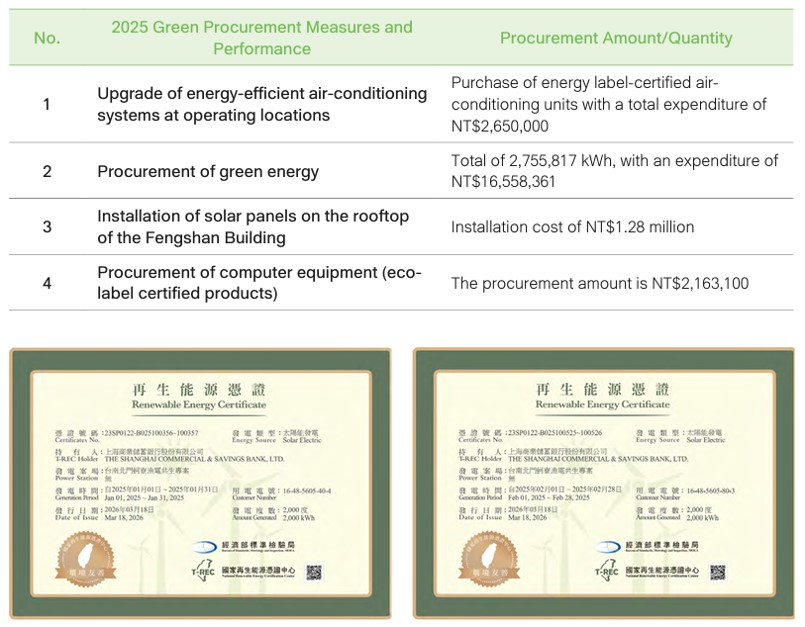
A New Milestone in the Green Energy Transition: Renewable Energy Share Exceeds 10% The SCSB is actively advancing environmental sustainability and demonstrating its commitment to carbon reduction through energy transition initiatives. To date, total renewable energy consumption across SCSB has reached 2,755,817 kWh, accounting for 10.48% of total electricity usage. This achievement is equivalent to a reduction of approximately 1,306.2573 tCO2 e in carbon emissions, based on Taiwan’s electricity emission factor.
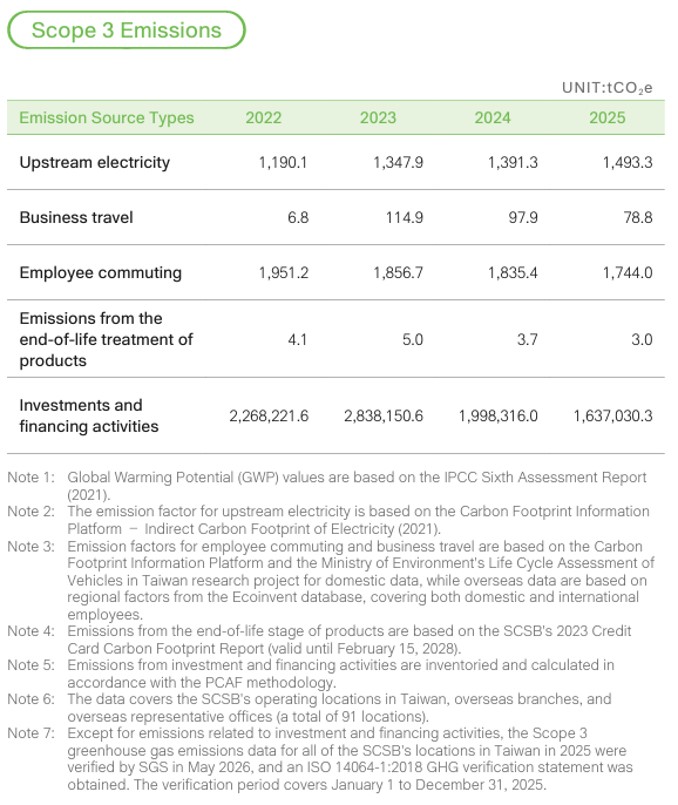
Scope 3- Emissions from investment and financing activities
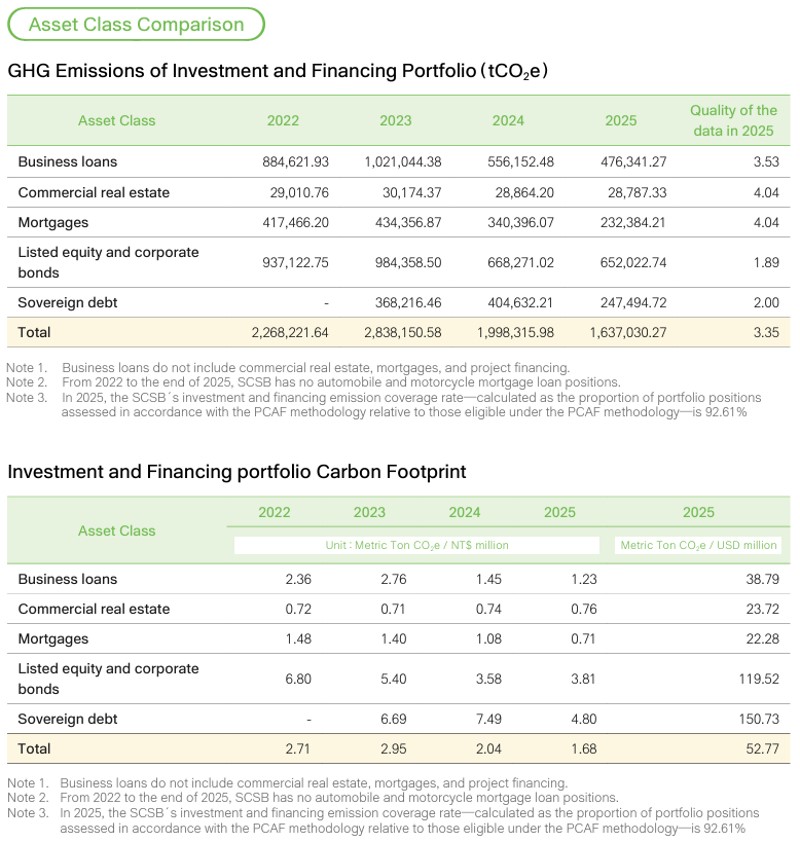
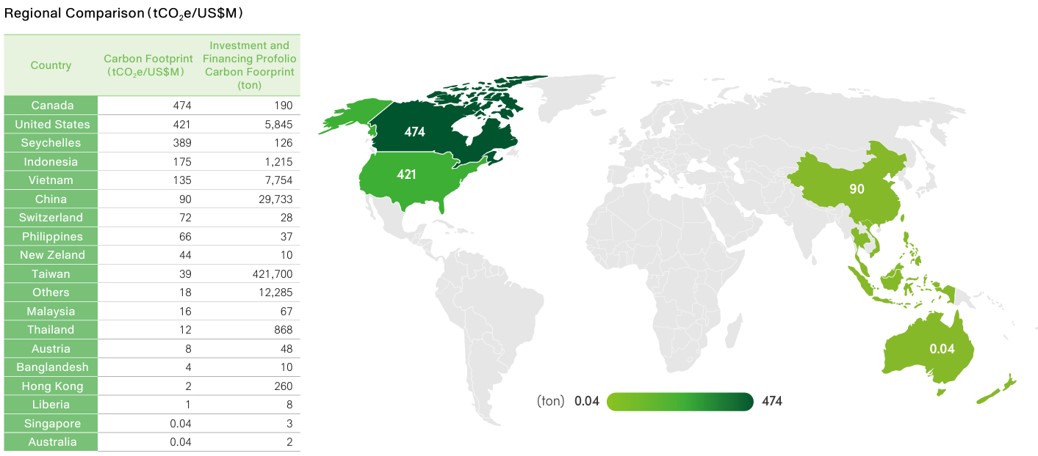
The SCSB calculates the carbon emissions of investment and financing portfolios in accordance with the Partnership for Carbon Accounting Financials (PCAF) methodology. The total carbon emissions of the investment and financing portfolio in 2025 amounted to 1,637,030.27 metric tons of CO2 e. The carbon footprint of the investment and financing portfolio was 1.68 metric tons of CO2 e / NT$ million dollars (approximately 52.77 metric tons of CO2 e / million USD). Most asset categories showed a declining trend in carbon footprint from 2022 to 2025. The SCSB will continue to monitor the carbon emissions of the investment and financing portfolio and assist investment and financing targets in transitioning to low-carbon operations through engagement.
Industry Comparison
In 2025, the carbon emissions from investment and financing portfolio by industry1 showed that the top three absolute carbon emitters were "Power Generation / Petroleum Refining Industry (31.18%)", "Cement Industry (15.44%)"2, and "Chemical industry (9.08%)". Further analysis of the carbon footprint of the investment and financing portfolio revealed that the highest carbon footprint was from the " Cement Industry ", followed by the " Power Generation / Petroleum Refining Industry ", and thirdly the " Chemical industry ", with 1,877.65, 570.11, and 469.83 tCO2 e per million USD, respectively.
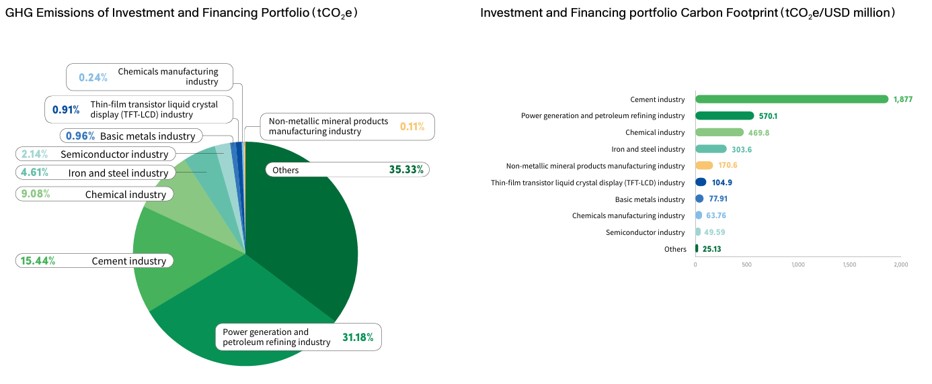
Note 1: The financed emissions data by industry category covers asset classes including listed equity investments, corporate bond investments, and corporate lending.
Note 2 : Greenhouse gas emissions disclosed in this section are ranked by absolute emissions and are not included in the aggregated totals of other industry sectors
Avoided Emissions In accordance with the PCAF definition, the SCSB includes project financing for renewable energy projects, such as wind and solar power generation projects, with clearly defined use of purposes, in the project finance category. furthermore, the SCSB calculate the annual avoided emissions of these projects based on the yearend outstanding balance. The following are the project financing data for power plants over the past three years. Moving forward, the SCSB will continue to expand financing for renewable energy power plants to contribute to carbon reduction in the power generation industry.

Energy Management
The SCSB's energy consumption across its operating locations is primarily derived from purchased electricity and gasoline used by official vehicles. In 2025, the SCSB's total energy consumption amounted to 65,802 GJ, representing an increase of 527 GJ from 65,275 GJ in 2024, or approximately 0.8%. Energy consumption per employee was 22.85 GJ, an increase of 1.2% compared to 22.59 GJ in the previous year
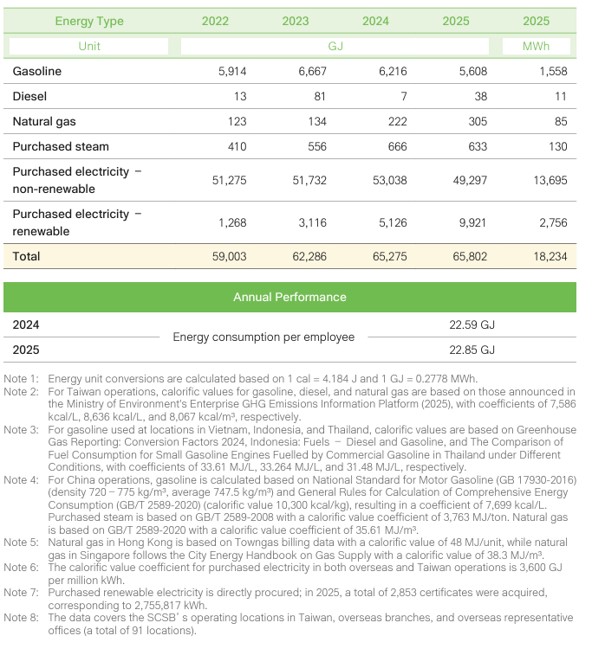
Water Resources Management
Water used in the SCSB‘s office buildings and service locations is primarily for employee and partial customer use, and does not have a direct impact on water sources. Domestic wastewater generated after use is discharged into the sewer system and collected through pipelines to wastewater treatment plants for processing, without causing pollution to surface water bodies. In addition, the SCSB has installed water-saving facilities for restrooms and other water-using equipment, utilizing products certified with water efficiency labels. To further strengthen water management, the SCSB has introduced the ISO 46001 Water Efficiency Management System. Through the analysis of water usage activities, areas with potential for water conservation are identified, and water flow is adjusted accordingly. In 2025, the SCSB's total water withdrawal amounted to 71.5 million liters, an increase of 2.4 million liters compared to 69.1 million liters in 2024. Water withdrawal per employee was 24,800 liters, representing an increase of 900 liters from the previous year, or approximately 3.8%, mainly due to the addition of an employee cafeteria in the new headquarters building, which led to higher water consumption
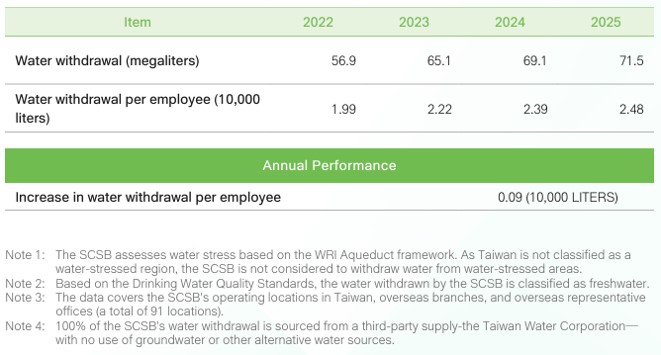
Waste Management
Due to the nature of the financial services industry, the SCSB primarily generates non-hazardous general waste. The SCSB encourages employees to implement waste sorting practices. Recycling areas are in place at the headquarters building and all branches to facilitate waste classification. Waste disposal operations are entrusted to qualified and licensed environmental recycling contractors, with waste treated through recycling, incineration, or final landfill disposal based on its characteristics. As a result, the waste generated from the SCSB's operations has not caused significant environmental pollution. In 2025, the SCSB's total waste volume amounted to 172 metric tons, representing a decrease of 19 metric tons compared to 2024. Non-recyclable waste totaled 72 metric tons, and the overall waste volume decreased by 9.95% in 2025.
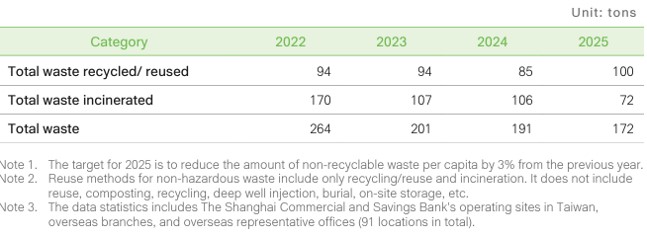
Environmental Data & Performance of the Group
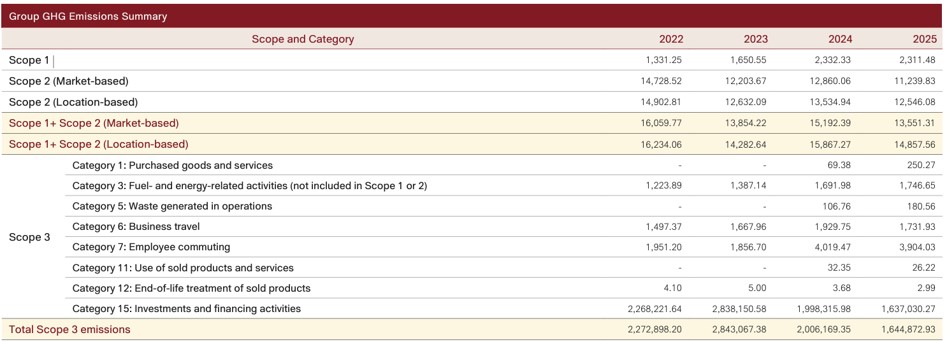
Note 1: The greenhouse gas inventory boundary for 2022 to 2023 covered SCSB, the Hong Kong subsidiary, SCSB Leasing, and AMK. In 2024, to align with the SCSB's SBT emission reduction targets and to comprehensively capture subsidiary emissions, the inventory scope was expanded to include SCSB Asset Management, SCSB Marketing, and China Travel Service. Additional categories, including Category 1, Category 5, and Category 11, were also incorporated. Due to the expansion of both the organizational boundary and reporting categories, emissions across all scopes increased compared to previous years.
Note 2. Scope 1 and Scope 2 emissions data of the SCSB and its subsidiaries in 2025, as well as Scope 3 emissions data excluding those related to investment and financing activities, were verified by SGS Taiwan in 2026. An ISO 14064-1:2018 greenhouse gas verification statement was obtained, covering the period from January 1 to December 31, 2025.
Note 3. To accurately reflect the carbon reduction impact of the SCSB's use of renewable energy on its overall greenhouse gas emissions, data for the years 2022 to 2024 have been retrospectively adjusted. Location-based greenhouse gas emissions have been recalculated using Taiwan's average grid emission facto
The coverage rate of GHG emissions data in 2025 was calculated based on headcount, with the denominator representing the total number of group employees and the numerator representing the number of employees from entities whose GHG emissions data was collected: 8,619 / 8,619 = 100%. The total group headcount includes employees from The Shanghai Commercial & Savings Bank, Ltd. (SCSB), Shanghai Commercial Bank Limited (Hong Kong), AMK MFI (Cambodia), SCSB Leasing (China), SCSB Asset Management Ltd., SCSB Marketing Ltd., and China Travel Service (Taiwan).

The coverage ratio of water consumption data is based on the number of employees, and the denominator is the sum of the number of employees in each year of The Shanghai Commercial & Savings Bank, Ltd. (SCSB), Shanghai Commercial Bank Limited (Hong Kong), AMK MFI (Cambodia), SCSB Leasing (China), SCSB Asset Management Ltd., SCSB Marketing Ltd., and China Travel Service (Taiwan).
As of the end of 2025, the total number of employees at SCSB and its subsidiaries was 8,619. The 2025 energy consumption data covered SCSB, Shanghai Commercial Bank Limited (Hong Kong), and AMK MFI (Cambodia), with a total of 8,387 employees included. Coverage ratio = 8,387/8,619= 97.3%


The coverage rate of energy data in 2025 was calculated based on headcount, with the denominator representing the total number of group employees and the numerator representing the number of employees from entities whose energy data was collected: 8,387/ 8,619 = 97.3%. The total group headcount includes employees from The Shanghai Commercial & Savings Bank, Ltd. (SCSB), Shanghai Commercial Bank Limited (Hong Kong), AMK MFI (Cambodia), SCSB Leasing (China), SCSB Asset Management Ltd., SCSB Marketing Ltd., and China Travel Service (Taiwan).
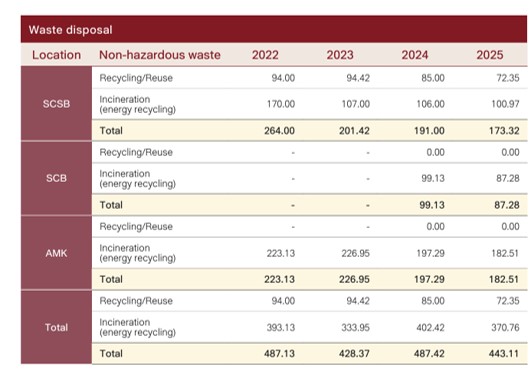
The coverage rate of waste disposal data in 2025 was calculated based on headcount, with the denominator representing the total number of group employees and the numerator representing the number of employees from entities whose waste disposal data was collected: 8,387 / 8,619 = 97.3%. The total group headcount includes employees from The Shanghai Commercial & Savings Bank, Ltd. (SCSB), Shanghai Commercial Bank Limited (Hong Kong), AMK MFI (Cambodia), SCSB Leasing (China), SCSB Asset Management Ltd., SCSB Marketing Ltd., and China Travel Service (Taiwan).
Green Operations Strategies
Electronic documents and Paperless Policy
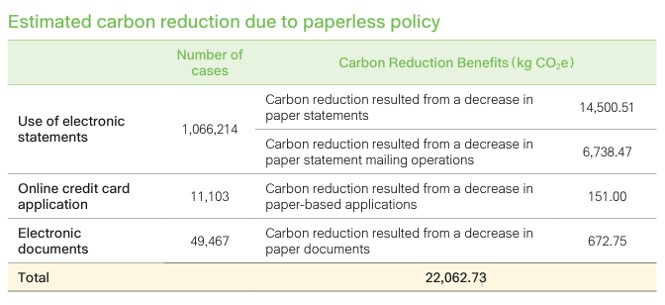
The SCSB continues to encourage customers to apply for credit cards online. Customers who apply for the Minions card online can enjoy a three-year waiver of the annual fee, thereby saving paper and achieving the goal of reducing carbon emissions. In 2025, more than 66.67% of credit card applications were made online, totaling 11,103 applications. If each application uses two A4 sheets of paper, the online credit card application service saved 22,206 sheets of paper. The SCSB is also promoting the use of electronic statements instead of printed statements. In 2024, the number of customers using only electronic statements reached 160, with a total of 1,066,214 electronic statements issued throughout the year. Assuming that each statement and envelope uses two A4 sheets of paper, these customers would collectively save at least 2,132,428 sheets of paper in 2025. Additionally, the SCSB issued 49,467 electronic documents in 2025. Assuming each document would have used two A4 sheets of paper, this also reduced carbon emissions by approximately 672.75 kg of CO2e. According to the Ministry of Environment's Carbon Footprint Information Platform, one A4 sheet of paper has a carbon footprint of 0.0068 kg. In addition, based on the estimation method recommended by the Intergovernmental Panel on Climate Change (IPCC), the mailing process for each physical statement generates approximately 0.0068kg of CO2e. Therefore, the reduction in paper, envelopes, and statement mailing operations due to SCSB´s paperless efforts in 2025 resulted in a reduction of 22,062.73 kg of CO2e
Internal Carbon Pricing and Credit Customer Carbon Fee Risk Assessment
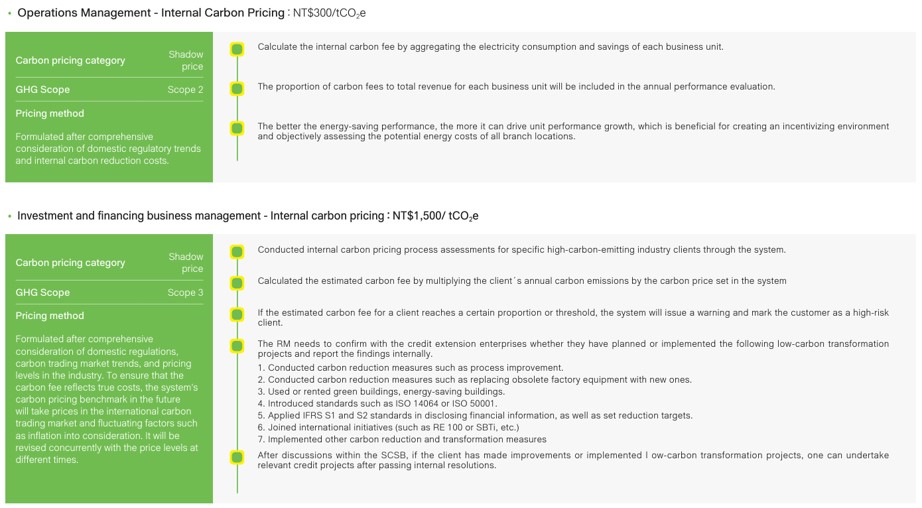
In order to reduce the organization's carbon emissions, the SCSB has begun planning an internal carbon pricing mechnism and developing a carbon fee risk assessment system. By introducing carbon pricing, the SCSB aim to reflect potential carbon costs in our investment and financing decarbonization strategies, as well as in the energy-saving measures at various branch locations.This will encourage employees to implement sustainable environmental actions and serve as a mechanism for managing investment and financing risks.
Paris-Aligned Lobbying and Trade Associations
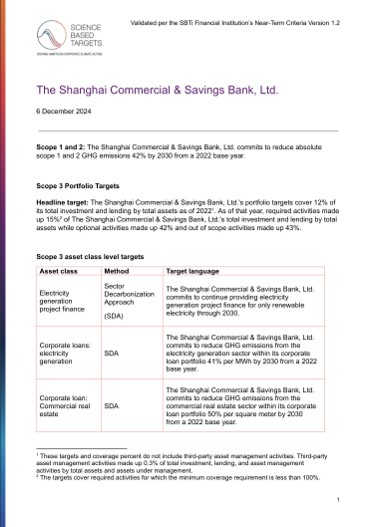
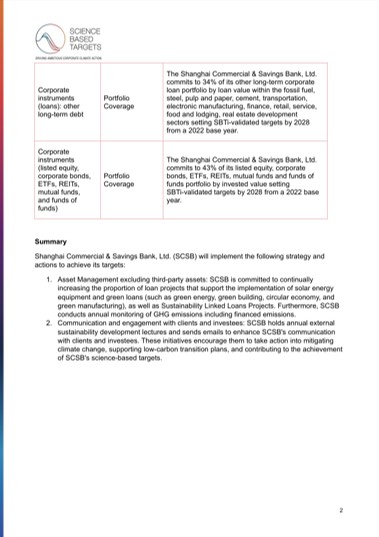
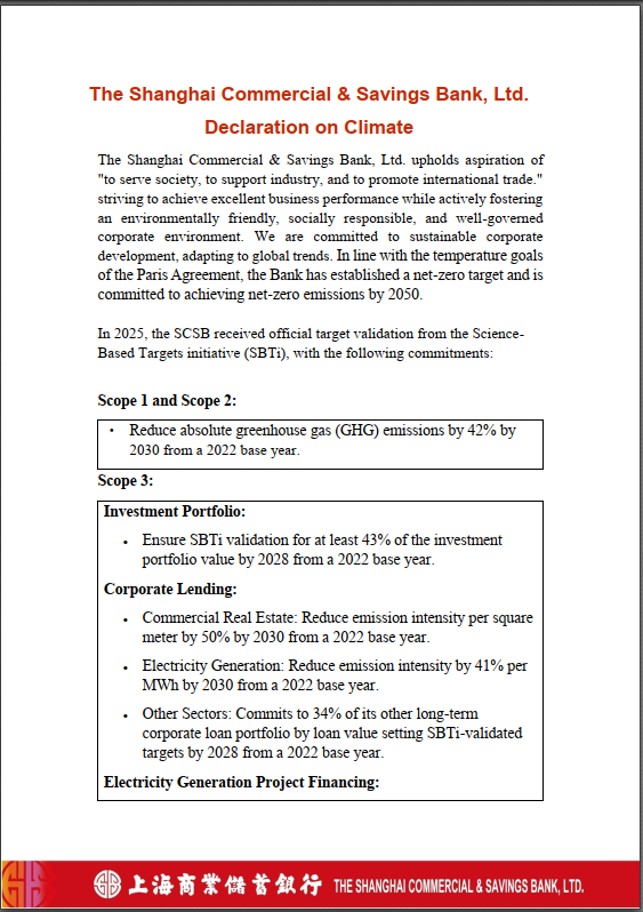
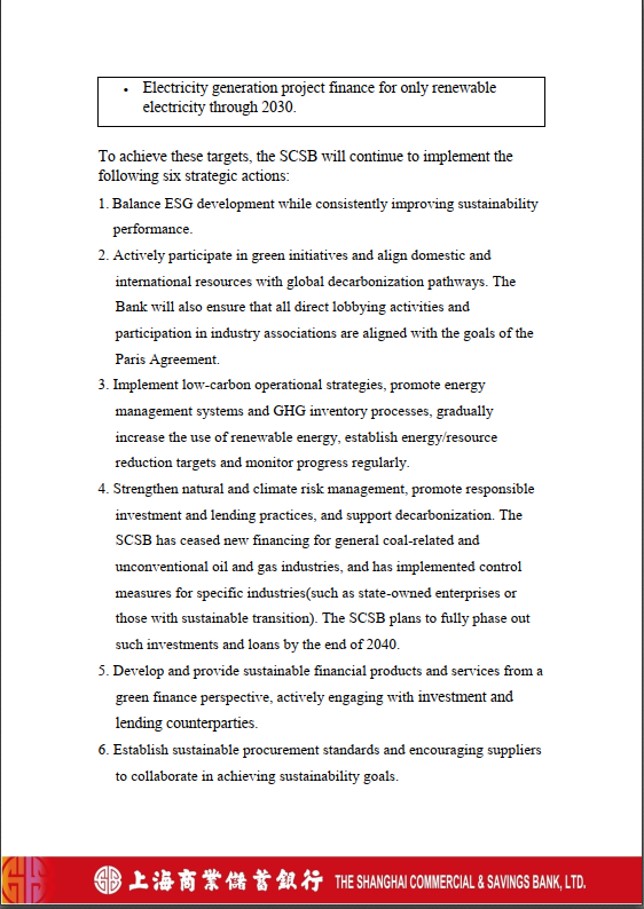
In alignment with our commitment to corporate sustainable development, responding to the international trend towards net-zero emissions, and achieving net-zero emissions by 2050, the SCSB has issued the "The Shanghai Commercial & Savings Bank, Ltd. Declaration on Climate" and established the"Sustainable Development Practices Code" and the "Sustainable Development Promotion Guidelines." These include climate-related management policies and specific implementation plans, serving as the foundation and guiding direction for sustainable development. Additionally, in September 2023, the SCSB announced the "SCSB Sustainable Development Consensus Procedures“, which are aligned with the Paris Agreement. This aims to leverage our financial influence to promote the sustainable development of Environmental, Social, and Governance (ESG) with strategic partners. To ensure that the SCSB’s direct lobbying activities or participation in trade associations are aligned with the goals of the Paris Agreement, we have established the following management mechanisms to regulate all operational areas of the bank (including overseas branches) and its subsidiaries:
- Direct Lobbying Activities
If there is a need for direct lobbying activities, the SCSB will follow the relevant lobbying regulations in each region and adhere to the following management and supervision procedures: Identify whether the direct lobbying activities are related to climate issues. Before engaging in direct lobbying activities related to climate policies, ensure that the lobbying content aligns with the Paris Agreement and the bank’s sustainable development policies. The content must be evaluated by the General Management Office and approved by the Sustainable Development Committee (chaired by the General Manager) before proceeding. The General Management Office will oversee the integration of commercial association participation or lobbying activities, assign specific departments to form task forces based on lobbying topics, and define relevant tasks and responsibilities. The General Management Office will track the execution progress and regularly report the lobbying activity progress and outcomes to the Sustainable Development Committee. The Sustainable Development Committee will regularly report the progress and results of direct lobbying activities to the Board of Directors. - Trade Associations
For trade associations in which the SCSB participates or intends to participate, the following management and supervision procedures have been established: Each responsible unit will regularly identify whether the trade associations in which the bank participates or intends to participate are related to climate issues. Each responsible unit will regularly assess whether the goals of the climate-related trade associations align with the Paris Agreement. After evaluation, if the goals of the trade associations in which we participate or intend to participate are inconsistent with the bank’s climate change policies and the Paris Agreement, appropriate control measures will be taken, including but not limited to the following actions: For associations with partially inconsistent climate policy positions, the SCSB will engage in a review and monitoring process as per the Sustainable Development Consensus Procedures, aiming to align the association’s goals with those of the bank within two years. If after this period, the association's climate policies and goals remain inconsistent with those of the bank or the Paris Agreement and no improvements are observed, the SCSB will consider withdrawing financial support or terminating membership. For associations with completely inconsistent climate policy positions, the SCSB will consider directly withdrawing financial support or terminating membership. If there are any of the above circumstances, the responsible units must report the review and monitoring progress and results to the Sustainable Development Committee. The Sustainable Development Committee will regularly report the aforementioned review and monitoring progress and results to the Board of Directors. - 2025 Assessment Results:
In 2025, the SCSB did not engage in any direct lobbying activities. In 2025, the trade associations related to climate issues in which the SCSB participated had goals that were consistent with those of the bank and the Paris Agreement. The SCSB completed its SBTi commitment in 2025 and is a founding member of the CommonWealth Magazine Sustainability Association, continually engaging in climate and sustainability exchanges, sharing, and collaborative learning activities across industries. The SCSB is also a member of the Taipei Securities Association, the R.O.C. Bills Finance Association, and The Bankers Association of the Republic of China, jointly advancing sustainable action plans for the financial industry with trade associations.
Sustainable Procurement and Supply Chain Management
The SCSB's supplier management not only requires suppliers to comply with government regulations but also follows established guidelines such as the "Outsourcing Guidelines", "Outsourced Vendor Management Guidelines", "Selection of Entrusted Institutions Guidelines", "Procurement Guidelines", "Purchasing Operation Supplier Management Rules" and the "Supplier Corporate Social Responsibility Standards". These ensure that contract contents do not violate mandatory or prohibitive legal requirements. the SCSB has also included integrity clauses and anti-corruption declarations in supplier contracts, requiring all suppliers to acknowledge and comply with these statements, ensuring adherence to the Banking Act, Anti-Money Laundering Act, Personal Data Protection Act, and Consumer Protection Act. For supplier management, when the procurement amount exceeds NT$100,000 and a contract signed, suppliers must provide a Supplier Corporate Social Responsibility Self-Evaluation Form and a Supplier Corporate Social Responsibility Commitment Letter. This ensures that partner companies have not experienced major occupational accidents, environmental penalties, or violations of labor laws. In 2024, the SCSB certified for the ISO 20400 sustainable procurement guidelines standard. By conducting sustainable risk assessments on our suppliers, the SCSB identified potential risks in our supply chain related to environmental impact, occupational health and safety, and consumer privacy protection. This allowed the SCSB to establish risk control measures and management strategies appropriate for the procurement stages of operations. Based on the risk assessment results, the SCSB also conducted supplier educational training, surveyed the status of the supply chain, revised management regulations and supplier policies, and audited procurement processes. Through the transformation of working guidelines and management systems, the SCSB has strengthened the internal concept of green procurement, integrating sustainable principles into daily operations. The SCSB has also extended the sustainable procurement philosophy to our partnering suppliers, aiming to play a guiding role and work together with our supply chain partners to support the balanced and sustainable development of the economy, society, and environmental ecosystems.
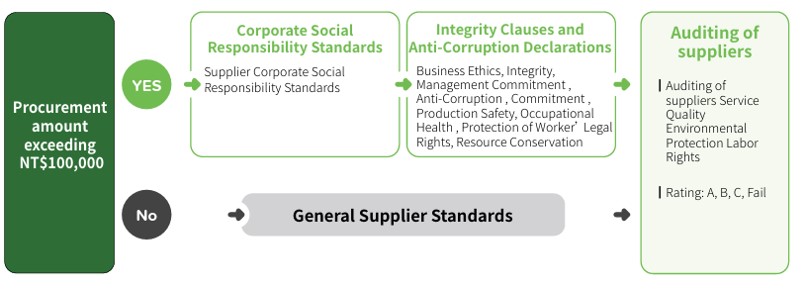
The SCSB's suppliers mainly include properties, labor services, engineering, information technology, and insurance. In 2025, the primary procurements were in the engineering and labor services, amounting to NT$494 million and NT$432 million, respectively. The SCSB's procurement suppliers are primarily local. In addition to considering product quality and on-time delivery, the SCSB prioritizes environmentally friendly and energy-saving products, such as LED energy-saving light fixtures, FSC-certified photocopy paper, and energy-saving labeled computers and monitors. In 2025, the SCSB's total procurement of equipment amounted to approximately NT$20 million, representing about 2% of the SCSB’s total annual procurement expenditure. This includes over 2,755,800 kWh of renewable energy, accounting for 10.48 % of the SCSB's total electricity consumption, with a total of 2,853 renewable energy certificates obtained. The SCSB will continue to increase the proportion of environmentally friendly and energy-saving products in its procurement. Through green procurement, the SCSB aims to promote the growth of the green consumer market, create green benefits, and further expand energy-saving and carbon reduction efforts.