Employee is one of the important factors for us to achieve the vision of common prosperity. To build a happy working environment, the SCSB actively recruits young talents through diverse recruitment channels and natures of work to attract next-generation talents, with the aim of maximizing workforce diversity. In addition, human rights and equality values are highly valued, no discrimination against any gender, race age group, political affiliation, marital or family status. The total number of employees in 2025 is 2,880, 19 less than in 2024(2,899 employees), no significant difference.
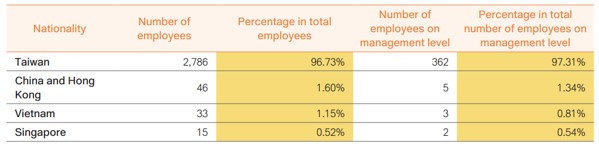
Employee composition in the end of 2025
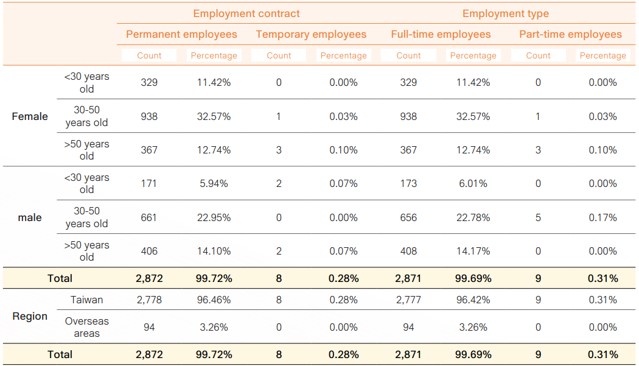
Note 1. In 2025, the SCSB hired 18 employees with disabilities and 1 Taiwanese indigenous persons.
Note 3. Percentage calculation = The number of this type of employee/Total number of employees
Note 4 Section 4.1 on employee-related data only covers the SCSB which does not include its subsidiaries. For the information of subsidiaries, the SCB (Hong Kong), the SCSB Leasing (China), and the AMK MFI (Cambodia), please refer to the Appendix
The SCSB's employee promotion system is implemented in accordance with the"Regulations Governing Employee Transfer", with vacancies announced across the SCSB and filled based on principles of fairness, impartiality, and transparency. To ensure equal and diverse promotion opportunities for all employees regardless of gender, the balance of male and female representation across most employee categories improved in 2025. The SCSB aims to increase the proportion of both male and female employees in entry-level management positions by 2025, while maintaining a balanced gender distribution (with neither gender exceeding 60%). This approach is intended to support appropriate career development and provide equal promotion opportunities for all employees.
Diversity indicators for employees in the end of 2025
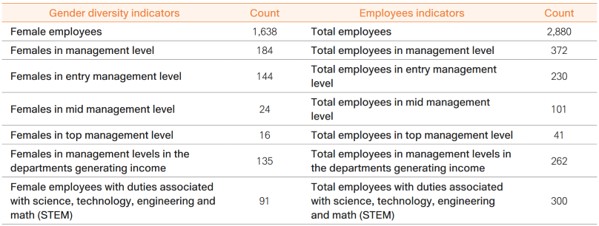
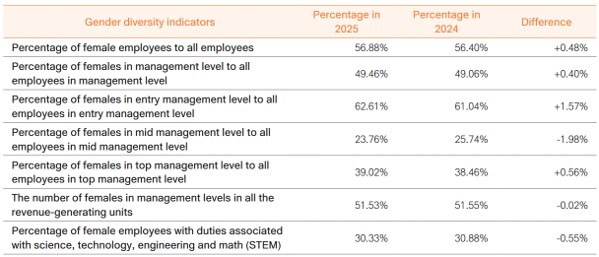
Note: Revenue-generating units include business departments, business units, and channel management departments.
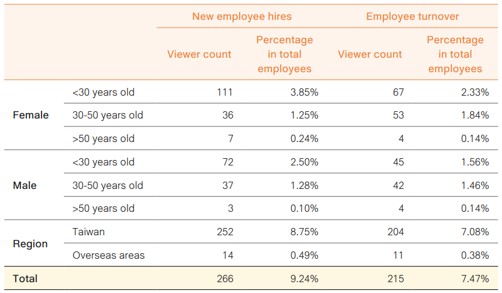
Composition of new employee hires and employee turnover in 2025
The average recruitment cost in the past four years

Note: Average recruitment cost = Recruitment cost this year/Total number of new employees this year.
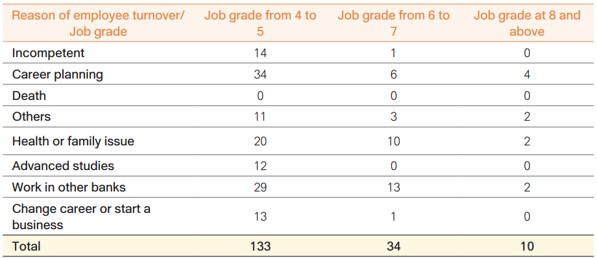
The SCSB annually analyzes employee turnover rates and reasons for leaving by employee grade level to identify potential turnover risks and employees at a higher risk of leaving. Based on the analysis, the SCSB formulates corresponding response and improvement measures to enhance employee retention. From 2022 to 2025, turnover among the SCSB’s management personnel remained stable. Annual departures ranged from one to three employees at the junior management level, zero to one employee at the middle management level, and zero to one employee at the senior management level. The one senior management departure in 2025 was due to the expiration of the employee’s term of appointment. In each year, the number of management personnel who left the SCSB accounted for approximately 0% of its total workforce.
Employee turnover rate in the past four years

Note 1. Calculation of the total/voluntary turnover rate is to calculate the percentage of the number of employees resigned/voluntarily resigned employee in the total number of employees.
Note 2. This table only covers the SCSB, which does not include its subsidiaries. For the information of subsidiaries, the SCB (Hong Kong), the SCSB Leasing (China), and the AMK MFI (Cambodia), please refer to the Appendix
Employee turnover rate for the past four years by job grade
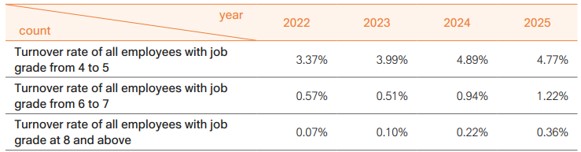
Note 1. This table excludes retiree, employee on unpaid leaves of absence, and laid off employee.
Note 2. The data in this table covers only the SCSB and does not include its subsidiaries.
Analysis of reason for employee turnover in 2025
Internal hires rate in the past four years

Note 1. Internal vacancy fill rate = (Number of positions filled by internal employees ÷ Total number of internally announced vacancies during the year).
Note 2. Types of leave included in absenteeism for 2025 comprise occupational injury and illness leave, general sick leave, and personal leave. Absences of employees on long-term leave due to serious illness are excluded.
Note 3. Sick leave and personal leave calculations previously included menstrual leave and family care leave. In 2025, the absenteeism calculation methodology was revised to exclude statutorily protected leave types (family care leave and menstrual leave), in order to comply with labor regulations and uphold human rights protection principles. Through this refinement of indicators, the SCSB ensures that the management of this metric does not create pressure on employees in exercising their legal leave rights, and remains committed to promoting employee well-being and work-life balance, supporting employees in taking leave with confidence, and fostering a supportive and psychologically safe workplace environment.
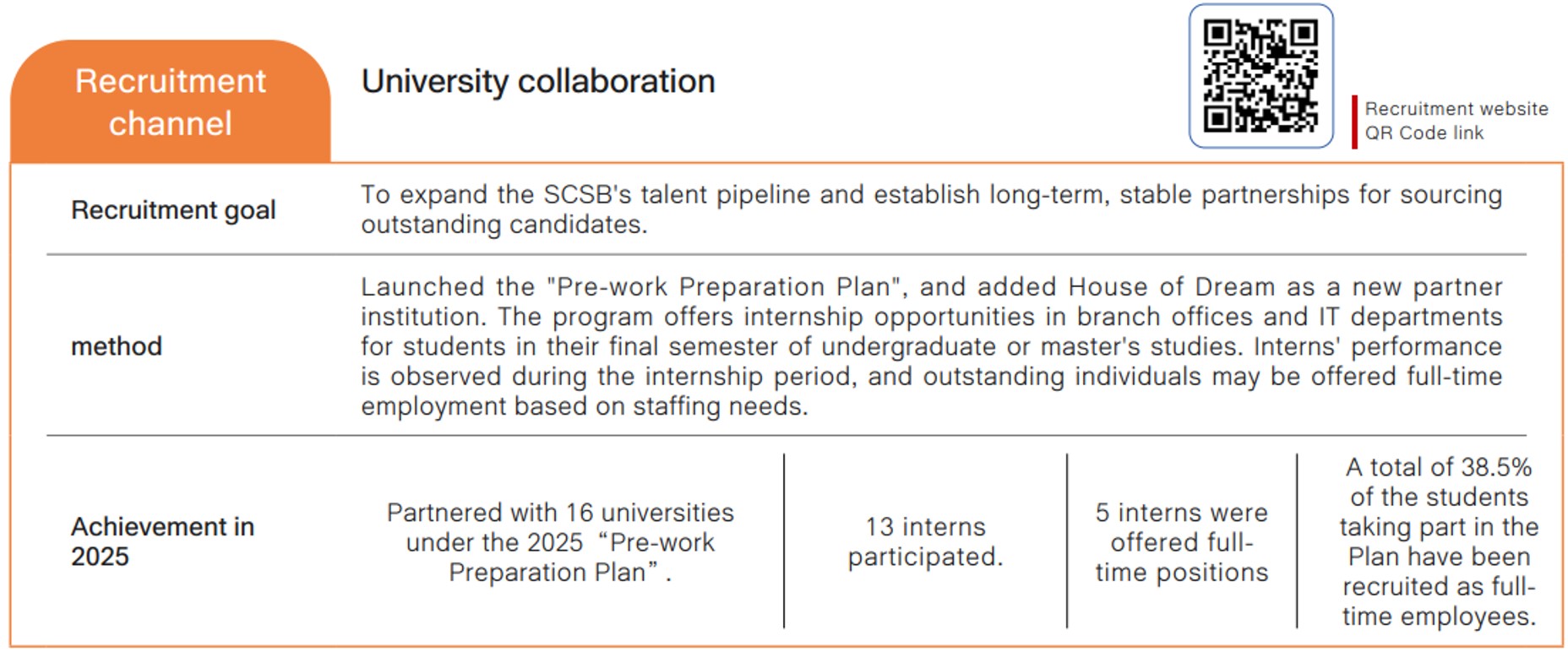
Diverse recruitment
As part of this year's focus on "Talent First" strategy, the SCSB has established diverse internship channels through industry-academia collaboration, overseas referral programs, and partnerships with non-profit organizations. These opportunities enable students to gain early exposure to real-world banking operations while allowing the SCSB to identify potential talent. In 2025, our recruitment efforts emphasize inclusivity, welcoming candidates regardless of academic major or nationality, with a particular focus on IT and digital talent. The SCSB collaborates with colleges and universities to cultivate sustainable banking talents.
Retiree Return Program
In response to evolving workforce demographics and the growing trend of extended careers, the SCSB is committed to supporting retired employees by providing opportunities for transition and career transformation. The SCSB has established the Regulations for Fixed-Term Employment of Retired Employees. Under this policy, employees reaching retirement age may be offered new positions under renewed labor contracts with fixed terms. In addition, employees who retire before the statutory age may also be invited to return to the SCSB, depending on staffing needs, their professional background, and past performance. This approach ensures that employees can continue to contribute and grow at different stages of their career journey.
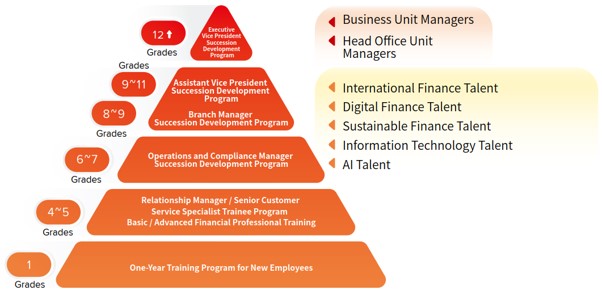
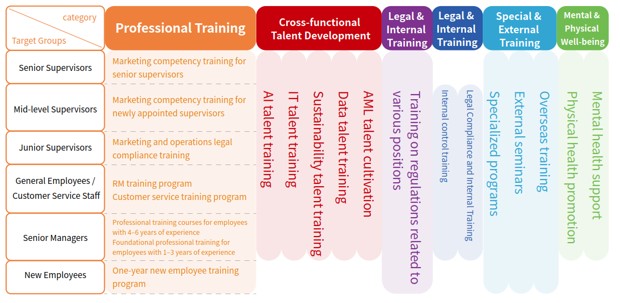
The SCSB believes that corporate growth must be rooted in human capital. Every employee is an asset worthy of investment and care. Accordingly, the SCSB has adopted the vision of “Developing Core Competencies to Strengthen Human Capital" as the strategic focus of its talent development efforts. In addition to formulating "The Regulations Governing Education Training" as the implementation framework, the SCSB takes into account its overall talent development framework, strategic objectives, and top-down training and development needs to design and execute the annual training plan and assess its effectiveness, thereby advancing its commitment to talent sustainability.
Branch Mentoring Program
To strengthen onboarding support and promote employee development among new hires, the SCSB has implemented a Branch Mentoring Program. This initiative helps new employees integrate into the workplace culture and enhance their professional competencies more effectively. Mentors are assigned to guide new employees for a six-month period. Upon successful completion of the mentorship and the mentee‘s successful completion of the probation assessment, mentors may be awarded promotion points, as an incentive for their contributions to employee development. To enhance mentoring effectiveness, the SCSB has established a dedicated online section titled “Mentor’s Warm Welcome Guide”, which compiles interactive tips and experience sharing. Detailed explanations of the mentorship program are also provided during onboarding to ensure both mentors and mentees fully understand their roles and mutual expectations. Each department is responsible for pairing mentors with new employees and reporting mentoring progress, enabling the Human Resources Department to track outcomes and continuously optimize the program. This initiative reflects the SCSB's strong commitment to talent cultivation and employee development.
|
Column
Digital Development Key Employee Training |
|
|---|---|
Coverage 20.99% (199 employees participated in the program / total number of employees in business units and support units: 948)
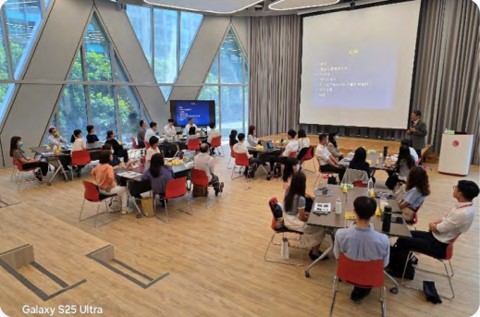
To respond to the development trends of digital finance and related applications, the SCSB continues to promote its digital transformation, foster a digital culture, enhance digital innovation capabilities, and strengthen employees’ digital competencies. In 2025, the SCSB continued to plan and implement training programs related to digital finance and artificial intelligence (AI):
|
|
|
Column
Financial Expertise Course Training Plan |
|
|---|---|
Coverage 54.04% (A total of 314 junior branch employees participated training / total number of branch level employees 581)
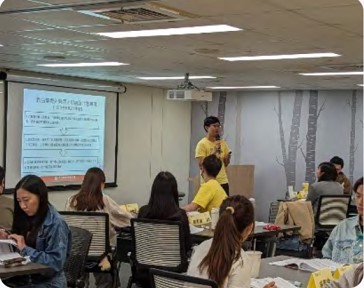
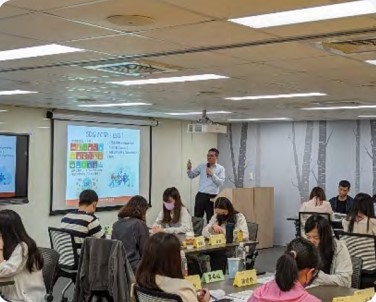
To enhance the financial expertise of business unit employees so that they can offer customers comprehensive financial services, in addition to the “Financial Expertise Basics Course” (abbreviated as “Financial expertise B (asic) course”) general training for junior staff with 1–3 years of experience, the “Financial Expertise Advanced Course” was also conducted (referred to as “Financial expertise A (dvanced) course“) in 2025 to implement cultivating training for promising staff with more than four years of experience. The course focuses on retaining diverse talents and involves the sharing of applicable laws and regulations and relevant cases across the four lines of business. In addition, the program also includes relevant courses such as fair customer treatment, trust, wealth transfer, ESG, and sustainable management. Post-course computerized tests for the financial expertise courses were arranged at physical test centers to enhance training effectiveness.
Direction for Course Topic Planning:
Two sessions of the “Financial Expertise B(asic) Course” were held, with 109 additional participants in total; two sessions of the “Financial Expertise A(dvanced) Course” were held, with 50 additional participants in total. The following benefits were achieved:
|
|
|
Column
Senior Management Reserve Talent Cultivation Plan |
|---|
Pursuant to Article 23-1 of the “Corporate Governance Best-Practice Principles for Banks,” banks shall establish a management development plan, and the Board of Directors shall regularly evaluate the development and implementation of the plan to ensure sustainable operations. Consequently, the SCSB continues to organize the senior talent cultivation plan, including:
|
|
Column
AMK, SCSB's Cambodian Subsidiary, Promotes Financial Education and Financial Literacy for Employees |
|---|
| AMK, a subsidiary in Cambodia, places strong emphasis on enhancing employees' financial education and financial literacy. Through diverse educational initiatives and structured training programs, AMK aims to improve employees' understanding of financial knowledge and personal financial management. In 2025, the Marketing and Communication Department, Risk Department, and Training Development Department jointly planned and implemented financial education awareness activities. The program covered fundamental financial concepts, financial planning, and financial knowledge awareness. One financial education campaign was conducted in 2025, with 908 employees participating. In addition, AMK continues to promote financial education for employees through regular weekly courses. These ongoing programs enable employees to continuously strengthen their financial knowledge and practical capabilities. By combining awareness campaigns with systematic training, AMK enhances employees‘ financial literacy and professional competencies, while supporting them in developing sound personal financial management practices. |
Employee Training
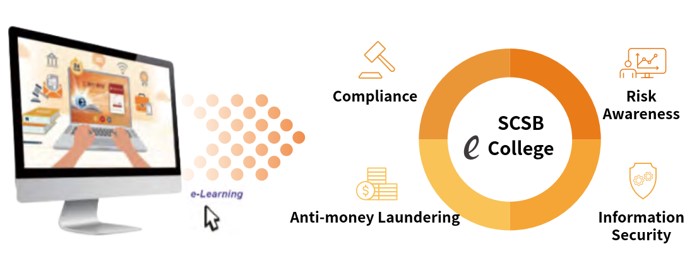
To meet the training needs for employee development, the SCSB provided basic courses at all branches and departments, and established the SCSB e-College as the learning platform without time restriction. The SCSB provides diverse training methods and open learning classes. The courses are easy to access and the learning space has no restrictions. The employees can join the professional or knowledge-based courses on the e-learning system through the Internet, e.g., anti-money laundering, legal compliance, information security, and risk awareness. This way, the employees are able to access the convenient and efficient learning environment and evaluate the learning results based on their own needs. In 2025, all employees were also assigned to complete online courses such as "Integrity as Our Core Value" and "Financial Friendly Service Measures." These courses helped build collective consensus and reinforce the SCSB's service philosophy of "always placing customers' needs first," thereby deepening the cultivation of our corporate culture.
Certification subsidy plan
- Language proficiency is recognized as a critical element supporting employees‘ engagement in international communications and exchanges. Therefore, the SCSB has established foreign language subsidy standards, providing fixed-amount subsidies for language proficiency enhancement. As of the end of 2025, approximately 2,460 employees had obtained various language certifications. In alignment with the Financial Supervisory Commission’s policy to foster a bilingual financial service environment, the percentage of employees passing English proficiency tests accounted for 85.68% of the total workforce. Apart from language enhancement subsidies, operating departments are also empowered to assess and proactively apply for funding subsidies for other necessary certifications based on employees’ needs.
- To recognize overall financial professionalism and alignment with government policies, the SCSB launched a three-year“Fixed-Amount Incentive Program for International Professional Certifications and Government Policy Promotion Project Certifications” in 2024. Employees who obtain professional certifications issued by international institutions or certifications related to government policy promotion projects are granted fixed-amount incentives to encourage employees to obtain project incentive certifications.
- To enhance the professional capabilities of AML Center personnel in performing their duties, the SCSB implemented the "CAMS Certified Anti-Money Laundering Specialist Certification Subsidy Program" in 2025. The program encourages dedicated AML and counter-terrorism financing personnel at the AML Center to participate in the CAMS certification test. In 2025, 6 additional employees passed the test and obtained certification, bringing the cumulative total across the SCSB to 229 employees, accounting for 7.98% of the total workforce.
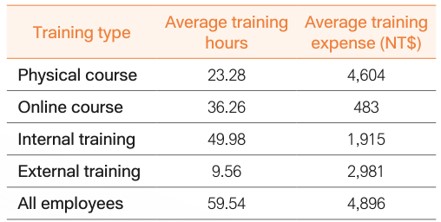
2025 average employee training hours and expense
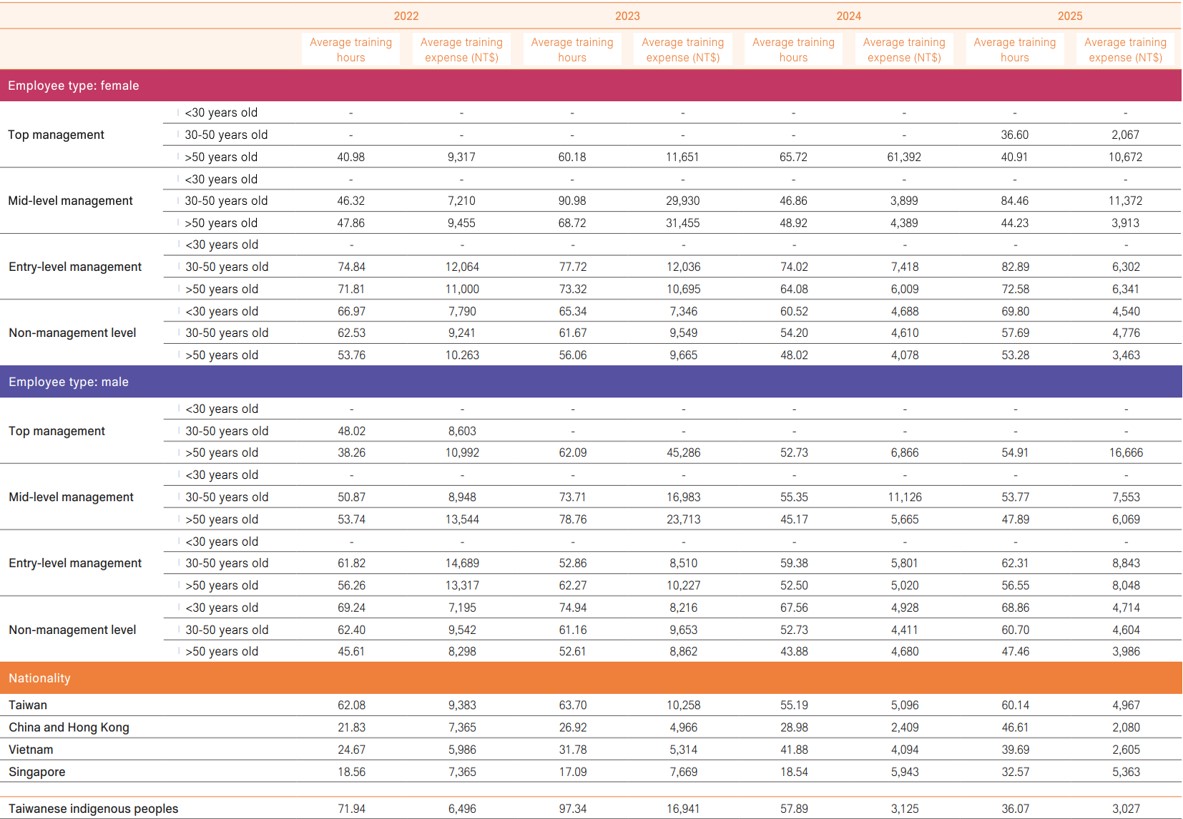
Note 1. The total number of full-time female employees was 1,634, with total training hours of 99,211.64 hours and an average of 60.72 training hours per person.
Note 2. The total number of full-time male employees was 1,237, with total training hours of 71,726.80 hours and an average of 57.98 training hours per person.
Note 3. The total number of top-level management employees was 41, with total training hours of 2,022.94 hours and an average of 49.34 training hours per person; the total number of mid-level management employees was 101, with total training hours of 4,965.59 hours and an average of 49.16 training hours per person; the total number of entry-level management employees was 230, with total training hours of 15,759.48 hours and an average of 68.52 training hours per person; and the total number of non-managerial employees was 2,499, with total training hours of 148,190.43 hours and an average of 59.30 training hours per person.
Note 4. A dash “-” indicates that no employees of the respective gender and job level participated in training programs in 2025.
Note 5. The data in this table only covers the SCSB and does not include its subsidiaries. For the information of subsidiaries, including the Hong Kong subsidiary, SCSB Leasing, and AMK Cambodia, please refer to the Appendix.
Note 1. The employee count calculated in this table excludes part-time staff.
Note 2. The data in this table only covers the SCSB and does not include its subsidiaries. For the information of subsidiaries, the SCB (Hong Kong), the SCSB Leasing (China), and the AMK MFI (Cambodia), please refer to the Appendix
The SCSB adheres to the sustainable strategy of "Balanced and Growth". In terms of talent capital management, apart from talent selection, cultivation, and utilization, the retention of talent is also a crucial focus for the SCSB. The SCSB establishes the Employee Welfare Committee to organize employee clubs, various activities, and diverse benefits. Additionally, a portion of the revenue is allocated to provide multifaceted subsidies, discounts, and additional compensation reward mechanisms. Since 2020, the SCSB has established Employee Assistance Programs (EAPs) to provide counseling services, facilitating enhanced communication channels. Furthermore, the SCSB aligns with governmental regulations, demonstrating comprehensive care for employees in compliance with various legal policies and regulations.
Employee Caring
The SCSB treats employees like family members and places significant emphasis on their physical and mental well-being. Various welfare measures are regularly implemented, including comprehensive health checks for all employees. Additionally, a range of club activities and travel subsidies are provided, allowing employees to enhance their relationships and relieve stress outside of work. The SCSB also values the voices of its employees and has established the iTalking Employee Care Mailbox as a safe and confidential communication channel. Employees can use this platform to raise any work-related inquiries, suggestions, concerns, or requests for assistance. Furthermore, to aid employees in enhancing their professional skills and career development, a platform is provided for those seeking job transfers. These initiatives aim to boost employee morale and satisfaction, serving as catalysts for the SCSB‘s growth. Since 2022, the SCSB has implemented the "New hires caring program" and continued to carry out questionnaire surveys, telephone interviews, and other relevant measures in order to understand how new employees are adapting to their work, offer timely assistance, and collect employee feedback for relevant departments to adjust future business directions.
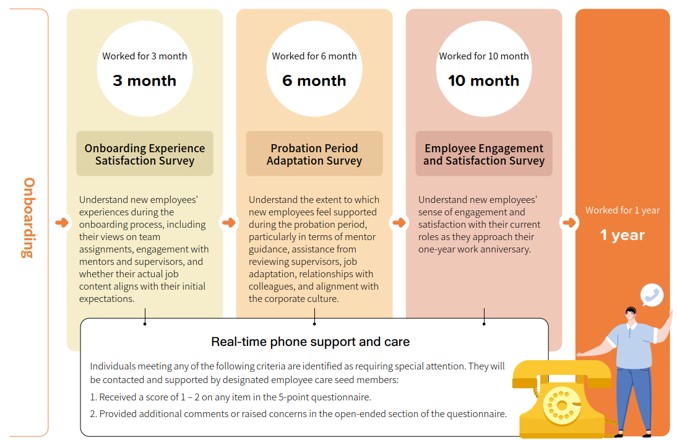
In 2025, to care for new employee adaptation, the SCSB conducted questionnaire surveys and follow-up phone calls for junior staff in business units who had worked for less than one year. Surveys were conducted in the 2nd, 5th, and 10th months, covering the "Onboarding Experience Survey", "Adaptation Survey", and "Work Engagement Survey". A total of 401 responses were collected. There were 17 questions across the three phases, each targeting workplace atmosphere, mentor awareness, and communication with the section chief in the first phase; expectation discrepancies, mentor effectiveness, communication with the section manager, work achievement, interpersonal relationships with colleagues, and cultural identification in the second phase; and work identification, career development, communication with supervisors, interpersonal relationships with colleagues, retention intention, and other suggestions in each phase. The statistical results showed that new employees gave high recognition to their overall interaction and communication with mentors, section managers, and section chiefs.
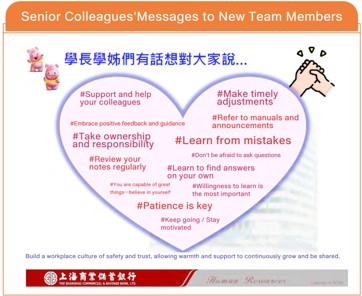
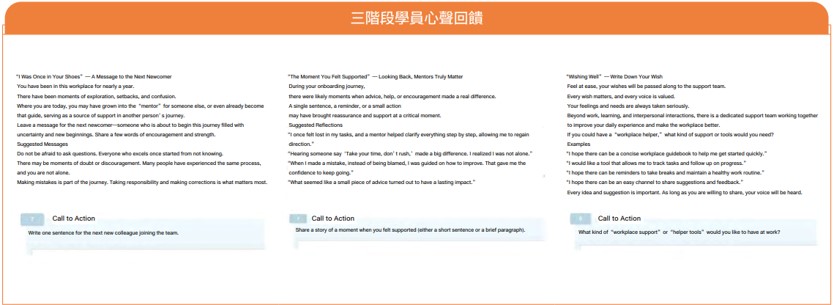
In addition, to strengthen new employees' confidence in work, the SCSB added voice feedback items to the three phases of questionnaire surveys starting from June 2025 and planned the "Positive Feedback Action". In September 2025, a featured mentor column was announced through internal messages to establish a positive learning effect. The SCSB also further called new employees who were willing to share their experiences and included their interaction stories with mentors in the quarterly publication, serving as replicable actions and learning examples for other mentors and strengthening the operation of the mentor system. In addition, encouragement messages left by new employees for the next new employees were compiled into new employee training materials and presented as a warm word-cloud wall, allowing new employees to feel the supportive and trusting team atmosphere created by the SCSB during new employee training. In November 2025, the new employee caring status was communicated at the business meeting, and new employees' pain points were summarized. Supervisors of all units were encouraged to care for new employees through practical actions, create a supportive and trusting team atmosphere, and enhance new employees' retention intention and growth momentum.
The SCSB collaborates with external professional consultants to implement an Employee Assistance Program (EAPs) to support employees, with the aim of fostering a healthy physical and mental workplace environment. The scope of EAPs counseling services covers work-related issues, family matters, parenting, relationships, interpersonal communication, self-exploration, emotional management, as well as legal consultations related to housing transactions, traffic accidents, divorce and alimony, and inheritance of property. Employees may access these resources through a free hotline, email, or face-to-face individual consultations, providing channels for stress relief and supporting a better balance between work and personal life. A total of 52 employees utilized these services in 2025. The Human Resources Department also shares EAP-related articles titled "Moments for the Mind" on a monthly basis, using a variety of themes to provide timely mental support through reading and to promote employees' overall well-being.
Employee Benefit (Full-time Employees)
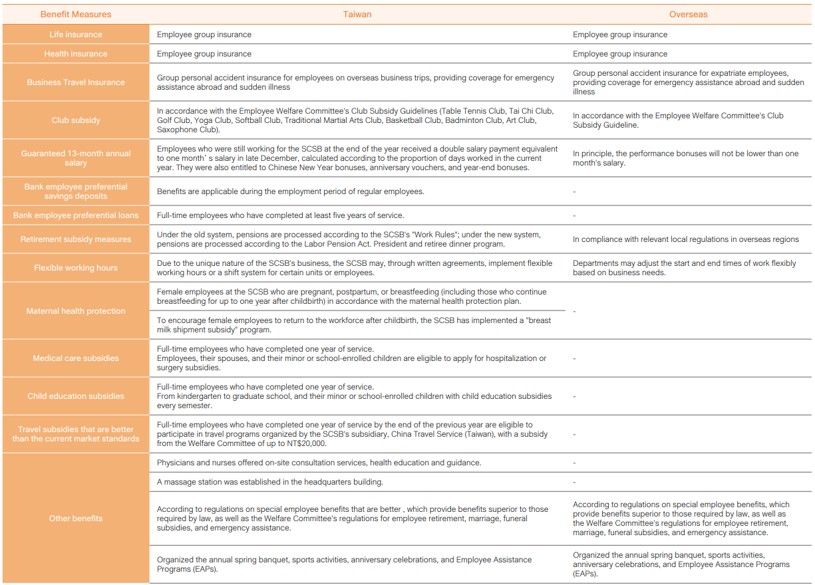
Leave entitlements and wage benefits for female employees during menstruation, pregnancy (including prenatal check-ups and pregnancy-related medical leave), maternity leave, parental leave, and breastfeeding periods are clearly defined. In accordance with relevant regulations, the SCSB provides 8 weeks of paid maternity leave and 1 week of paid prenatal check-up leave for primary caregivers, as well as 1 week of paid paternity leave and prenatal accompaniment leave for non-primary caregivers. Moreover, the SCSB offers an additional 4 days of paid maternity leave beyond statutory requirements. Parental leave is not limited to female employees; all eligible employees are entitled to apply for unpaid parental leave, thereby enhancing support for employees in balancing work and family responsibilities. To further encourage female employees to return to the workplace after childbirth, the SCSB launched the "breast milk shipment subsidy" program in 2024. Under this program, each eligible employee may claim up to 12 reimbursements per year, with a maximum of NT$400 per delivery, fostering a family-friendly work environment.
Parental leave
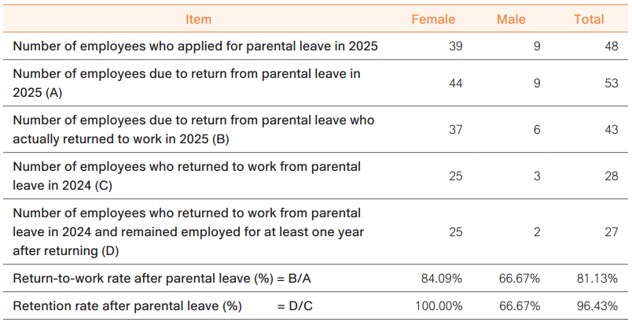
Note: This table includes data for the SCSB only and does not cover its subsidiaries.
Nursing and Childcare
The SCSB currently provides dedicated lactation rooms at its Headquarters, Neihu, Jiaxin, Personal Banking, and Ren‘ai buildings for postpartum female employees, fostering a supportive environment. To further promote a family-friendly workplace and help employees balance work and family responsibilities, the SCSB has also partnered with Hess Educational Enterprise Co., Ltd. To offer corporate childcare services. Employees whose children attend Hess-affiliated preschools or after-school programs are eligible for tuition discounts and extended childcare hours.
Compensation And Incentives
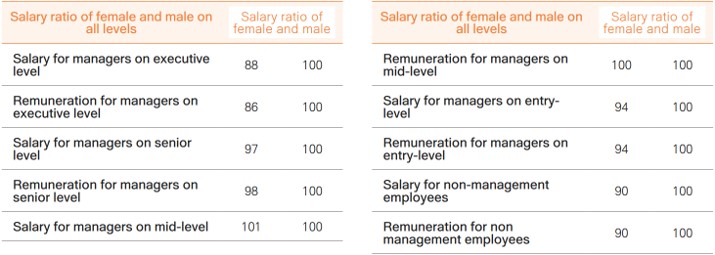
The SCSB annually reviews employee compensation by considering market salary levels, the Consumer Price Index (CPI), and industry benchmarks. Salary scales are updated at least once every two years, with corresponding adjustments made to the starting salaries of new hires to ensure adequate wages at or above cost of living estimates or benchmarks. Bonuses are distributed during the Dragon Boat Festival and Mid-Autumn Festival based on the SCSB’s annual earnings. Year-end performance bonuses are determined through a performance-based evaluation system. At the end of each year, employee performance is assessed against individual annual goals and overall behavioral competencies. Following performance review discussions between supervisors and employees, final performance ratings are confirmed and serve as the basis for determining year-end bonuses. Employees with outstanding performance may also be considered for promotion and salary adjustments. Additionally, in line with public financial institutions, the SCSB offers employees preferential savings programs with set limits, as well as home loans in accordance with related regulations. In 2025, the average female-to-male salary ratio was approximately 0.86:1 for general staff, 0.98:1 for senior management, 1:1 for mid-level management, and 0.94:1 for entry-level management.
The average salary and medium of the salary of non-managerial employees
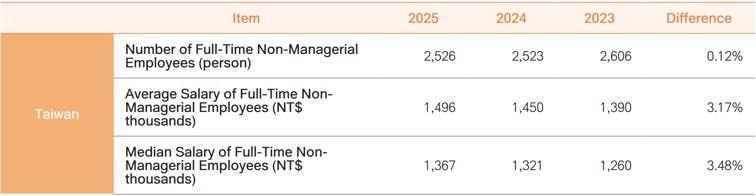
Note. The calculation of the disparity ratio is based on the percentage result of (2025 - 2024) / 2024.
Gender pay indicators
Gender pay indicators difference
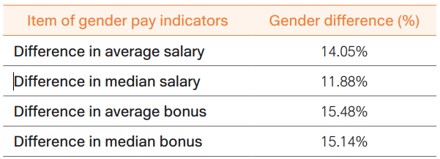
Note 1. Salary includes monthly wages from January to December as well as position allowances. Bonuses include variable compensation such as Dragon Boat Festival and Mid-Autumn Festival bonuses, full attendance bonus, various subsidies, and other types of bonuses.
Note 2. Gender pay gap for salary = (Male salary – Female salary) / Male salary; Gender pay gap for bonuses = (Male bonus – Female bonus) / Male bonus.
Note 3. The gender pay data in this section covers only employees of the SCSB in Taiwan. It does not include employees with overseas income, overseas branch employees, or employees of subsidiaries (SCB, SCSB Leasing, and AMK; please refer to the Appendix).
Note 4. Managers on executive level refer to positions at or above the Executive Vice President level; general management level refers to entry-level, mid-level, and senior managerial positions below, but not including, the Executive Vice President level; non-management refers to employees without managerial duties.
All starting salaries at the SCSB exceed the minimum wage stipulated by the Labor Standards Act and do not vary based on gender or other factors. Gender pay indicators are disclosed annually in the SCSB's Sustainability Report. In addition, the SCSB reviews pay gap data from peer institutions to monitor gender disparities and implements relevant management measures, including the promotion of high-performing female managers to leadership positions, in pursuit of the goal of equal remuneration for men and women.
Long-term Incentive System
The SCSB continues to fulfill its care and commitment to employees by providing employee stock ownership trusts, various subsidies, and other welfare measures, and has been continuously included as a constituent of the Taiwan High Salary 100 Index and the Taiwan Employment 99 Index for multiple years.
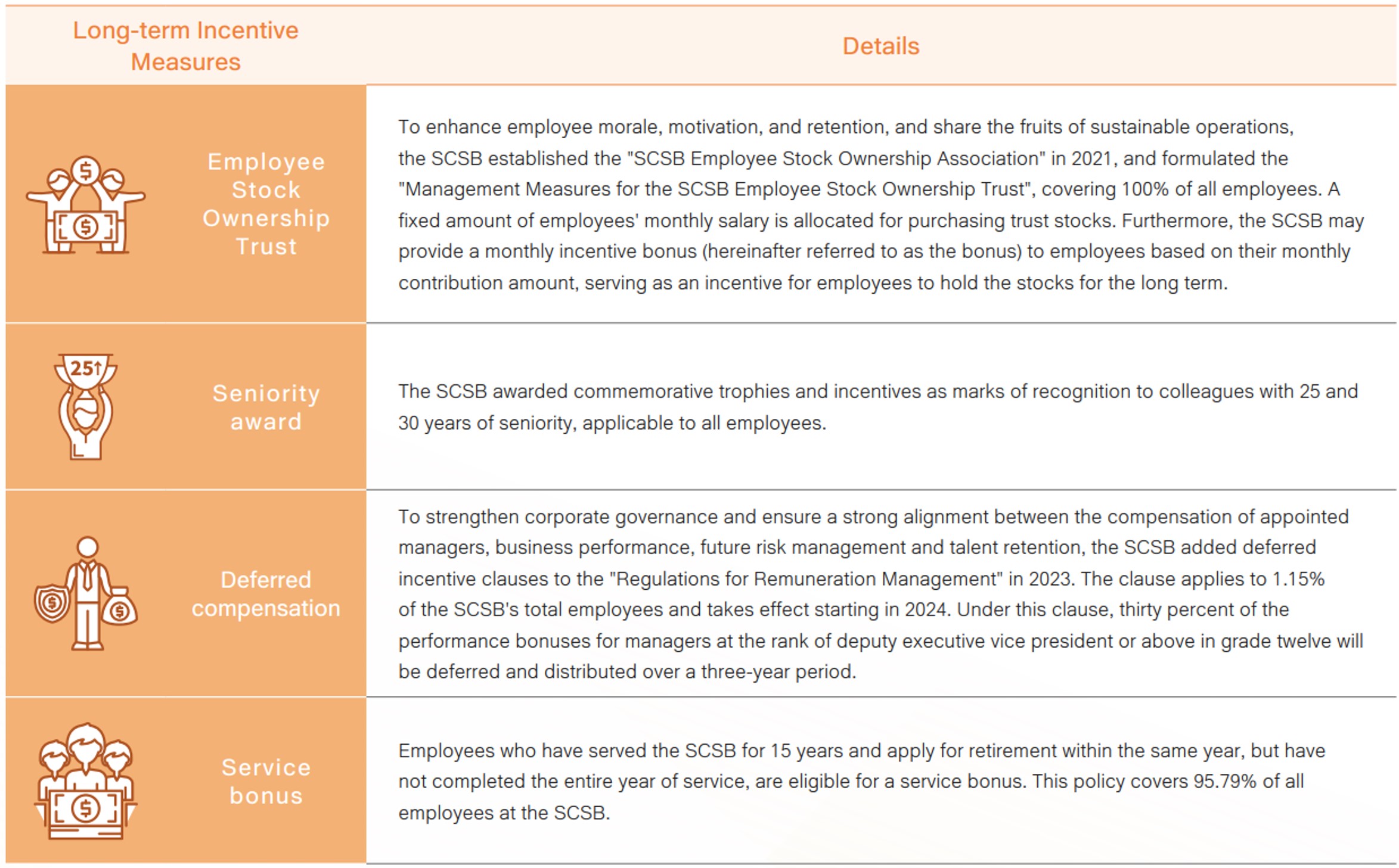
Clawback provision: Under Article 5 of its Remuneration Management Regulations, unpaid deferred bonuses may be partially or fully forfeited in cases of misconduct, or forfeited in full upon voluntary resignation or termination before meeting retirement eligibility criteria.
Fair Performance Appraisal
- KPI goal management and performance ranking: To achieve the SCSB‘s organizational strategic objectives and enhance employee competitiveness, the performance management system is utilized to cascade strategic goals from the entire organization down to individual objectives within each department, for the organizational goals to cascade down and connect effectively to the individual objectives of the employee. Throughout the year, continuous communication and dialogue between supervisors and subordinates are conducted to review goal execution, identify actors for goal achievement and areas for improvement regarding occupational behavior, and provide timely feedback to employees. All the SCSB employees are required to participate in regular performance evaluations, which fairly assess their job performance through mechanisms such as goal management and performance ranking. The performance management system covers all employees, with a coverage rate of 100%.
- Team performance evaluation: To incentivize business departments to enhance operational efficiency and empower employees to execute annual strategic objectives collaboratively, the SCSB has established the “The Shanghai Commercial and Savings Bank Organizational Performance Evaluation Measures for Business Unit”, which sets group evaluation items and allocation according to each unit’s strategies for the year. Departments that meet or excel in their evaluations will be rewarded with bonuses to encourage teamwork efforts.
- Two-way (appraisal – feedback) appraisal mechanism and communication: After the top supervisor of the unit completes the final performance appraisal of the appraisee, the appraisal result is sent to the appraisee. The appraisee is asked whether he or she agrees with the appraisal form, and the appraisee may provide feedback to the top supervisor of the unit. This enhances two-way communication on the performance appraisal results between the appraisee and supervisor.
- 360-Degree performance feedback mechanism: In addition to self-assessment and supervisor evaluations in the annual performance appraisal, staff undergo service quality sampling assessments conducted by the Channel Management Department across all branches and support units nationwide. The Channel Management Department executes cross-departmental assessments and includes service satisfaction feedback in the assessment evaluation mechanism through mystery customer call-ins and the platinum customer service award, achieving multi-dimensional performance assessments.
- Agile communication: Furthermore, specific departments and project teams hold regular stand-up meetings or weekly meetings during daily operations to discuss business execution, pending tasks, and strategies for addressing execution challenges. This fosters a corporate culture of agile communication, ensuring effective and immediate communication between subordinates and supervisors.
Performance Appraisal Flow and Frequency

Freedom of Association and Collective Bargaining
The SCSB grants employees the freedom to associate, and there is an internal employee union available for employees to join voluntarily. Employees participating in the union receive equal treatment in all aspects, including but not limited to salary, bonuses, training, transfers, and promotions.
The percentage of employees participating in the employee union accounted for the following proportion of the total workforce
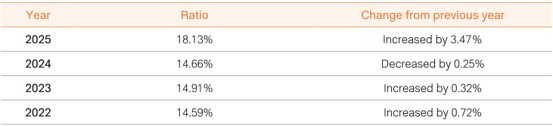
The SCSB holds quarterly labor-management consultation meetings with union representatives to communicate and discuss working conditions and related labor issues. The SCSB signed its first collective bargaining agreement in 2025, marking a significant milestone in promoting the institutionalization of labor-management cooperation.
|
Column
Milestone in Labor – Management Collaboration: Signing of the First Collective Agreement |
|
|---|---|
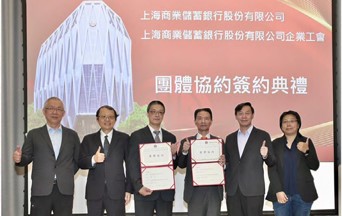
| To further institutionalize labor–management collaboration, the SCSB formally signed its first collective agreement with the employee union on May 27, 2025, coinciding with the SCSB's 110th anniversary. The agreement was signed by the President and the Chairperson of the employee union, with witnesses from the Ministry of Labor and local competent authorities.The agreement not only consolidates existing employee rights and benefits, but also introduces benefits beyond regulatory requirements, including a half-day birthday leave each year and three days of paid special family care leave. These measures concretely implement the SCSB's corporate culture of "warmth, ease, and respect", recognize employees as the SCSB's most important partners, and build a stable and sustainable happy workplace. |
|
Employee Work Experience Survey
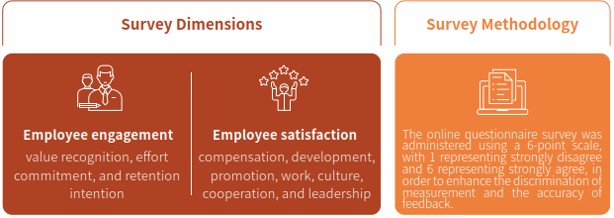
Employees are the SCSB’s most important asset. To optimize the employee work experience and understand the feelings of employees, since 2022, the SCSB has commissioned an objective third-party external consultancy to carry out an anonymous employee engagement and satisfaction survey, inviting all active employees to participate. The scope of the employee experience survey has been expanded to include full-time employees worldwide, in order to understand employees’ evaluations of five dimensions, including meaningful work, supportive management, positive work environment, opportunity for growth, and leadership and trust. Happiness and stress levels were also included as survey dimensions. Through the systematic collection of feedback and cross-analysis with relevant indicators such as employee performance and turnover rates, the SCSB formulates strategies to optimize the talent experience and establishes the foundation for talent management planning in the following year. To further improve survey quality and analytical depth, starting from 2025, the SCSB adjusted its cooperating third-party professional institution and optimized the survey framework and measurement method to gain a more comprehensive understanding of employee feedback and organizational conditions.
Survey Results of Employee Commitment and Satisfaction
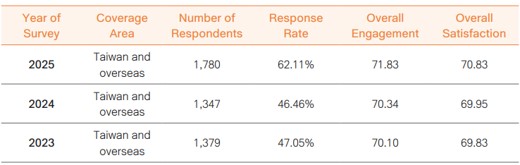
Note 1. The base date for the number of respondents is based on the period from January 1 to December 31 of the
respective year. The total number of employees for each year is based on the number of employees in the
SCSB as of December 31 of the respective year.
Note 2. The response rate is calculated by dividing the number of respondents by the total number of SCSB
employees worldwide.
| 2024 Survey Result Analysis and Improvement Plan | 2025 Improvement Plan Implementation Status |
|---|---|
|
|
|
|
|
|
|
|
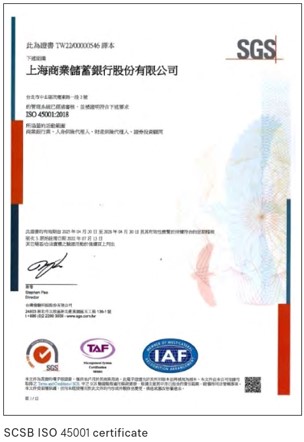
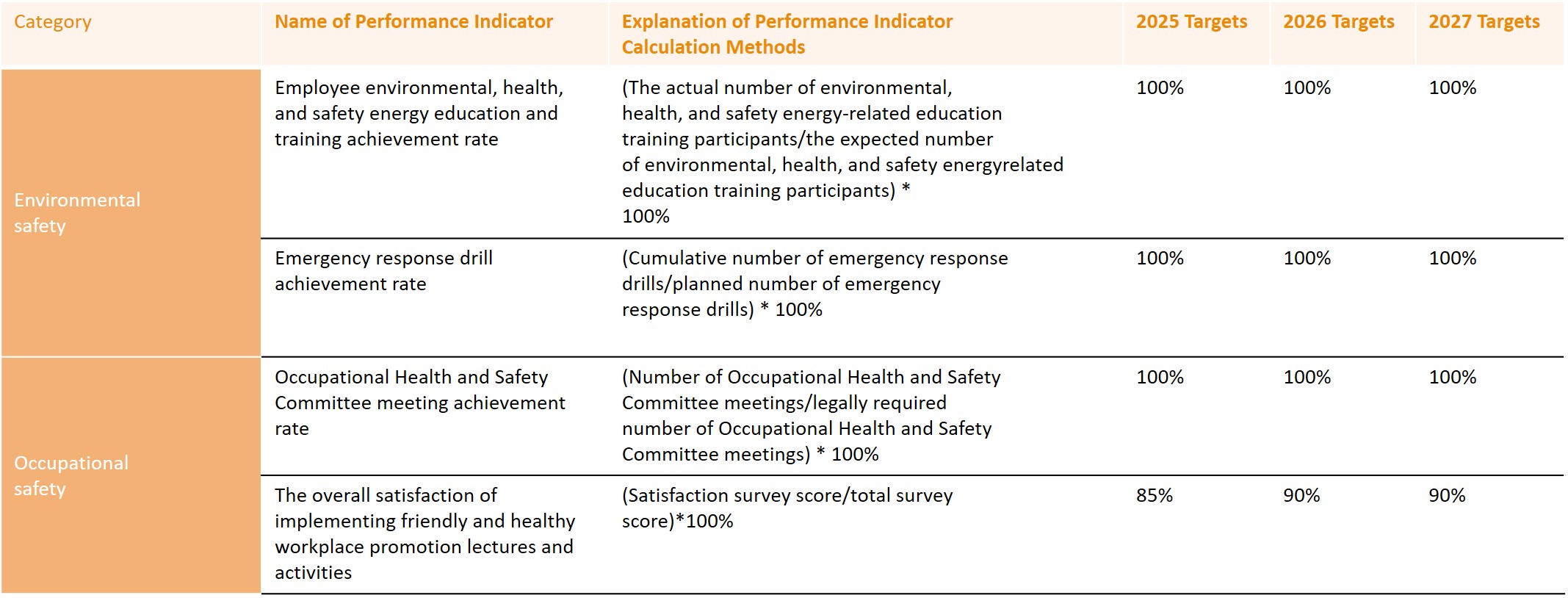
The SCSB attaches great importance to employee health and safety. In 2022, the SCSB introduced the ISO 45001 Occupational Health and Safety Management System and successfully obtained certification. Starting in the second half of 2023, the SCSB expanded the scope of certification nationwide, achieving a coverage rate of 100% at Taiwan locations by 2025. A committee should be established in accordance with the “Regulations of Occupational Health and Safety Management” and the SCSB‘s “Regulations of the Establishment of Occupational Health and Safety Committees”, and quarterly meetings should be convened. According to Article 11 of the Regulations of Occupational Health and Safety Management, laborrepresentatives should account for more than one-third of the committee members. The SCSB’s committee consists of 11 members, including 4 labor representatives, thereby complying with legal requirements.
Considering the work patterns of employees, the SCSB follows the framework of the Four Major Plans for Labor Health Services to formulate short-, medium-, and long-term occupational and environmental safety and health indicators and targets. Furthermore, the SCSB conducts overload surveys to identify and evaluate high-risk groups, implements improvement measures including health management and medical personnel interviews, as well as plans relevant health promotion activities. In 2025, the SCSB implemented projects to address potential workplace risks. These include the installation of partitions in electrical switch boxes to minimize the chances of operators accidentally touching live components; the installation of guardrails along the edges of roofs to prevent fall accidents; the installation of handrails and anti-slip strips on stairs to prevent falls and injuries while using stairs.
Short-, Medium-, and Long-term Indicators and Targets of Occupational and Environmental Health and Safety
Health Risk Evaluation
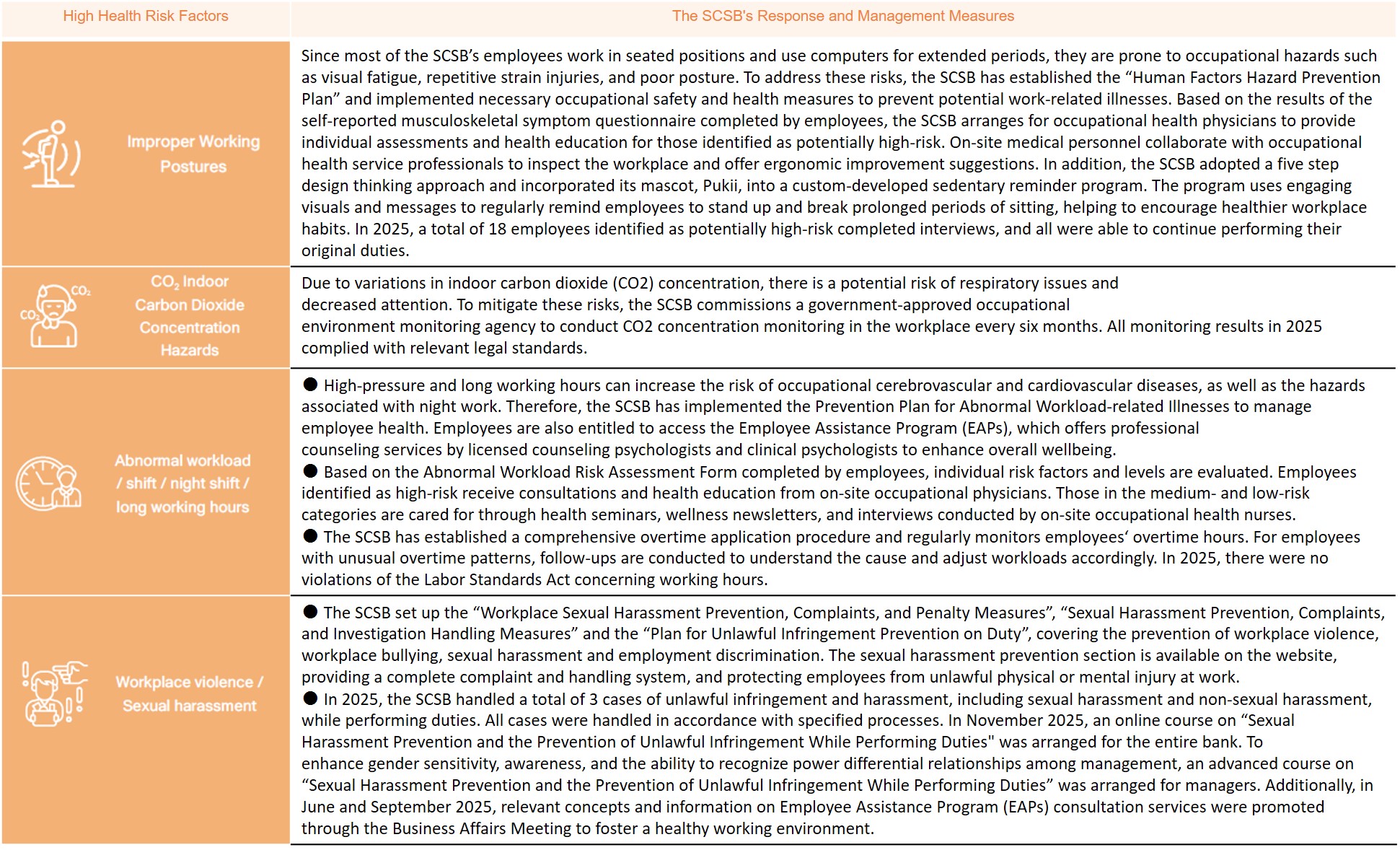
Overtime Management And Work-life Balance
The SCSB complies with the "Labor Standards Act" and other relevant regulations by clearly defining working hours, overtime, and leave policies in its "Work Rules", "Employee Compensation and Benefits Guidelines", and "Overtime Application Procedures". The total number of extended working hours may not exceed 46 hours per month. To promote work-life balance, the SCSB compiles a monthly list of employees whose clock-out times exceed 30 hours beyond regular working hours and reminds supervisors to adjust workloads as needed to safeguard employees' physical and mental well-being and ensure workplace safety. The SCSB also encourages employees to maintain a healthy work-life balance by including a special leave policy in the "Work Rules" and offering initiatives such as the "Travel Subsidy Program" to encourage employees to plan and take leave in advance. In cooperation with labor inspections conducted by regulatory authorities, the SCSB has maintained a clean record with no major deficiencies in recent years, underscoring its commitment to fostering a high-quality work environment.

The classification of employees' health conditions is executed based on the health check-up results. High-risk staff are arranged for interviews with labor health service medical personnel on an individual basis according to occupational safety plans, such as the Prevention Plan for Abnormal Workload-related Illnesses, Human Factors Hazard Prevention Plan, Maternal Health Protection Plan, and Middle-aged and Elderly Employee Adaptive Work Plan. Health education and medical advice are provided through interviews to protect the mental and physical health of employees and prevent diseases.
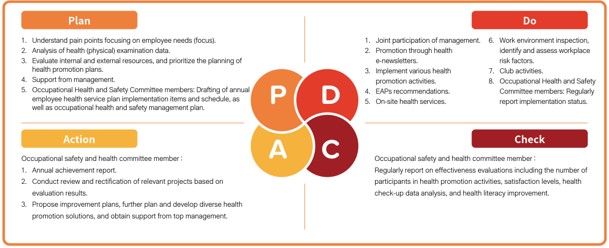
Employee Health Management And Health Promotion
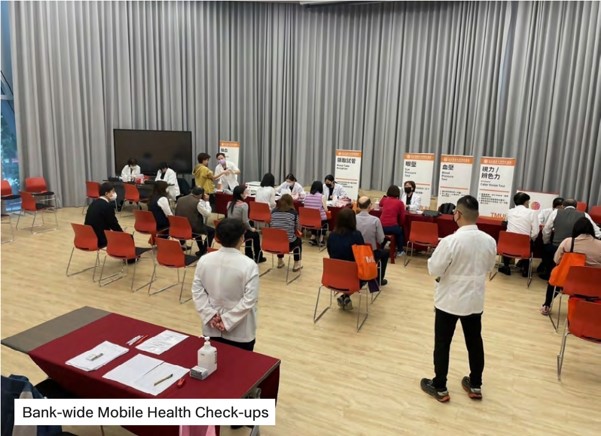
The SCSB strives to uphold and care for employee health. The SCSB pays for the health examination for new employees. With regards to the health check-up for employees, a free health check-up is offered every three years, superior to legal requirements, and mobile health examination services are arranged in cooperation with accredited medical institutions. To demonstrate the SCSB’s emphasis on employee health, in 2025, the SCSB increased health examination subsidies. In line with the regular health check-up conducted every three years, employees are provided with health examination subsidies ranging from NT$3,000 to NT$7,500 based on age. In addition, the Employee Welfare Committee provides an additional NT$3,000 subsidy to promote employees' voluntary health management and protect their physical and mental health. In 2025, a total of 2,518 employees completed health check-ups.
For follow-up health management, the SCSB's occupational health service medical personnel classify employees' physical and health examination results, conduct on-site health service interviews, and provide health education for high-risk groups. In 2025, medical personnel conducted 15 and 96 on-site health services with doctors and nurses, respectively, interviewing 310 employees with an overall satisfaction rate of 92.4%.
Additionally, the PDCA approach is applied to understand employees' pain points through empathy. Furthermore, practical health promotion lectures and activities were planned to care for employees and encourage them to value their health. At the same time, the SCSB actively builds a comprehensive healthy workplace. In 2025, a total of 20 units at the Head Office building and branch offices all passed the Workplace Health Promotion Self-Assessment Certification.
In addition, the SCSB achieved outstanding results in health promotion and maternal protection and received multiple national and local recognitions in 2024:
- Healthy Workplace Mark: The Insurance Agency Department, Yuanlin Branch, and Savings Department Branch were awarded the Badge of Accredited Healthy Workplace – Health Promotion Mark by the Health Promotion Administration, Ministry of Health and Welfare. The Business Department was awarded the Badge of Accredited Healthy Workplace – Health Activation Mark.
- Excellent Breastfeeding Rooms: Breastfeeding rooms at the Head Office, Neihu, Chiaxin, Personal Banking, and Ren’ai buildings received the High Distinction Breastfeeding Room Certification from the Taipei City Department of Health for their complete facilities and considerate environment.
- Annual Outstanding Recognition: In 2024, the Head Office received the Health Communication Award for the National Excellent Healthy Workplace Award, demonstrating the SCSB’s long-term commitment to maintaining employees’ physical and mental health.
On-site Health Service is Provided by Contracted Occupational Health Service Physicians and Nurses
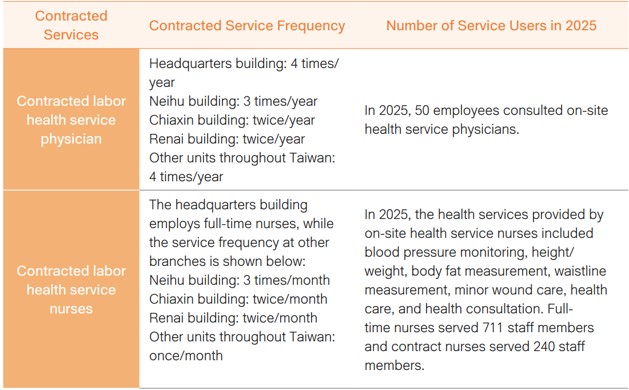
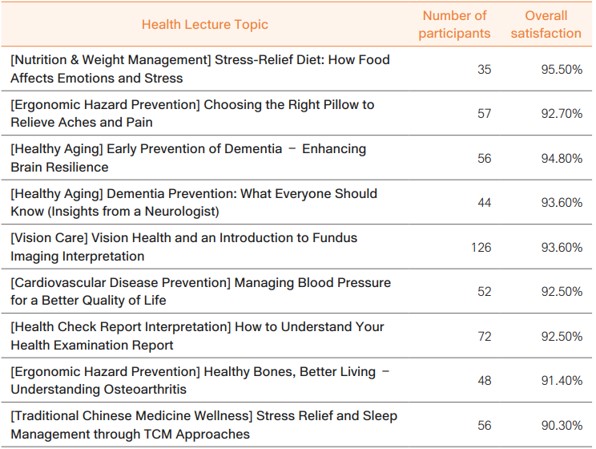
In 2025, there were zero cases of occupational diseases, permanent disabilities, or fatalities resulting from occupational accidents at the SCSB. There were zero severe occupational injuries and 20 recordable occupational injuries, all of which were traffic accidents occurring during business trips or commuting. The actual working hours were 5,669,904 hours, resulting in a recordable occupational injury rate of 3.53 (number of occupational injuries × million hours / actual working hours). No other workers experienced occupational injuries, and the overall average absenteeism rate for SCSB employees in 2025 was 0.26%, meeting the SCSB’s target of 0.5% for the same year.
Note 1. The definition of severe occupational injury is based on the "Regulations of the Examination of Injuries and Diseases Resulting from the Performance of Duties by the Insured Persons of the Labor Occupational Accident Insurance" issued
by the Bureau of Labor Insurance, Ministry of Labor.
Note 2. Absenteeism rate = ((occupational injury and sick leave + sick leave + personal leave) / total working days) × 100%. Long-term absences due to serious illness were excluded from the 2025 absenteeism calculation.
Note 3. As mentioned above, before 2024, the calculation of sick leave and personal leave included menstrual leave and family care leave. In 2025, the SCSB optimized the absenteeism calculation method by excluding statutorily protected leave types, including family care leave and menstrual leave, to implement the principles of legal compliance and human rights protection. Through the adjustment of this indicator, the SCSB avoids creating leave-related pressure on employees through its management mechanism, supports employees in exercising their leave entitlements with peace of mind, and continues to build a friendly workplace environment that is both supportive and psychologically safe.
Note 4. The calculation scope for the 2025 absenteeism rate includes the SCSB's business locations in Taiwan, as well as its overseas branches and representative offices.
To strengthen employees' awareness of occupational safety and health, the SCSB continuously conducts education and awareness programs. Employees are trained to identify risks and evacuate from the workplace in a timely manner when facing imminent and serious threats to their life or health while performing their duties. In addition, the SCSB has implemented appropriate measures to ensure employees are protected from such risks and conducts occupational safety and health training in accordance with relevant regulations. In 2025, the SCSB arranged for all employees to partake in the "Ergonomic Hazards and Prevention in the Financial and Insurance Industry – Office Settings" online course, which achieved a 100% completion rate. The Administration Management Department is responsible for the annual inspection of fire equipment and AEDs to ensure that equipment at each location can effectively respond to emergencies.
Note: The training completion rate calculation for "Ergonomic Hazards and Prevention in the Financial and Insurance Industry – Office Settings" excludes employees on unpaid leave, long-term leave, new employees who joined in December of the current year, and overseas employees.

Employee Health and Safety Plan
| Project Items | Project Description and Achievements |
|---|---|
| Maternal Health Protection Plan | The SCSB has formulated the “Maternal Health Protection Plan”, where occupational health service medical personnel provide care, counseling, and guidance for pregnant, postpartum, and breastfeeding female employees, as well as evaluate maternal workplace hazards. In addition, dedicated breastfeeding rooms are available at the headquarters, Neihu, Chiaxin, and Personal Banking buildings. The breastfeeding rooms comply with the standards for the establishment and management of breastfeeding rooms in public places, providing female employees with a better and safer breastfeeding environment. The SCSB has also established a maternal health education section titled “PU Mommy & Baby Wellness Hub” in the health management system, providing relevant health education information for pregnant, postpartum, and breastfeeding female employees, helping female colleagues acquire pregnancy-related health knowledge and strengthen their self-care capabilities. In 2025, a total of 52 pregnant, postpartum, and breastfeeding female employees received face-to-face or telephone interviews with medical personnel, who provided health education information related to pregnancy and postpartum care. Employees were also informed of maternal protection benefits such as childbirth subsidies, the breast milk delivery subsidy program, and EAPs services. The overall satisfaction rate reached 93.1%. Breastfeeding rooms at the headquarters, Neihu, Chiaxin, and Personal Banking buildings received the Excellent Breastfeeding Room Certification (High Distinction) from the Taipei City Department of Health for the period from September 1, 2024 to August 31, 2027. The Renai Building also applied for and received the Excellent Breastfeeding Room Certification (High Distinction) from the Taipei City Department of Health for the period from September 1, 2025 to August 31, 2028. |
| Provision of healthcare information | The SCSB issued health e-newsletters to internal colleagues, focusing on infectious disease prevention and control, health care, and employee health promotion. The diverse topics include cardiovascular and cerebrovascular disease prevention, influenza prevention, dementia prevention, nutrition knowledge, cancer prevention, and tobacco hazard prevention. The content is designed with text and graphics to improve readership. Employees may also obtain timely health information through the newsletters. In 2025, 32 e-newsletters were issued, positively benefiting and influencing all 3,000 employees, with total reach of approximately 96,000 person-times. Through diverse communication channels, the SCSB continues to implement workplace health promotion. |
| Health stairs | The health stairs were established and beautified to encourage colleagues to take the stairs more often. Climbing stairs instead of taking the elevator not only improves cardiopulmonary function and physical endurance but also helps boost employee work efficiency and morale. By integrating exercise into daily routines, the program can promote energy conservation and health. In addition, information such as floor step count and calories burned is also displayed. |
| Wellness Center | The SCSB has established the “Wellness Center” at the headquarters building, with access control in place to ensure safe use. The facility provides diverse sports and recreational equipment, including upright exercise bikes, elliptical trainers, table football, dart machines, and televisions. It is open for employees to use during their free time to promote physical and mental health, relieve stress, and improve work efficiency. |
| Cancer screening activity | Cancer screening activities were organized. In total, 41 employees received pap tests and 25 employees received mammography, achieving an overall satisfaction rate of 94.7%. In conjunction with the 2025 mobile health check-up promotion, 334 employees completed fecal occult blood tests. |
| Technology Fitness Testing Events | In 2025, the technology fitness testing event was executed in the headquarters building. A total of 97 staff members participated in the event, achieving an overall satisfaction rate of 94.7%. |
| Flu shots | In 2025, the SCSB organized 2 workplace flu shot sessions, offering both publicly funded and self-funded flu shots at the headquarters building. A total of 165 employees participated, including 79 employees receiving publicly funded flu shots and 86 employees receiving self-funded flu shots, achieving an overall satisfaction rate of 96.6%. |
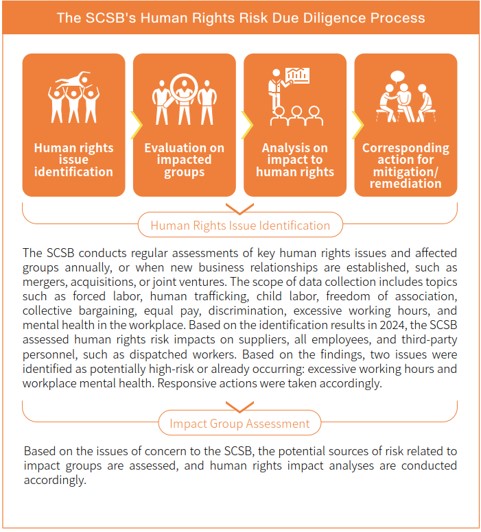
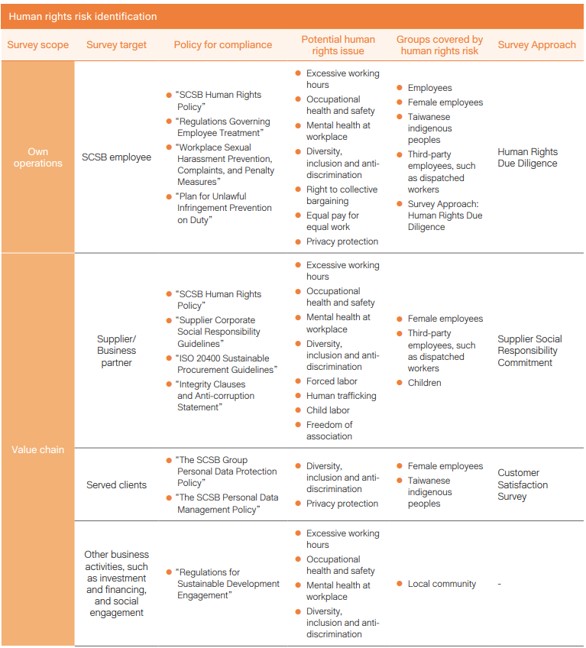
To fulfill corporate social responsibility, protect the basic human rights of employees, suppliers, and business partners (e.g. customers), the SCSB strives to create an environment that ensures human rights and adheres to regulations of global branches where they are located. The SCSB agrees to and supports various principles disclosed in the "International Bill of Human Rights", "ILO Core Conventions on Labor Standards", "The UN Global Compact", and the "United Nations Guiding Principles on Business and Human Rights (UNGPs)". To eliminate any infringement or violation of human rights and reflect the responsibility of respecting and safeguarding human rights, the "SCSB Human Rights Policy" was formulated, and the "Employee Service Regulations" explicitly stipulate that employees should respect human rights in their daily work.
To strengthen the practice of human rights and ensure the protection of labor conditions, the SCSB has established 13 labor-management meetings across its head office and 12 business units in accordance with the Regulations for Implementing Labor-Management Meeting. These meetings are convened quarterly and composed of representatives from both labor and management, selected according to regulatory requirements. Discussion topics include compensation, working hours, employee benefits, and occupational safety, serving as a key reference for policy adjustments and system improvements. Through this mechanism, the SCSB actively promotes labor-management communication and cooperation, and is committed to continually enhancing the workplace environment.
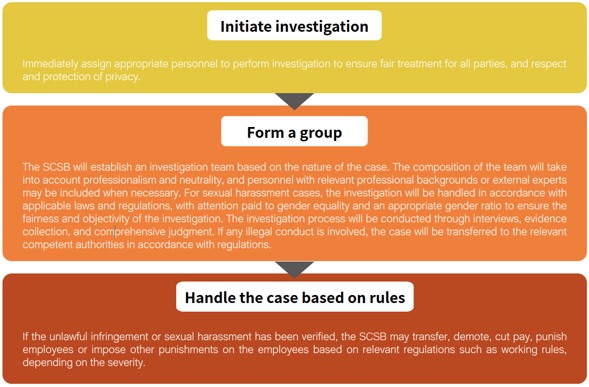
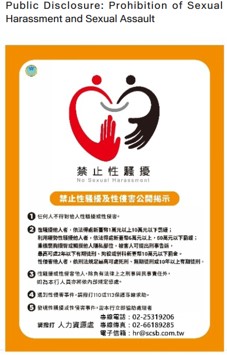
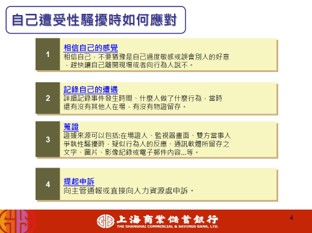
On the other hand, the SCSB set up the "Workplace Sexual Harassment Prevention, Complaints, and Penalty Measures", "Sexual Harassment Prevention, Complaints, and Investigation Handling Measures" and the "Plan for Unlawful Infringement Prevention on Duty", which cover the prevention of workplace violence, workplace bullying, sexual harassment, and employment discrimination. The sexual harassment prevention section is available on the website, providing a complete complaint and handling system, and protecting employees from unlawful physical or mental injury at work. In 2025, there were 3 cases of unlawful infringement and harassment, including sexual harassment and non-sexual harassment, while performing duties. They were closed according to specified processes. In November 2025, an online course on "Sexual Harassment Prevention and the Prevention of Unlawful Infringement While Performing Duties" was arranged for the entire bank. To enhance gender sensitivity, awareness, and ability to recognize power differential relationships among management, an advanced course on "Sexual Harassment Prevention and the Prevention of Unlawful Infringement While Performing Duties" was arranged for managers. Additionally, in June and September 2025, relevant concepts and information on Employee Assistance Program (EAPs) consultation services were promoted through the Business Affairs Meeting to foster a healthy working environment.
|
Column
Workplace Misconduct and Sexual Harassment Prevention Promotion Series |
|
|---|---|
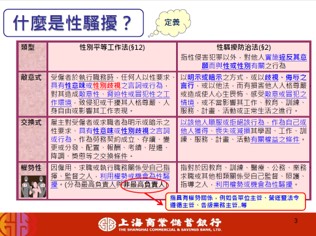
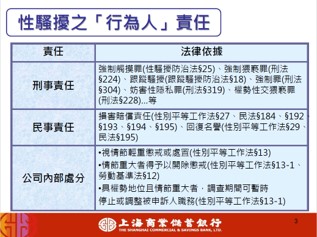
To reinforce colleagues' sexual harassment-related awareness, the SCSB has launched the e-Academy course entitled "Sexual Harassment Prevention and Unlawful Infringement Prevention on Duty" to further strengthen colleagues' sensitivities toward relevant issues.
“Sexual Harassment Prevention and Unlawful Infringement Prevention on Duty”
|
|
“Sexual Harassment Prevention and Unlawful Infringement Prevention on Duty (Advanced)”
|
|
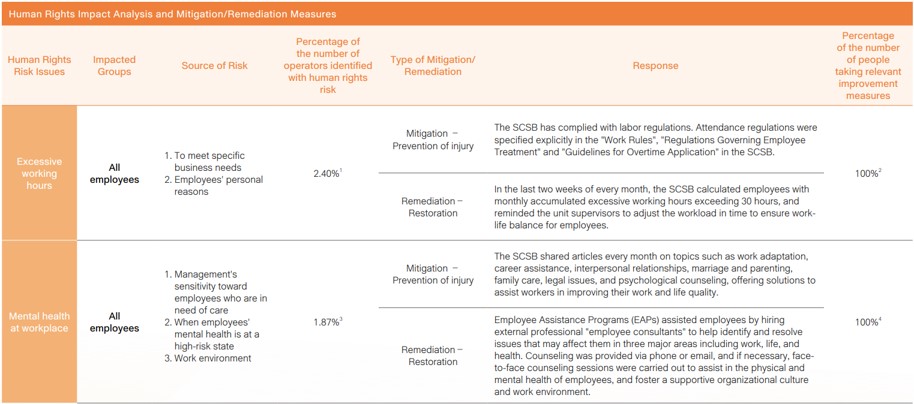
Note 1. The total number of employees with monthly accumulated overtime hours exceeding 30 hours in 2025, from January to December, divided by the total number of employees in the SCSB, excluding locally employed personnel in overseas branches.
Note 2. In 2025, a total of 67 employees exceeded 30 hours of overtime work per month. After appropriate care and adjustments to workload by the SCSB, all employees showed improvement and did not violate the regulations regarding overtime hours stipulated in the Labor Standards Act.
Note 3. The total number of cases utilizing Employee Assistance Programs in 2025 divided by the total number of employees in the SCSB, excluding locally employed personnel in overseas branches.
Note 4. In 2025, there were a total of 52 cases utilizing Employee Assistance Programs. Through the involvement of external professional "employee counselors", these cases assisted employees in identifying and resolving issues affecting their personal work, life, and health dimensions.
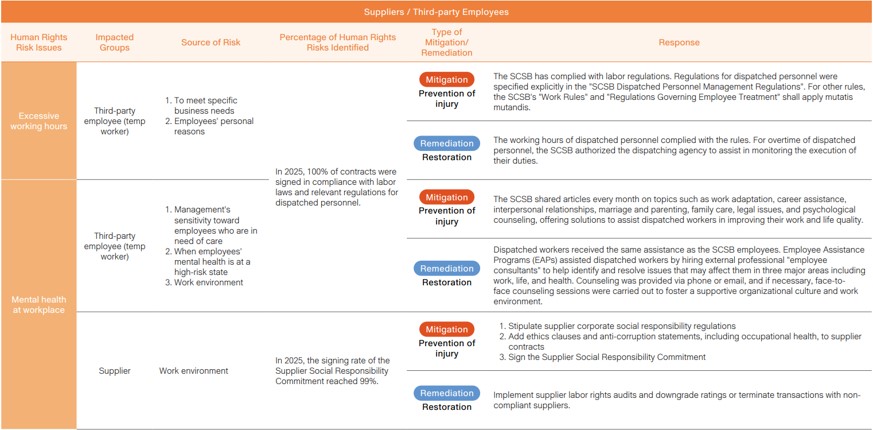
The SCSB actively promotes awareness of related concepts among employees, upholding the strategic focus of "fulfilling social responsibility and building a positive corporate image." In 2025, the SCSB continued to provide human rights education and training.

The SCSB upholds the service philosophy of "Always placing customers' needs first", orienting towards societal needs and advancing multiple initiatives to enhance the accessibility of financial services for vulnerable groups. These groups include children, the general public, diverse communities, and the elderly, aligning with the principles of inclusive finance. Our Cambodian subsidiary, AMK, also offers micro-loans to farmers, contributing to local income and standard of living improvements. The SCSB remains committed to ongoing efforts in introducing financial products that meet a broader range of needs, contributing to a more prosperous and harmonious society.
Financial Inclusion Loan
To support businesses across Taiwan, the SCSB issued a total of 31,597 corporate loans in 2025, with an outstanding loan balance of approximately NT$385.1 billion. Of this amount, NT$301.4 billion, accounting for 78.27%, was extended to small and micro-sized enterprises.
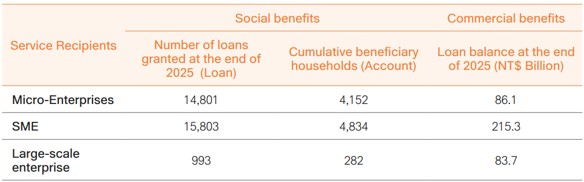
Note 1: Small and medium-sized enterprises (SMEs) are categorized according to the definition provided by the Financial Supervisory Commission (FSC), with those having capital of less than NT$30 million being further classified as micro-enterprises.
Note 2: The definition of community development is based on the initiatives outlined in the Ministry of Health and Welfare's Regulations on Community Development Work. There were no loan cases related to community development in the current year.
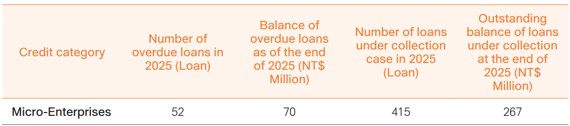
To enhance investors' understanding of loans with social benefits, the SCSB provides specific disclosures regarding overdue and collection information for micro enterprise loans. This practice aims to reflect both the social impact of the loans and the risk management associated with them to investors.
|
Column
Hong Kong Subsidiary Supports SME Financing and Data-Driven Financial Services |
|---|
| The Hong Kong subsidiary ,Shanghai Commercial Bank, actively participates in the SME Financing Guarantee Scheme launched by the Hong Kong Special Administrative Region Government, supporting small and medium-sized enterprises in securing stable sources of funding. SCB continues to expand its engagement across diverse industries, including green-related sectors, start-ups and technology, healthcare, import and export, and wholesale and retail. Through diversified financial services, SCB contributes to industrial development and economic vitality. In addition, SCB continues to enhance the accessibility of financial services by providing essential banking services to SMEs, retail customers, and underserved segments, supporting easier access to financial resources and advancing financial inclusion.In the area of digital finance, SCB participates in the Commercial Data Interchange (CDI) platform promoted by the Hong Kong Monetary Authority (HKMA). The platform leverages data-sharing mechanisms to replace manual data collection and document retrieval with automated, program-based data queries, enabling efficient collection of corporate operational data and improving the loan application and credit assessment process, while enhancing operational efficiency and data timeliness. SCB has also incorporated the Interbank Account Data Sharing (IADS) mechanism into SME loan application processes. Subject to customer authorization, this mechanism enables banks to access machine-readable account transaction data from other banks. The approach improves the efficiency of credit assessments, supports ongoing credit reviews and post-loan monitoring, and strengthens risk management capabilities. Through data integration and automation, SCB enhances both the efficiency of credit processes and the overall quality of financial services provided to SMEs. |
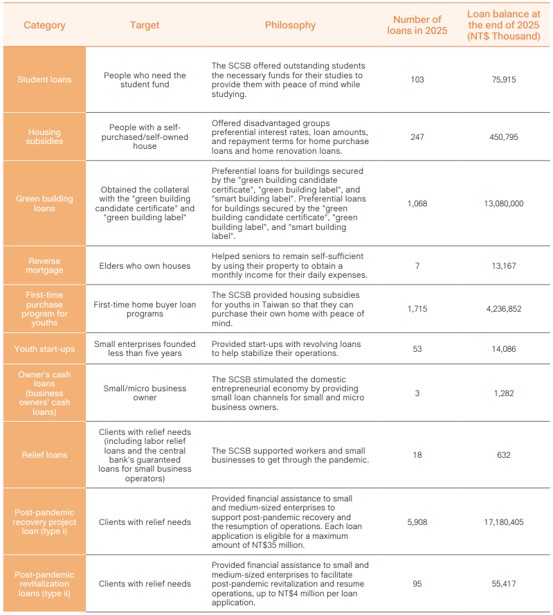
In 2025, there were 44,850 personal loans in total and the balance was about NT$368.7 billion by the end of the year. The SCSB offered numerous loan programs including student loans, housing loans, and start-up loans. Implementation of the programs in 2025 is shown below:
Trust Transition
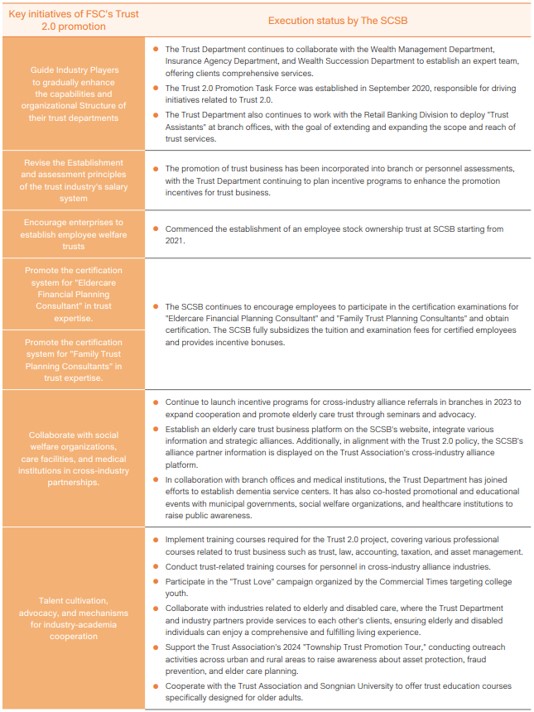
The SCSB proactively supported the Trust 2.0 Plan organized by the FSC. The Trust 2.0 Promotion Team was established at the headquarters in September 2020, and the SCSB implemented two major programs including the Strategic Alliance and Trust Helper. The former focused on the promotion of Trust 2.0 to implement comprehensive care trust, while the branch Trust Helper offered immediate trust service to customers at branch locations, aiming to facilitate the establishment of care trusts for senior citizens or people with disabilities. As of the end of 2025, the SCSB forged alliances with 461 partners from diverse industries, including long-term care facilities, nursing homes, social welfare charity groups, accountants, including bookkeepers, attorneys, and the medical and healthcare industries.
The SCSB values cultural preservation and the rights of disadvantaged students, women, children, seniors, and people with disabilities. The SCSB has assisted these groups by forming several charitable trusts and elderly care trusts. The trust situation for 2025 is illustrated below:
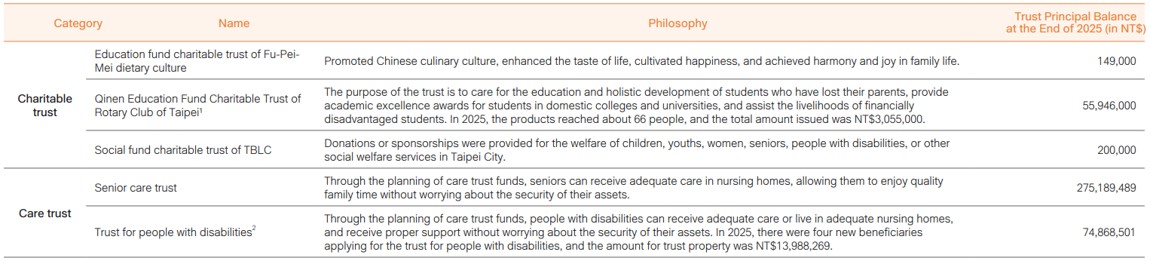
Note 1:
This applies to financially disadvantaged new or current college students. Those with one or both parents who have passed away, those from a single-parent family, or those whose families have fallen into misfortune are prioritized.
This applies to current students who earned an "A" in conduct and an average of 75 in GPA, without any failed subjects.
Note 2: Beneficiaries of the trust for people with disabilities must be disability certificate holders.
|
Column
Protecting the Financial Security of Persons with Disabilities through Trust Services |
|---|
| The SCSB utilizes trust mechanisms to assist vulnerable groups in planning and managing their assets. Ms. Li, a client referred by the Taipei Rehabilitation Association of Persons with Mental Disabilities, is under assisted declaration. Her aging parents expressed concerns regarding her future asset management and daily care, leading the SCSB to design a customized integrated self-benefit monetary trust structure.Under this arrangement, Ms. Li serves as both the trustor and beneficiary, placing future insurance payouts from her parents and her personal savings into the trust. The Taipei Rehabilitation Association acts as the trust supervisor. The trust agreement stipulates that the association may request monthly disbursements from the trustee within a predefined amount to cover Ms. Li’s living and care expenses, ensuring continuous support. Any single disbursement exceeding the agreed limit requires the consent of the assistant or guardian before execution. This trust structure ensures that Ms. Li’s assets are used exclusively for her care needs under the supervision of the trust supervisor, reducing the risk of fraud or misuse. The Taipei Rehabilitation Association will continue to refer additional clients for similar arrangements, collaborating with the SCSB to promote the use of trust mechanisms in safeguarding the financial security of persons with disabilities. |
Protect The Rights Of People With Disabilities
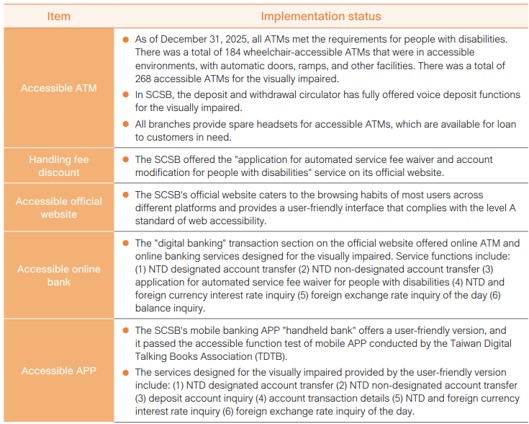
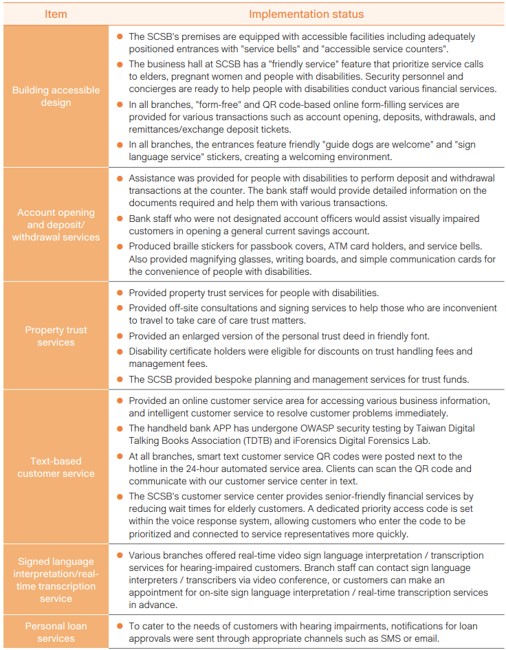
The SCSB not only offered trust services designed for people with disabilities as well as their families and relatives to accommodate their needs for managing wealth through trusts but also provided off-site signing services for customers who were unable to visit the SCSB branches. Furthermore, the SCSB has established a service improvement mechanism for senior citizens and people with disabilities. Relevant opinions are compiled by the heads of each business division and discussed in meetings chaired by the President to continuously optimize and improve service quality. The SCSB's online banking and mobile APP banking services offer a user-friendly version and the SCSB’s official website has obtained the "A" level certification for accessibility, providing a user-friendly interface with A-level accessibility standards for the entire website. The digital banking "Transaction Section" on the homepage of the official website offers online banking services designed for the visually impaired. Additionally, the SCSB's ATMs provide "Accessible ATM" services for the visually impaired, including functions such as cash withdrawal, transfer, balance inquiry, and changing passwords, all meeting accessibility specifications.
Sustainable Insurance
The SCSB's Insurance Agency Department strives to provide premium services to meet the insurance needs, risk management, and financial planning of customers across all age groups. Furthermore, the SCSB offers comprehensive financial insurance services aimed at personal and asset protection, retirement planning, and asset inheritance for the public. Primary services of life insurance include allocating insurance products by customizing risk planning, offering adequate advice, and analyzing customers' needs. The insurance products include health insurance, whole life insurance, endowment insurance, principal repayment life insurance, investment insurance, annuity insurance, housing loan life insurance for housing loan customers, as well as group and personal injury insurance for corporate customers. Primary services of property insurance cover risks associated with personal housing, factories of corporate customers, cargo transportation, trade credit, as well as director's and supervisor's liability for corporate customers. In 2025, the SCSB provided a total of 412 insurance products related to environmental care, social responsibility, and ESG topics, generating a total premium of approximately NT$4,143,068. To give back to society and protect the rights of disadvantaged groups, the SCSB also sponsors micro insurance for various vulnerable groups each year. In 2025, a total of 86 micro insurance sponsorships was provided, with premiums totaling NT$15,498, benefiting 86 individuals.
|
Column
Digital Ambassadors |
|---|
| To address the digital gap and service needs of elderly individuals and people with disabilities, the SCSB has implemented a "Digital Ambassador" program. Branch operations and compliance managers serve as the core drivers of this initiative, supported by the launch of "Digital Ambassador Professional Training Programs" to systematically cultivate specialized talent. Through internal knowledge sharing and cross-unit collaboration, the SCSB strengthens employees' understanding and application of digital financial services, enhancing overall customer experience while improving the quality and competitiveness of the SCSB's digital services. |
|
Column
PukiiBank Youth Financial Planning Program |
|
|---|---|
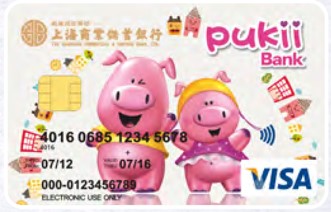
| Children are a lifelong asset to their parents, and the SCSB is committed to safeguarding what matters most to our customers. To help minors under the age of 18 develop financial planning skills early on, the SCSB launched the PukiiBank savings account, offering exclusive preferential interest rates. The account is paired with a personalized Pukii Bank Easy Debit Card, which allows for domestic and international ATM withdrawals and transfers. This initiative encourages teenagers to develop responsible spending habits by using a Visa card, managing payments through designated account deductions, reviewing passbook records, and reconciling monthly transaction statements—therebyfostering a mindset of spending within their means. Since its launch in 2014, the program has opened over 5,232 accounts. |
|
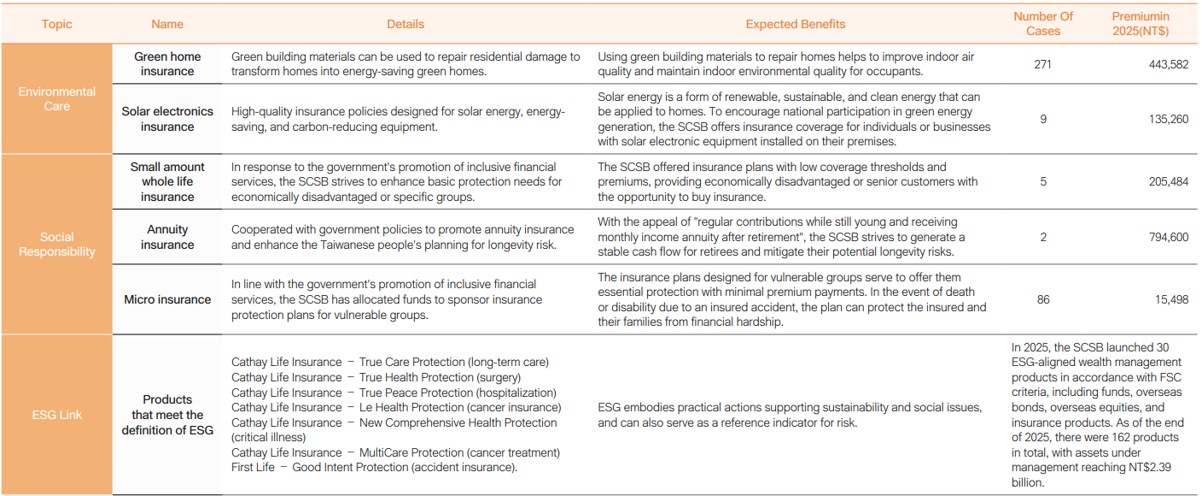
Note 1: Vulnerable groups include: micro enterprises, poor people, people with disabilities, people with low income, individuals in countryside or remote areas, women, elders, young people with special conditions, people with health conditions or disabilities, ethnic minorities, immigrants or informal workers, uneducated people, or people who are forcibly displaced.
Note 2: The units receiving micro insurance premium donations in 2025 were the Spinal Cord Injury Welfare Association of Hualien County and Taoyuan Chang Chang Care Institution.
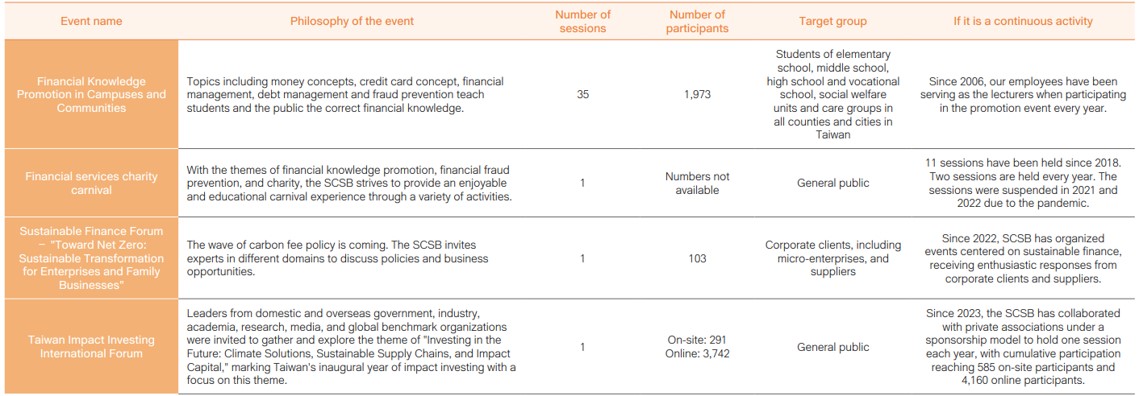
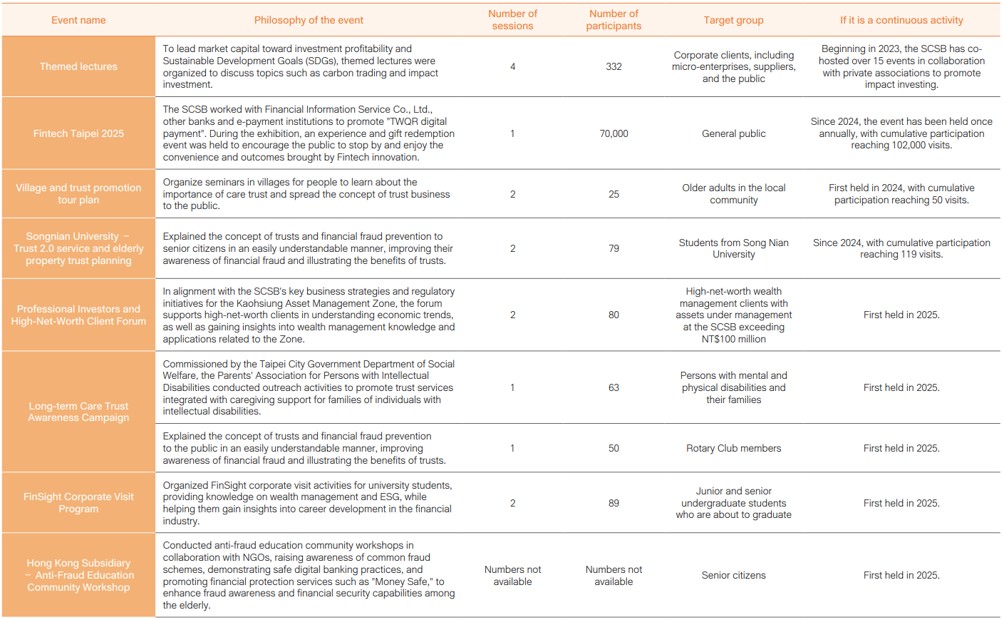
Since 2006, the SCSB has actively supported the FSC's policies by collaborating with the BAROC, TABF, and The National Federation of Credit Co-operatives R.O.C. (NFCC) to organize the "Financial Knowledge Promotion in Campuses and Communities". The SCSB has been honored by the FSC and received the certificate of appreciation for more than ten consecutive years since 2011. To help children and clients understand investment and financial concepts as well as sustainability trends, the SCSB has also organized children's financial camps and various lectures via offline or online multimedia platforms such as Facebook. The following summarizes activities held in 2025:
|
Column
Cross-industry collaboration: Trust operation promotion |
|
|---|---|
| The SCSB continues to collaborate with social welfare organizations and government agencies to promote trust services and property management education for people with physical and mental disabilities. In 2025, the activity was commissioned by the Taipei City Government Department of Social Welfare and implemented by the Taipei Association for Parents of Persons with Intellectual Disabilities, focusing on families of persons with intellectual disabilities. The program promoted the integration of trust services with care and nursing support, explaining trust regulations, trust structures, and their applications in safeguarding the assets and daily care of beneficiaries, while also sharing practical case studies and operational experience.This promotion continues the SCSB past experience in working with social welfare organizations dedicated to serving people with intellectual disabilities. Through thematic presentations and case discussions, participants were able to better understand the importance of trusts in asset management and daily care arrangements. In the future, families may use trust arrangements to safeguard the financial security of beneficiaries, and may be referred to the SCSB for relevant trust services when needed, thereby creating a financially friendly care environment. This not only enhances the professional knowledge of social welfare organizations and families, but also further implements financial inclusion and social responsibility, ensuring that people with physical and mental disabilities and their families receive financial protection in a safe and trusted environment. |
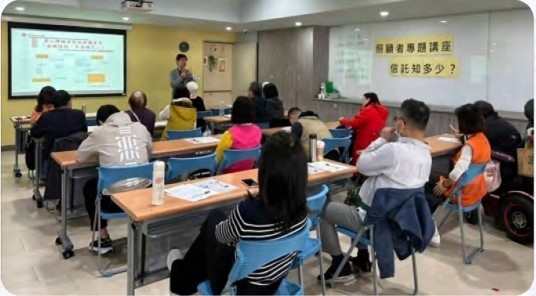
|
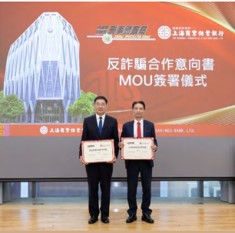
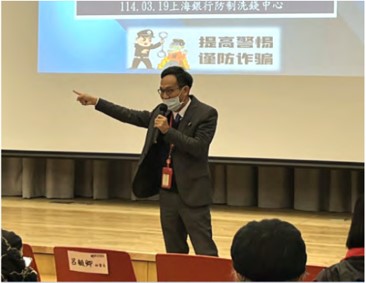
With the increasing digitalization of financial transactions, fraud schemes have become more diverse and sophisticated, posing significant challenges to customers' asset security and the overall integrity of the financial system. To fulfill the responsibility of protecting customer rights and in alignment with regulatory anti-fraud initiatives, the SCSB continues to strengthen its anti-fraud management framework. Through a combination of internal controls, employee training, and external awareness campaigns, the SCSB is committed to building a secure and trustworthy financial service environment.
| Anti-Fraud Information Hub | |
|---|---|
| The SCSB has established official anti-fraud information platforms, such as the SCSB Anti-Fraud Awareness, which systematically integrate the latest fraud schemes, educational videos, and real-life cases. Through continuous updates and segmented content presentation, the SCSB enables the public to stay informed about evolving fraud trends and risk patterns in a timely manner, thereby enhancing their ability to identify, respond to, and protect themselves against fraud. |
|
| Anti-Fraud Tips | |
|---|---|
The SCSB has established an anti-fraud information section on its official website and created a dedicated "Anti-Fraud Tips" page, using simple and easy-to-understand content design to help the public build correct anti-fraud awareness in daily financial activities. The content not only covers explanations of common fraud schemes but also emphasizes practical operational guidance to strengthen real-time identification and response capabilities:
|
|
Anti-Fraud Awareness and Financial Security
| Column | |
|---|---|
|
|
| Column | |
|---|---|
|
|
Since its establishment in 1915, the SCSB has been committed to the principle of "serving society", emphasizing the promotion of public welfare activities. Through various initiatives, the SCSB provides a more secure life for the elderly, youth, and persons with disabilities, striving to create a more compassionate society. To extend the power of "good" to every corner of society, the SCSB established the "SCSB Cultural and Educational Foundation" and the "SCSB Charity Foundation" in 1990 and 2010, respectively. In recent years, the SCSB has actively integrated its business operations with philanthropic efforts, combining credit card rewards and occupational affinity cards for charitable purposes to effectively disseminate social influence. With the ethos of "taken from the community, giving back to society", SCSB employees form a volunteer team, spreading the power of "good" across various regions in Taiwan.
To effectively manage the resources invested in social engagement and assess their outcomes, the SCSB utilizes the Business for Societal Impact (B4SI) community investment assessment framework. In 2025, the SCSB categorized its social projects into charitable donations, community investments, and business initiatives. Through quantified results, the SCSB evaluates the input and output of relevant social welfare projects, aiming to allocate resources for social welfare engagement appropriately and improve resource conversion efficiency. This ensures the sustainable development of charity projects, maintaining the SCSB's original intention of fostering goodness in society.
The SCSB’s donations in 2025, excluding the SCSB Cultural & Educational Foundation, the SCSB Charity Foundation, and AMK, the SCSB's Cambodian subsidiary, totaled NT$82.38 million for the year. This amount primarily included NT$66.85 million donated to the Credit Guarantee Fund, NT$13 million donated to the SCSB Cultural & Educational Foundation to facilitate cultural and sustainable development, and NT$2 million donated to the Formosa Dreamers. In 2025, the SCSB Cultural & Educational Foundation and the SCSB Charity Foundation sponsored academic seminars, cultural activities, and charitable activities by contributing approximately NT$24.69 million and NT$2.56 million, respectively. The total budget was approximately NT$27.25 million.
In addition, the Shanghai Commercial Bank (Hong Kong subsidiary) continued to contribute to social welfare initiatives in 2025, including charitable donations of approximately NT$9.50 million, community investments of approximately NT$1.44 million, and in-kind donations of approximately NT$0.19 million, totaling approximately NT$11.13 million.
Overall, the SCSB, together with its subsidiaries and foundations, has contributed to social welfare through diverse initiatives, continuously expanding its social impact and fulfilling its commitment to sustainable development across different regions, while striving to promote shared prosperity and long-term value creation.
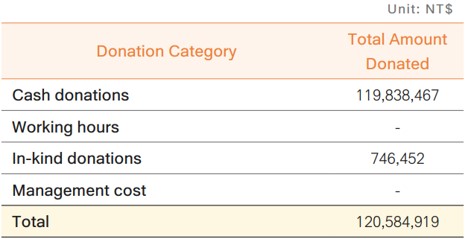
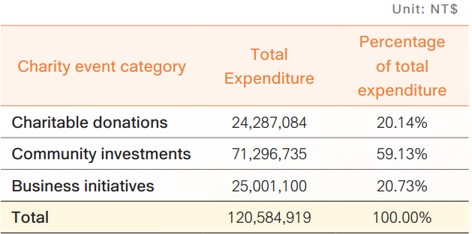
Note: The data includes the subsidiary of the Shanghai Commercial Bank (Hong Kong). The exchange rate is calculated according to the exchange rate announced by the Central Bank on the last business day of 2025, December 31, 2025, where USD1 = NT$31.438, HKD $1=NTD$4.038.
Charitable Strategy
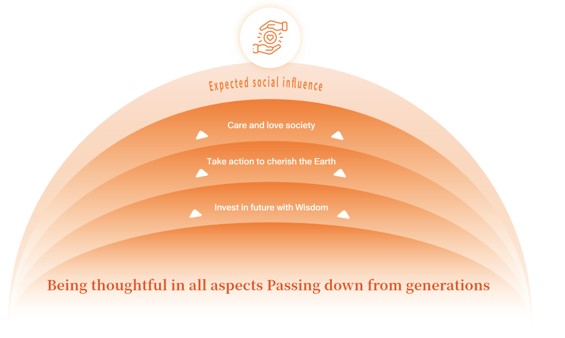
With a century-long history, the SCSB has always aspired to be a commercial bank that assists individuals in starting families and enterprises in transmitting their legacy. At its inception, the SCSB aimed to become a cornerstone of the community, embodying the core philosophy of “Being thoughtful in all aspects, passing down from generation to generation”. It actively integrates its resources, strengthens relationships with customers and supply chain partners, and incorporates the needs and expectations of stakeholders. Through three major philanthropic strategies: "Care and Love Society", "Taking Action to Cherish the Earth", and "Invest in the Future with Wisdom", the SCSB combines its core financial strength to create the greatest possible social impact.
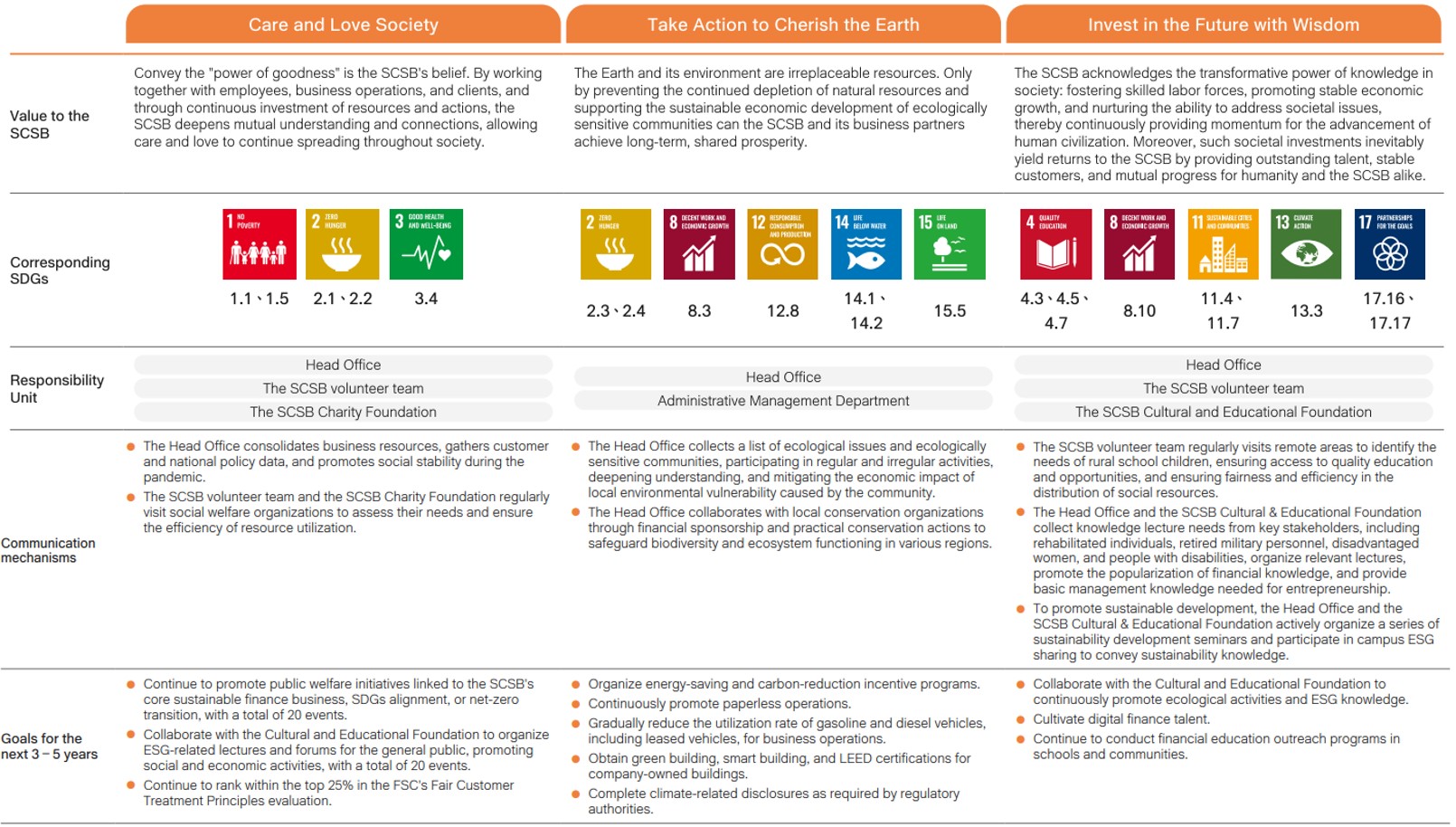
Care And Love Society
| Business Benefits | Environmental/Social Benefits |
|---|---|
|
|
| Supporting Campus Screenings of 《細漢大仔》”Xìhàn Dàizǎi” — Witnessing the Strength of Growth | |
|---|---|
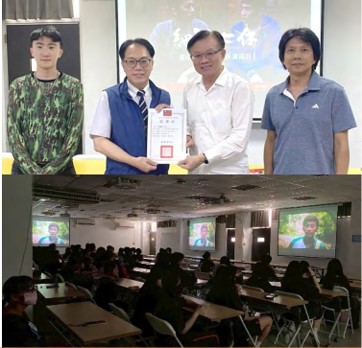
| The SCSB Cultural and Educational Foundation continues to promote education and cultural initiatives. In 2025, the Foundation sponsored a nationwide high school campus tour of the film “Xìhàn Dàizǎi,” directed by Lin Ying-Tso. Centered on adolescent development, the film explores themes such as family dynamics, school bullying, and peer relationships. The tour began in September, with the first screening held at Taipei Yuda High School, attracting over a hundred student participants. Post-screening discussions were organized to guide students in reflecting on their own growth experiences, fostering empathy and self-identity. According to Secretary-General Lu Yu-Ching of the Foundation, young people represent the future of society, yet they often face challenges such as limited emotional support, imbalanced family structures, and peer pressure during their development. Addressing these challenges requires collective attention and support from all sectors of society. Through the integration of art and film, the campus tour enables students to resonate with the content, learn to approach developmental challenges with a positive mindset, and transform the educational setting into a platform for dialogue on social issues. |
|
| Supporting the 2025 Charity Carnival – Advancing Sustainable Actions of Care | |
|---|---|
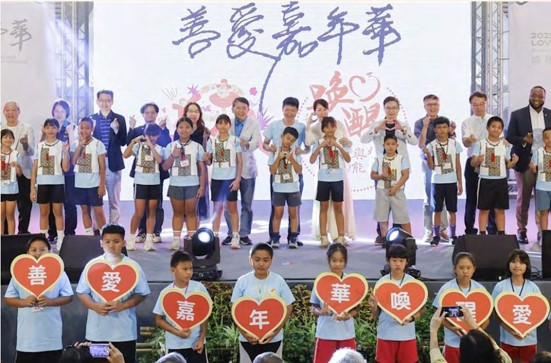
| The SCSB supports the “2025 Charity Carnival,” jointly organized by the Taiwan External Trade Development Council (TAITRA) and the Little Tree Love Association. This two-day public welfare event, themed “Awaken Love, Sustain Love,” brings together educators, volunteers, corporate partners, and families to promote the practice of compassion and kindness in daily life, education, and society. Since 2024, the SCSB Cultural and Educational Foundation has partnered with the Little Tree Love Association to organize one charitable event each year. These events have attracted more than 28,000 participant attendances in total, continuously expanding the Foundation’s social impact. Through sponsorship of this event, the Foundation supports the implementation of the Little Tree Love Association‘s core concept of the “Happiness Trilogy” in schools and communities, including the “Bringing Love into Campuses” initiative, the “Embrace the Heart Movement,” and immersive carnival experiences. These initiatives span areas such as emotional education, family relationships, and sustainable living, helping young people cultivate positive values and empathy. The event featured eight themed zones, including "Mind Exploration," "International Culture," "Science and Growth," and "Family Engagement," with participation from organizations such as the National Palace Museum and the National Taiwan Science Education Center. The program enabled students from both rural and urban areas to share learning and growth experiences. Through active participation in public welfare initiatives, the SCSB demonstrates its commitment to corporate social responsibility by supporting the educational and emotional development of children across Taiwan. Through the integration of arts and experiential education, the Foundation guides younger generations to reflect on personal growth and social responsibility, sustaining the cycle of care and illuminating every corner of society. |
|
| Supporting Laonong Elementary School – Advancing Sustainable Ed ucation and Community Prosperity in Rural Areas | |
|---|---|
| The SCSB continues to support the educational development of Laonong Elementary School located in Liugui District, Kaohsiung City. In 2025, the SCSB provided a donation of NT$200,000 to support the school's centennial anniversary celebration and the inauguration of its athletic field, demonstrating its commitment to rural education and school development through tangible action. With a history of over one hundred years, Laonong Elementary School has long served students in mountainous areas. Through collaboration among the school, the local community, and various stakeholders, improvements to the school’s athletic facilities have been completed, creating a safer and more supportive learning environment. The centennial celebration reflects strong collaboration among the school, community, and local stakeholders, showcasing the outcomes of collective efforts. The school continues to integrate local culture with education, strengthening the quality of rural education. The SCSB will continue to support the development of education in rural areas, contributing to a more balanced distribution of educational resources and promoting sustainable growth. |
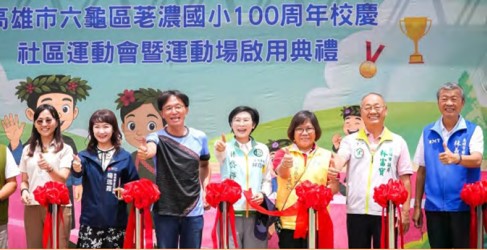
|
| Supporting Diverse Children and Youth – Advancing Care and Equal Growth Opportunities for Children of Migrant Workers | |
|---|---|
| The SCSB upholds its commitment to caring for children and vulnerable groups. Together with the SCSB Charity Foundation, the SCSB supported the "LOVE Kids Park – Equal Love for Every Child" initiative organized by the Taiwan Fund for Children and Families, focusing on the living conditions and developmental needs of children of undocumented migrant workers. The volunteer team conducted site visits to the Taipei Children's Home, engaging directly with the organization to understand the services provided, including residential care, psychological counseling, and daily life support. These efforts support children in growing up in a stable environment and contribute to their healthy development. |
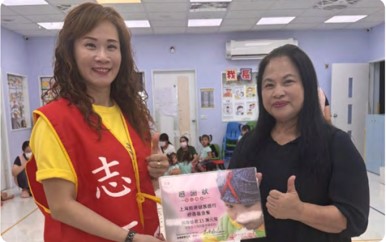
|
| Gratitude and Care – Supporting Migrant Workers and New Residents | |
|---|---|
| Guided by the principle of “gratitude and care,” the SCSB participated in the “Healthy Migrant Workers, Vibrant Industries” cross-cultural exchange event organized by the Garden of Hope Foundation. Through concrete actions, the SCSB promotes health equity and the concept of care without borders, supporting the well-being of migrant workers and new residents in Taiwan. On the day of the event, Manager Tsai Ya-Lien from the Zhongli Branch of the Taoyuan-Hsinchu Volunteer Team represented the SCSB, demonstrating the SCSB's commitment to cultural inclusion and diversity. The event featured a variety of interactive activities and attracted nearly 200 participants from migrant communities, fostering cross-cultural understanding and strengthening collective social support through engagement and exchange. |
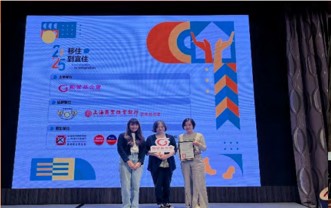
|
| Supporting the "Financial Services Charity Carnival" | |
|---|---|
| The SCSB participated in the "2025 Financial Services Charity Carnival," jointly organized by the Bankers Association of the Republic of China. The SCSB contributed NT$487,484 at the Chiayi event. The carnival focused on financial literacy promotion, charitable initiatives, and anti-fraud awareness, enabling the public to experience both the accessibility of financial education and the warmth of social welfare activities. |
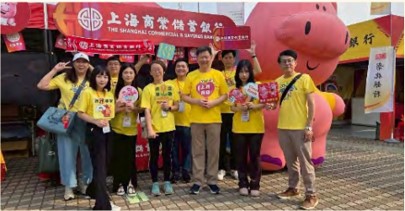
|
Take Action To Cherish The Earth
| Business Benefits | Environmental/Social Benefits |
|---|---|
|
|
| Protecting the Earth – Wild Bird Conservation Program | |
|---|---|
| Since 2023, under the coordination of the National Property Administration, Ministry of Finance, the SCSB has sponsored the Chinese Wild Bird Federation and the Tainan Wild Bird Society to adopt state-owned non-public land designated as salt pan wetlands, supporting the protection of wild bird habitats. The initiative includes actions such as (1) bird surveys and patrols in salt pan areas, (2) rescue and rehabilitation of injured birds, (3) capacity-building training for bird survey personnel, (4) research on migratory bird routes, and (5) participation in international conservation knowledge exchange, contributing to the preservation of environmental biodiversity. The SCSB also engages its customers in ecological conservation efforts under the concept of "Your Deposits, Our Contribution." In 2023, the SCSB launched the "Eco-Friendly Preferential Time Deposit Program" to encourage customers to participate. In 2025, the SCSB launched the updated "Protecting Wings Together – Wild Bird Sustainability NT Dollar Time Deposit Program," continuing to encourage customer participation while allocating a portion of proceeds as donations to the Tainan Wild Bird Society. The 2025 program offered a six-month deposit with an interest rate of 1.68%, attracting 661 participants and achieving a total subscription amount of NT$1.884 billion, further contributing to wetland conservation and wild bird protection. |
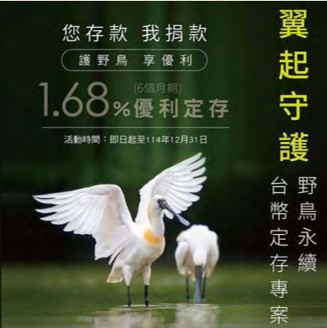
|
| Supporting BNP Paribas Tree Planting Sponsorship Program – Planting Over 19,260 Trees in India and Indonesia | |
|---|---|
| The SCSB participated in the Tree Planting Sponsorship Program exclusively introduced in Taiwan by BNP Paribas Wealth Management, in collaboration with the French social enterprise Reforest’Action, which is dedicated to forest restoration. The program provides high-net-worth clients with an opportunity to contribute to forest conservation through their investment activities. For every USD 10,000 invested in sustainable financial products developed by BNP Paribas, one tree is planted in India or Indonesia through Reforest’ Action.In 2025, the SCSB contributed to the planting of 17,409 trees in Aceh, Indonesia, and 1,851 trees in Assam, India, totaling over 19,260 trees. The initiative generated 19,260 hours of local employment, sequestered approximately 2,889 metric tons of CO2e, created habitats for 57,780 animals, and provided 77,040 months of oxygen supply. Through this program, the SCSB integrates wealth management services with environmental sustainability, contributing to climate action, biodiversity conservation, and positive social impact. |

|
| “Walk with Trees” – Transforming Employee Wellness into Environmental Action | |
|---|---|
| In alignment with its ESG sustainability vision, the SCSB launched the "Walk with Trees" employee wellness program, converting daily walking steps into symbolic actions of tree planting and forest conservation. The initiative encourages employees to integrate both health and environmental protection into their everyday lives. The program was conducted over a 60-day period from April 1 to May 30, 2025, with a total of 93 employees actively participating. Through a health app, employees accumulated daily step counts, which were translated into corresponding environmental actions once specific milestones were reached. By the end of the program, employees collectively recorded 48,884,249 steps, equivalent to a travel distance of 34,218.97 kilometers, achieving a total carbon reduction of 6,941.6 kg, and contributing to the planting of five trees. The seedlings will be cultivated into native Taiwanese species by the Kaohsiung Love Tree Association and used in wetland restoration projects, supporting ecological conservation and environmental sustainability. Through the "Walk with Trees" initiative, the SCSB enhances employee health awareness while integrating daily actions with corporate social responsibility, effectively advancing its ESG commitments. |
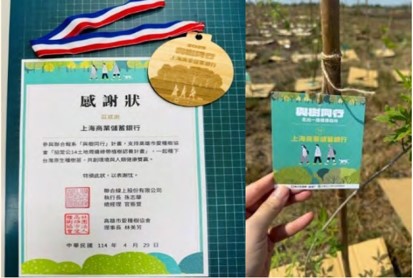
|
| 2025 Earth Day Lights-Out Campaign | |
|---|---|
| The SCSB has participated for five consecutive years in the global lights-off initiative launched by the World Wide Fund for Nature (WWF). In 2025, the initiative was expanded beyond the SCSB's 74 branches across Taiwan to include affiliated companies and China Travel Service Taiwan, with all participants turning off outdoor signage and neon lights for three consecutive evenings. This collective action demonstrates the SCSB's commitment to energy conservation, carbon reduction, and sustainable development. The initiative also aligns with the United Nations Sustainable Development Goal SDG 17 (Partnerships for the Goals), promoting multi-stakeholder collaboration to reduce carbon emissions and accelerate progress toward net-zero targets. By advancing environmental greening efforts, the SCSB also supports the preservation of biodiversity and sustainable ecosystem development. |
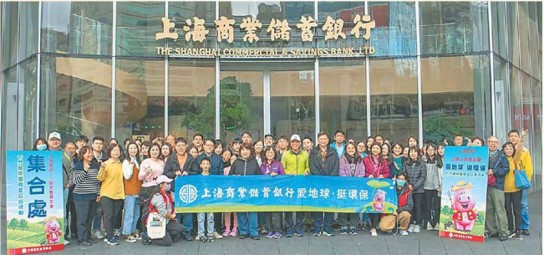
|
Invested In The Future With Wisdom
| Business Benefits | Environmental/Social Benefits |
|---|---|
|
|
| Sustainable Finance Forum – "Toward Net Zero: Sustainable Transformation for Enterprises and Family Businesses" | |
|---|---|
| The SCSB has participated for five consecutive years in the global lights-off initiative launched by the World Wide Fund for Nature (WWF). In 2025, the initiative was expanded beyond the SCSB's 74 branches across Taiwan to include affiliated companies and China Travel Service Taiwan, with all participants turning off outdoor signage and neon lights for three consecutive evenings. This collective action demonstrates the SCSB's commitment to energy conservation, carbon reduction, and sustainable development. The initiative also aligns with the United Nations Sustainable Development Goal SDG 17 (Partnerships for the Goals), promoting multi-stakeholder collaboration to reduce carbon emissions and accelerate progress toward net-zero targets. By advancing environmental greening efforts, the SCSB also supports the preservation of biodiversity and sustainable ecosystem development. |
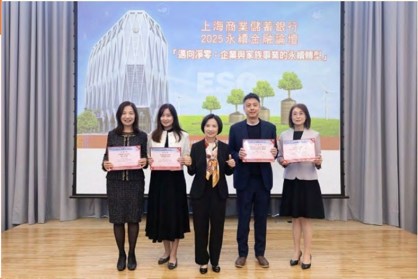
|
| Cultural and Arts Lecture Series | |
|---|---|
| To cultivate a reading culture, promote lifelong learning, and enhance the overall standard of cultural education, the SCSB has organized a wide range of knowledge-based and practical lecture series on a monthly basis since 2002. In collaboration with Film Appreciation Magazine, the SCSB launched a new series titled "Haiguang Cinema," hosting 10 film screenings during the year to revisit classics and foster meaningful exchanges in arts and culture. Other ongoing series and their 2025 session counts (with cumulative totals) include: Literary Cinema with 12 sessions (97 cumulative), Executive Reading Club with 12 sessions (229 cumulative), Our Literary Dream with 12 sessions (184 cumulative), Wealth Lecture Series with 10 sessions (65 cumulative), Healthy Living Series with 8 sessions (175 cumulative), Entrepreneur Talks with 12 sessions (55 cumulative), The Beauty of Sound Series with 20 sessions (235 cumulative), and Enriching Life Series with 35sessions (291 cumulative). Each session attracts approximately 100 participants. The total number of sessions has reached 1,300, with cumulative participation exceeding 100,000 attendees, reflecting strong engagement and widespread appreciation among the public. |
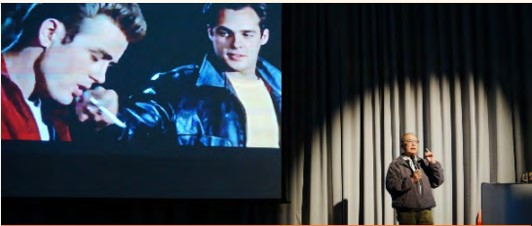
|
| Scholarships and Financial Education Initiatives | |
|---|---|
| Guided by the principle of "giving back to society," the SCSB continues to invest in education, culture, and public welfare initiatives, fulfilling its corporate social responsibility. In 1990, the SCSB established the SCSB Cultural and Educational Foundation, providing long-term support to enhance the positive impact of financial institutions on society. The scholarship program has now entered its 36th year, benefiting more than 7,500 students, with total scholarships exceeding NT$220 million, aimed at encouraging outstanding students and cultivating professional talent. In 2025, a total of 444 students received scholarships from the SCSB and its Foundation, with total disbursements of approximately NT$14 million. The SCSB also actively organizes financial education programs to enhance customers' financial literacy. |
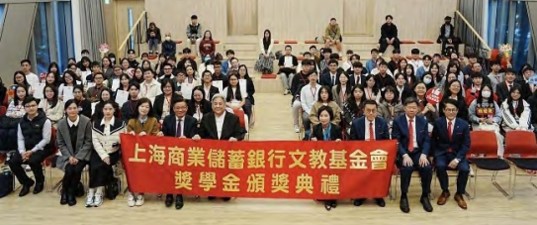
|